Established 2026 • West Bengal, India

The intersection of
Modern Life & Tech.

Exploring the digital frontier with a touch of elegance. We bridge the gap between clean code and circuit logic to deliver insights that simplify the complex and empower the next generation of digital builders.

ORIGINAL CONTENT • PURE RESEARCH • READER SUPPORTED

Fresh Insights

Latest Entries

West Bengal Voter List Controversy: Facts, Claims, and Ground Reality
Politics

West Bengal Voter List Controversy: Facts, Claims, and Ground Reality

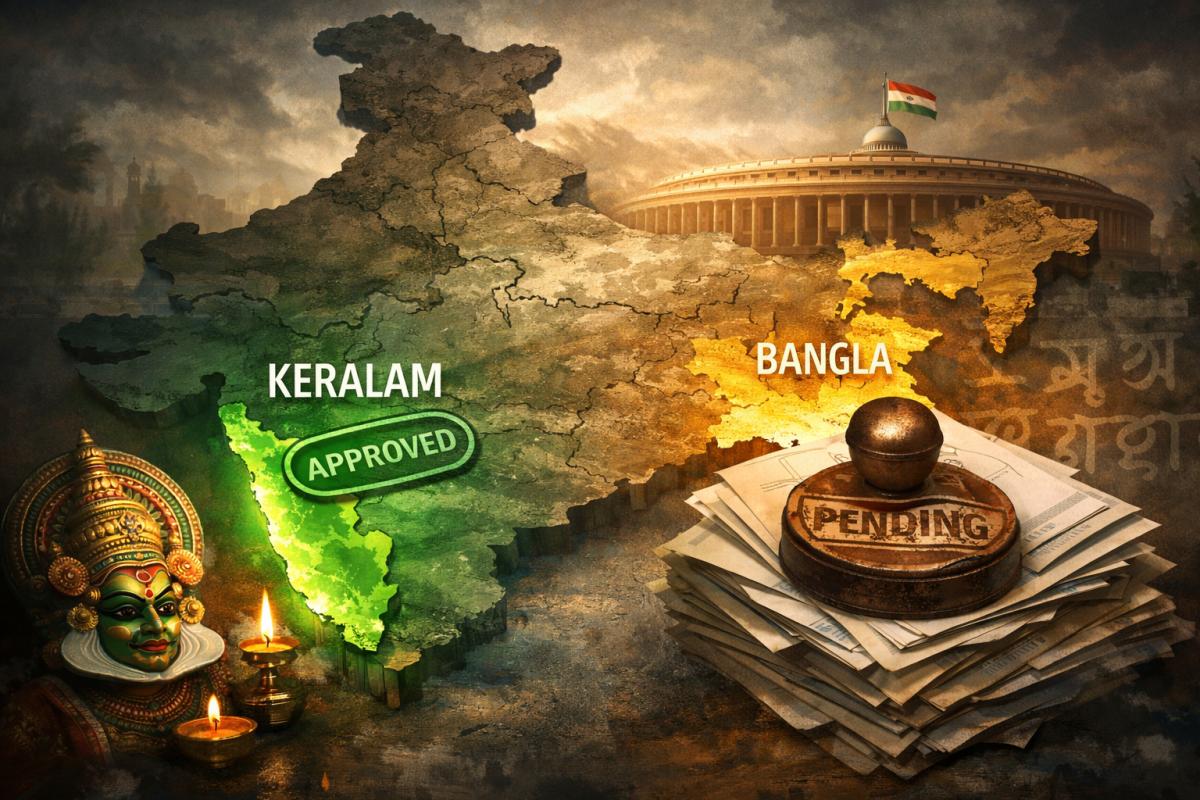
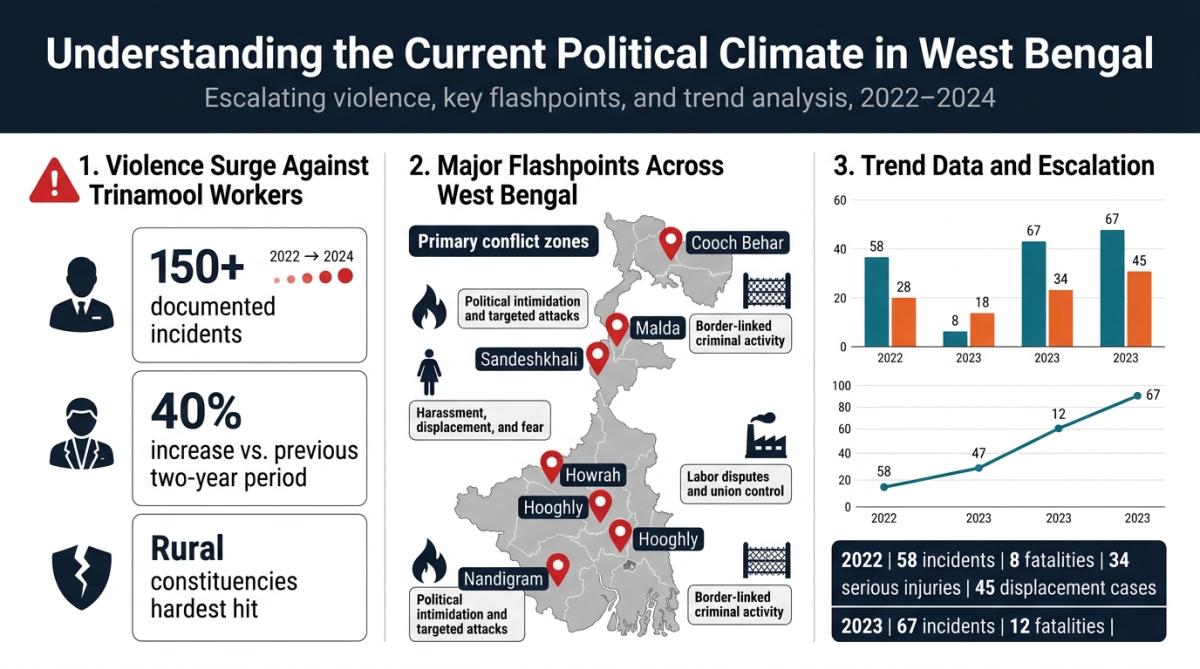
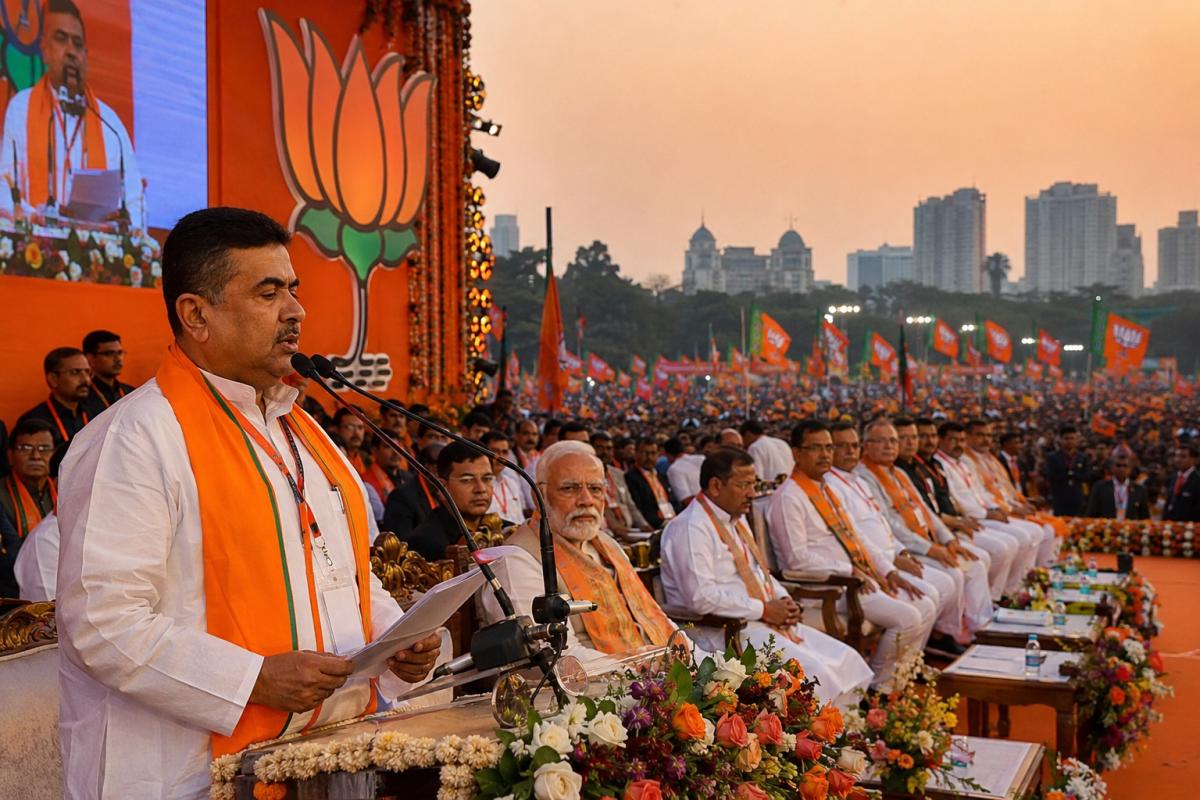
In recent weeks, one of the most debated and emotionally charged political developments in India has been the deletion of nearly 91 lakh voters from the electoral rolls of West Bengal. This issue, highlighted in multiple discussions and amplified by viral videos such as the one referenced, has sparked nationwide concern about the integrity of electoral processes, the role of institutions, and the very foundation of democracy. But what exactly happened? Were these deletions justified as part of a routine cleanup exercise, or do they point toward deeper systemic and political concerns? This blog dives deep into the facts, context, narratives, and implications of this massive electoral revision. Understanding the Scale: What Does 91 Lakh Mean? To truly grasp the magnitude of this development, one must understand the numbers. Nearly 91 lakh (9.1 million) voters were removed from the voter list during the Special Intensive Revision (SIR) process. This accounts for roughly 11.8% to 12% of the total electorate in West Bengal. In a state where elections are often decided by narrow margins, such a large-scale removal is not just administrative—it is politically and socially transformative. Parameter Data Total voters before revision ~7.6 crore Voters removed ~91 lakh Percentage removed ~11.8% New voters added Very limited (~1.9 lakh approx) What is the Special Intensive Revision (SIR)? The Special Intensive Revision (SIR) is a process conducted by the Election Commission of India (ECI) to update electoral rolls. The primary objective is to: Remove duplicate entries Delete names of deceased individuals Exclude ineligible voters (including migrants) Add newly eligible voters On paper, this is a necessary exercise to ensure fair elections. However, in practice, the 2025–2026 SIR in West Bengal has become one of the most controversial electoral exercises in recent history. Why Were So Many Voters Deleted? According to official explanations, the deletions occurred due to: Duplicate entries Deaths not previously recorded Migration (inter-state or international) Failure to verify identity during the revision process Officials claim that over 27 lakh voters were found “not eligible” after verification by judicial officers. Additionally, earlier rounds of deletions had already removed around 63 lakh names, bringing the total close to 91 lakh. The “Cleanup” Argument Supporters of the exercise argue that: Electoral rolls often contain inaccuracies Fake or duplicate voters distort democracy Cleaning the list strengthens election credibility From this perspective, the deletions are not alarming but necessary. The Controversy: Why Are People Concerned? Despite official justification, the scale and timing of the deletions have raised serious concerns across political and civil society groups. 1. Massive Scale of Deletions Deleting nearly 1 in 8 voters is unprecedented. Even courts have acknowledged the magnitude as significant. 2. Timing Before Elections The revision occurred just before crucial assembly elections, raising questions about intent and fairness. 3. Claims of Disproportionate Impact Reports suggest that certain districts like Murshidabad, Malda, and North 24 Parganas saw higher deletions. Some analyses also claim that specific communities may have been disproportionately affected, though this remains a politically contested claim. 4. Errors and Anomalies There have been cases where: Genuine voters found their names missing Voters appeared in other states’ rolls People who voted recently were suddenly removed For example, one report highlighted a voter whose name was deleted in West Bengal but appeared in Bihar’s voter list. Political Reactions: A War of Narratives Opposition View Opposition parties have called the exercise: “Unconstitutional” “Targeted disenfranchisement” “A threat to democracy” Some leaders have even alleged the use of algorithm-based or AI-driven filtering that unfairly excluded voters. Ruling Party & Supporters On the other hand, some political voices argue that: The deletions removed “fake voters” Electoral fraud was being corrected Opposition is politicizing a technical process In fact, controversial statements have emerged labeling deleted voters as “anti-nationals,” reflecting the intensity of the political divide. Election Commission’s Position The Election Commission maintains that: The process followed legal procedures Judicial officers supervised verification Appeal mechanisms exist for affected voters However, critics argue that the appeal process is often inaccessible or too slow. Legal and Constitutional Questions The issue has reached the courts, raising fundamental questions: Is the right to vote being protected, or is it being restricted through administrative processes? Legal experts have pointed out that: The right to vote is a constitutional right in India Mass deletion without transparent reasoning undermines this right Due process must be strictly followed Some petitions argue that the process lacks transparency and violates principles of natural justice. Human Impact: Beyond Numbers While statistics dominate the discussion, the real impact is human. Imagine: A daily wage worker losing voting rights An elderly citizen unable to navigate verification processes A first-time voter being excluded without explanation For many, voting is not just a right—it is identity, dignity, and participation in democracy. The “Vote Chori” Narrative This controversy is part of a larger national debate often referred to as “vote chori” or electoral manipulation. Allegations include: Deletion of genuine voters Addition of duplicate or fake entries Use of technology without transparency While these claims are strongly denied by authorities, they continue to shape public perception and political discourse. Data vs Perception: Where Does the Truth Lie? There are two competing realities: Official Narrative Opposition Narrative Cleaning voter list Mass disenfranchisement Removing duplicates & ineligible voters Targeting specific groups Legal and supervised process Lack of transparency The truth likely lies somewhere in between, but the lack of transparency makes it difficult to establish a universally accepted conclusion. Impact on the 2026 Elections The deletion of 91 lakh voters is expected to: Significantly alter voter demographics Impact electoral outcomes in key constituencies Increase political polarization Lead to legal challenges and protests In closely contested regions, even a small shift can determine the winner. Here, the shift is massive. What Should Ideally Happen? For a healthy democracy, the following steps are crucial: Transparency in deletion criteria Easy appeal mechanisms for voters Public disclosure of reasons for removal Independent audits of the process Time for correction before elections Without these safeguards, trust in the electoral system can erode. Conclusion The deletion of 91 lakh voters in West Bengal is not just a statistic—it is a moment that forces India to confront deeper questions about democracy, governance, and trust. While electoral roll revision is necessary, the scale, timing, and controversy surrounding this exercise have made it one of the most debated political developments in recent years. At its core, democracy depends on participation. Every deleted name is not just an entry removed—it is a voice potentially silenced. Whether this exercise strengthens democracy or weakens it will ultimately depend on transparency, accountability, and the willingness of institutions to address concerns with honesty and fairness.

ITR Filing AY 2026-27: Complete Guide to New Rules, Forms & Deadlines
Nation

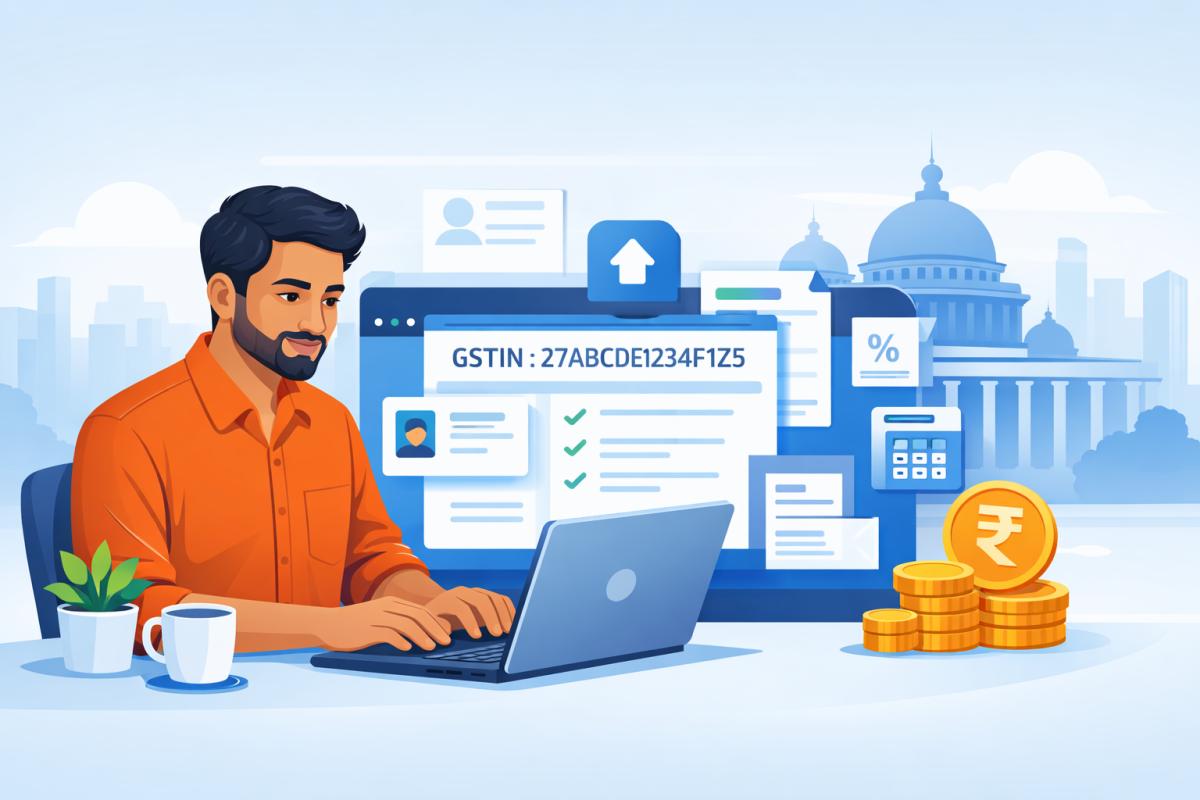
ITR Filing AY 2026-27: Complete Guide to New Rules, Forms & Deadlines

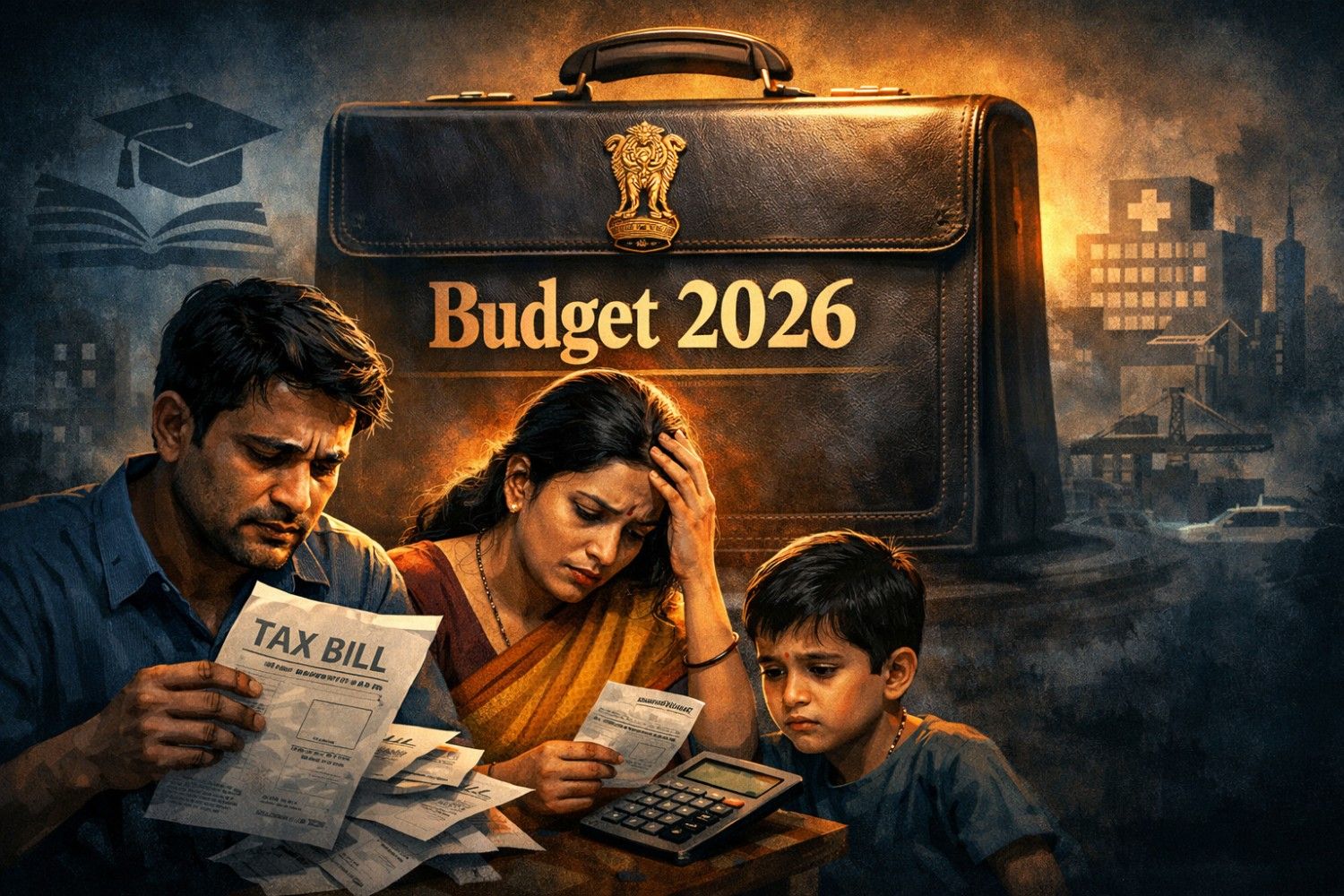
As the vibrant colors of Holi fade and the Indian summer begins to assert its dominance, a different kind of "heat" starts to build up in the offices of chartered accountants and on the computer screens of millions of taxpayers across the nation. It is the arrival of the Income Tax Return (ITR) filing season. For the Assessment Year (AY) 2026-27, the landscape of tax compliance has undergone a series of strategic shifts. The Central Board of Direct Taxes (CBDT) has recently notified the new set of ITR forms, and while the core objective remains the same—reporting your annual income and settling your dues with the state—the "how" and "what" of the process have seen significant refinements. This isn't just another routine update; it is a signal of a more data-driven, transparent, and slightly more demanding tax regime. Understanding these changes is not merely a task for financial professionals. In an era where the Annual Information Statement (AIS) and Taxpayer Information Summary (TIS) track almost every significant financial heartbeat—from your high-value credit card spends to your dividends and stock market trades—the margin for error in your ITR has shrunk to almost zero. The new forms for AY 2026-27 are designed to sync more effectively with this automated tracking, requiring taxpayers to be more granular in their disclosures. Whether you are a salaried employee who just bought a second home, a freelancer navigating the gig economy, or a sophisticated trader in the Futures and Options (F&O) segment, the nuances of these new forms will dictate how smoothly your tax season goes. In this exhaustive guide, we will break down the complexities of the new notifications, explore the expanded reporting requirements, and analyze the revised timeline that every Indian taxpayer must memorize. The Statutory Context: Why the 1961 Act Still Rules Before we dissect the individual forms, it is crucial to address a common point of confusion among taxpayers. With all the talk of "New Tax Acts" and sweeping reforms, many wonder which rulebook we are following this year. It is officially confirmed that for the Assessment Year 2026-27, we are still operating under the framework of the Old Income Tax Act of 1961. While the government continues to modernize the tax code, the 1961 Act remains the bedrock of the current filing cycle. This means the definitions of "Previous Year" (FY 2025-26) and "Assessment Year" (AY 2026-27) remain standard, and the traditional sections like 80C, 80D, and 24(b) are still relevant, depending on the tax regime you choose. The "Assessment Year" is the period (April 1, 2026, to March 31, 2027) during which the income you earned in the "Financial Year" (April 1, 2025, to March 31, 2026) is evaluated and taxed. The new forms notified by the CBDT are specifically crafted to capture the economic activities of that preceding financial year. Choosing the right form is the cornerstone of a successful filing. If you file using the wrong form, the Income Tax Department's processing system—the Centralized Processing Centre (CPC)—may flag your return as "defective," leading to unnecessary legal notices and potential penalties. ITR-1 (Sahaj): The "Two-House" Revolution for the Salaried Class For millions of resident individuals, ITR-1, also known as 'Sahaj', has been the go-to form for its simplicity. Historically, ITR-1 was restricted to those with a very basic income profile. However, AY 2026-27 brings a major, investor-friendly change to this form. For the first time, taxpayers owning up to two house properties can now use ITR-1. Previously, even owning a small second flat, whether vacant or let out, would automatically disqualify a taxpayer from Sahaj and force them into the more complex ITR-2. Who is Eligible for ITR-1 (Sahaj)? Income Limit: Your total income for the financial year must not exceed ₹50 Lakhs. Income Sources: Income must come from Salary, Pension, or "Other Sources" (such as interest from savings accounts, fixed deposits, or family pension). The House Property Update: You can now report income (or losses) from up to two house properties. This is a massive relief for the growing middle class that often holds a primary residence and a secondary investment property. Agricultural Income: You can still use ITR-1 if your agricultural income is a minor component, specifically up to ₹5,000. Capital Gains: Exempt Long-Term Capital Gains (LTCG) up to ₹1.25 Lakhs can be reported here under specific conditions. The Catch: Enhanced Reporting Requirements While the eligibility has expanded, the Department is asking for more transparency. If you are reporting two house properties in ITR-1, you cannot simply provide a consolidated figure. The new forms require detailed reporting for each property. This includes: Complete Address: You must provide the full postal address, including the pincode, for both properties. Ownership Share: If you own the property jointly with a spouse, parent, or sibling, you must explicitly mention your percentage of ownership. Property Status: You must clearly categorize the property as "Self-Occupied," "Let Out," or "Deemed Let Out." This level of detail is intended to prevent taxpayers from claiming undue interest deductions on multiple properties without proper verification. It also allows the Department to cross-match property data with municipal records and the AIS. ITR-2: For the High-Net-Worth and Diversified Investor If your financial portfolio includes more than just a salary and a couple of houses, ITR-2 is your mandatory destination. This form is designed for individuals and Hindu Undivided Families (HUFs) who do not have income from a business or profession but have diversified income streams that exceed the "Sahaj" limits. Deep Dive into ITR-2 Requirements 1. Income Over ₹50 Lakhs: Even if your only source of income is salary, if the total amount crosses the ₹50 Lakh threshold, you must graduate from ITR-1 to ITR-2. This allows for a more detailed breakdown of perquisites and allowances. 2. Capital Gains Mastery: This is the primary form for anyone who has sold shares, mutual funds, or real estate during the year. Whether you have Short-Term Capital Gains (STCG) or Long-Term Capital Gains (LTCG), ITR-2 provides the necessary schedules to report these. However, it is important to remember that ITR-2 cannot be used for reporting F&O or Intraday trading, as those are legally classified as business income. 3. Foreign Assets and Income: In an increasingly globalized world, many Indian residents hold foreign stocks (like Google or Apple shares), have foreign bank accounts, or own property abroad. Schedule FA (Foreign Assets) in ITR-2 is a critical section. Non-disclosure of foreign assets can lead to severe penalties under the Black Money (Undisclosed Foreign Income and Assets) and Imposition of Tax Act. 4. Directorship and Unlisted Shares: If you are a Director in any company—even a small private limited company owned by your family—or if you hold shares in an unlisted company, you are barred from ITR-1 and must use ITR-2 to disclose these interests. "ITR-2 acts as a comprehensive financial disclosure for individuals with significant wealth or investment activity. It requires a high degree of accuracy in reporting cost of acquisition and dates of sale to correctly calculate tax liability at special rates." ITR-4 (Sugam): The Shield for Small Businesses For small-scale entrepreneurs, freelancers, and professionals, ITR-4 (Sugam) offers a simplified route through the Presumptive Taxation Scheme. This scheme is designed to reduce the "compliance burden" on small taxpayers, allowing them to declare income at a fixed percentage of their turnover without the need to maintain exhaustive books of accounts or undergo a formal audit. Key Features of ITR-4 for AY 2026-27 Section 44AD: For small businesses with a turnover up to ₹2 Crores (extended to ₹3 Crores in certain cases with digital transactions), income is presumed to be 8% (6% for digital receipts) of the turnover. Section 44ADA: For professionals (doctors, lawyers, engineers, etc.) with gross receipts up to ₹50 Lakhs (extended to ₹75 Lakhs under digital conditions), income is presumed to be 50% of the receipts. Section 44AE: For those in the business of plying, hiring, or leasing goods carriages. Similar to ITR-1, the new ITR-4 Sugam form now permits the reporting of two house properties. This makes it an ideal form for a small business owner who lives in one house and rents out another. However, if your total income from all sources exceeds ₹50 Lakhs, you lose the "Sugam" privilege and must move to ITR-3, even if you are using presumptive schemes. ITR-3: The Powerhouse Form for Traders and Professionals If you are a serious player in the financial markets or run a substantial business with full bookkeeping, ITR-3 is the most comprehensive and complex form you will encounter. It is the "heavy-duty" version of the individual return, capable of handling everything from salary to complex business balance sheets. The "F&O" Reporting Shift: A Major Update The most significant technical change in ITR-3 for AY 2026-27 revolves around the Futures and Options (F&O) segment. In recent years, there has been an explosion in retail participation in the derivatives market. To bring more clarity and better monitoring, the new ITR-3 requires separate and distinct reporting of F&O turnover and F&O income. Previously, many traders would club their F&O activity with other business income or fail to clearly delineate their turnover. Now, there are specific fields in the "Income from Business or Profession" schedule where F&O data must be entered. This allows the tax department to verify the data against the reports provided by stock exchanges and brokers. If you are a trader, you must ensure that your "Tax P&L" statement from your broker is perfectly aligned with the numbers you enter in ITR-3. When Must You Use ITR-3? If you have income from a business or profession and do not qualify for ITR-4. If you are a Partner in a Firm. Partners receive salary, interest, and share of profit from the firm, all of which are reported in ITR-3. If you engage in Intraday Trading in shares (Speculative Business Income). If your business turnover exceeds the limits for presumptive taxation or if you choose to declare income lower than the presumptive rates, necessitating an Audit under Section 44AB. [Image Description: A professional workspace featuring multiple monitors displaying stock market trends and complex tax spreadsheets, representing the detail required for ITR-3 filing.] Deadlines for AY 2026-27: The New Timeline The Government has introduced a slightly more nuanced calendar for the 2026 filing season. Understanding these deadlines is critical to avoiding late fees and interest under Sections 234A, 234B, and 234C. Taxpayer Category Applicable ITR Forms Original Due Date Salaried Individuals / Pensioners (Non-Audit) ITR-1, ITR-2 July 31, 2026 Small Businesses & Traders (Non-Audit) ITR-3, ITR-4 August 31, 2026 Taxpayers Subject to Audit ITR-3, ITR-5, ITR-6 October 31, 2026 International Transactions (Transfer Pricing) ITR-3, ITR-5, ITR-6 November 30, 2026 The "August 31st" Extension A notable update for this year is the extension of the deadline for non-audit business cases (ITR-3 and ITR-4) to August 31, 2026. This acknowledges the increasing complexity of consolidating business accounts and gives entrepreneurs an extra month beyond the traditional July 31st deadline that still applies to salaried employees. This separation of deadlines helps de-congest the filing portal and provides relief to tax professionals handling multiple business clients. Late Fees and the "Belated Return" Trap If you fail to file your return by the applicable due date mentioned above, you can still file a Belated Return. The window for belated returns for AY 2026-27 closes on December 31, 2026. However, filing a belated return comes with several disadvantages: Section 234F Late Fee: A mandatory fine of ₹5,000 if your income exceeds ₹5 Lakhs. If your income is below ₹5 Lakhs, the fine is capped at ₹1,000. Loss of Carry Forward: You cannot carry forward any losses (except house property loss) if you file after the original due date. This is a massive blow for traders who have incurred F&O or Capital losses and wish to set them off against future profits. Interest Charges: Interest under Section 234A will be charged at 1% per month on the tax due for every month of delay. The "Big Revision" Rule: Introduction of Section 234I One of the most revolutionary changes in the administrative side of tax filing this year is the overhaul of the Revised Return process. Life happens, and sometimes we discover an omitted income or a missed deduction after the return is filed. Under the law, you can file a Revised Return to correct these errors. The Extended Window For AY 2026-27, the window to revise your return has been extended from the traditional December deadline all the way to March 31, 2027. This three-month extension (January, February, and March) provides ample time to ensure your return is perfectly accurate. The Price of Revision: Section 234I However, this extension is not free. The government has introduced Section 234I, which imposes a late fee on revisions made during the extended window. If you revise your return between January 1, 2027, and March 31, 2027, you must pay a fee: ₹1,000 if your income is up to ₹5 Lakhs. ₹5,000 if your income exceeds ₹5 Lakhs. If you revise your return before December 31, 2026, no such fee is applicable (assuming the original return was filed on time). This change is clearly aimed at discouraging taxpayers from using the revision facility as a way to procrastinate on accurate reporting.   Updated ITR (ITR-U): The Final Opportunity What happens if you miss even the March 31, 2027, deadline for revision? The government provides a final "safety net" called the Updated Return (ITR-U). For AY 2026-27, you can file an ITR-U until March 31, 2029 (24 months from the end of the relevant assessment year). Constraints of ITR-U: It can only be used to increase your tax liability. You cannot use it to claim a refund or increase a loss. It requires the payment of "Additional Tax"—25% extra if filed within 12 months, and 50% extra if filed within 24 months. You can only file an Updated Return once for a specific assessment year. Unlike revised returns, which can be filed multiple times, the ITR-U is a "one-shot" opportunity to come clean with the Department. A Summary Checklist for Taxpayers To ensure a seamless filing experience under the new rules, keep the following checklist handy before you log into the e-filing portal: Action Item Why it Matters Required Documents Check AIS/TIS Cross-match with Department data Download from e-filing portal House Property Details New 2-house limit and address rule Property tax receipts, ownership deeds Broker Statements New F&O separate reporting Tax P&L from Zerodha, Groww, etc. Form 16/16A Verification of TDS Obtain from Employer/Bank Bank Statements Interest income reporting Passbooks/Statements for all accounts Conclusion The notification of the new ITR forms for the Assessment Year 2026-27 represents a significant step in the evolution of the Indian tax system. By expanding the eligibility of ITR-1 and ITR-4 to include two house properties, the government has provided a practical solution for a large section of taxpayers who were previously burdened with unnecessarily complex forms. Simultaneously, the granular reporting required for F&O traders in ITR-3 and the introduction of the Section 234I late fee for late-stage revisions underscore a move toward strict accountability and data precision. As we move into the 2026 filing season, the mantra for every taxpayer should be "Accuracy over Speed." With the Income Tax Department's AI systems now capable of instantly spotting discrepancies between your ITR and your Annual Information Statement, the cost of a mistake—both in terms of money and mental peace—is higher than ever. Take the time to understand which form fits your financial reality, respect the new August 31st deadline for business filings, and try to finalize your returns well before the December 31st mark to avoid the new revision fees. In the complex world of Indian taxation, being informed is your best defense and your most valuable asset.

How to File Tribunal Appeal After Voter ID Rejection Step-by-Step Guide
Explained

How to File Tribunal Appeal After Voter ID Rejection Step-by-Step Guide

The right to vote is one of the most fundamental pillars of democracy. Yet, every year during electoral roll revisions, thousands of genuine citizens find their names missing, rejected, or marked under scrutiny. If you are one of them, the Tribunal Appeal system becomes your last and most powerful legal remedy. With the introduction of appellate tribunals—especially during Special Intensive Revision (SIR)—the Election Commission of India has created a structured pathway for citizens to challenge wrongful exclusion. However, confusion still exists around one crucial question: Should you file your tribunal appeal online or offline? This guide goes far beyond basic instructions. It provides a deep, practical, real-world understanding of the tribunal appeal process, including procedural flow, legal positioning, documentation strategy, error prevention, and expert recommendations. Understanding Tribunal Appeal: Legal and Administrative Perspective A tribunal appeal is not just a form submission—it is a quasi-judicial review mechanism. This means your case is examined by a legally authorized authority (often a retired judge or senior official) rather than a regular administrative officer. The purpose of this system is to: Ensure fairness in voter list preparation Provide a structured grievance redressal mechanism Prevent wrongful exclusion of eligible citizens Introduce judicial oversight in electoral processes Unlike standard correction forms (Form 6, 7, 8), a tribunal appeal is used after your application has already been rejected or ignored. When Exactly Should You File a Tribunal Appeal? Many applicants make the mistake of filing appeals unnecessarily or too late. Timing and eligibility are critical. You should file a tribunal appeal if: Your Form 6 (new voter registration) was rejected Your name was deleted from the voter list Your status shows "Under Adjudication" but later excluded You were marked as duplicate, shifted, or deceased incorrectly Your documents were submitted but still not accepted You should NOT file if: Your application is still under process You have not yet applied through standard forms Your issue is a minor correction (use Form 8 instead) End-to-End Workflow of Tribunal Appeal System Understanding the workflow helps you avoid mistakes and track your case efficiently. Application Submission (Online or Offline) Data Verification by Election Office Forwarding to Tribunal Case Review by Tribunal Authority Hearing (if required) Final Decision (Accepted / Rejected) This structured pipeline ensures that every appeal is reviewed systematically rather than arbitrarily. Online Tribunal Appeal: Deep Dive (With Practical Insights) Step-by-Step Execution 1. Access the Portal Visit the official Election Commission digital platform (ECINET or NVSP). 2. Authentication Login using mobile number or EPIC ID OTP verification ensures identity authenticity 3. Appeal Form Filling This is the most critical step. The system typically requires: Personal identification details Constituency and polling booth information Reason for appeal Detailed explanation of the issue 4. Writing Strong Appeal Content Your written explanation can significantly impact the decision. Tip: Clearly mention facts, attach evidence references, and avoid emotional language. Example structure: Introduction (Who you are) Problem description Proof of eligibility Request for reinstatement 5. Document Upload Strategy Use clear scanned copies (not blurred photos) Combine documents logically (ID + address proof) Ensure file size and format compliance 6. Submission and Tracking After submission: Save acknowledgment number Track status regularly Respond quickly if additional documents are requested Advanced Advantages of Online Mode Data Integrity: Reduced manual errors Transparency: Real-time updates Speed: Faster forwarding to tribunal Accessibility: 24/7 submission capability Hidden Challenges Server downtime during peak periods Upload failures due to size/format issues Lack of guidance for first-time users Offline Tribunal Appeal: Deep Dive (Ground Reality) Where to Apply District Magistrate (DM) Office Sub-Divisional Office (SDO) Electoral Registration Office (ERO) Step-by-Step Process Visit office physically Collect or write appeal application Attach photocopies of documents Submit to designated officer Receive acknowledgment receipt What Happens After Submission? Your offline application is not processed manually forever—it is: Digitized by officials Uploaded into the central system Forwarded to tribunal electronically Advantages in Real Life Personal assistance from staff Better for elderly or rural applicants Immediate clarification of doubts Practical Limitations Long queues and waiting time Dependency on staff efficiency Possible delays in digitization Online vs Offline: Strategic Comparison Factor Online Mode Offline Mode Processing Speed Fast Moderate to slow Ease of Use Requires digital skills Simple with guidance Error Rate Low (auto validation) Higher (manual handling) Convenience Apply from home Requires travel Support System Limited Strong (human assistance) Transparency High Moderate Documentation Strategy: What Actually Works Submitting documents is not just about quantity—it’s about relevance and clarity. Core Documents Aadhaar Card School Certificate (DOB proof) PAN Card Electricity Bill / Address Proof Pro-Level Tips Ensure name consistency across documents Highlight matching details (DOB, address) Avoid uploading irrelevant documents Timeline and Deadlines: Critical Factor Tribunal appeals are time-sensitive. Typical deadline: 15 days from list publication Late submissions may be rejected automatically Important: Always apply as early as possible to avoid last-minute technical or procedural issues. Do You Need Legal Representation? In most cases, you do not need a lawyer. The tribunal evaluates: Document authenticity Eligibility criteria Procedural correctness However, in complex disputes or repeated rejections, consulting a legal expert can be beneficial. Common Mistakes That Lead to Rejection Incorrect personal details Mismatched documents Weak or unclear explanation Missing deadline Uploading unreadable files Expert Strategy: How to Maximize Approval Chances Apply early Use strong, factual explanation Attach clear and relevant documents Double-check all entries Track application regularly Real-World Scenarios Case 1: Name Deleted Without Reason Solution: Provide previous voter ID + address proof + appeal explanation. Case 2: DOB Proof Rejected Solution: Submit school certificate + PAN + affidavit if needed. Case 3: Duplicate Entry Marked Solution: Clarify current residence with strong address proof. Future of Tribunal Appeals The tribunal system represents a shift toward a more transparent and accountable electoral framework. With increasing digitization, online appeals will likely dominate, but offline methods will remain essential for inclusivity. In the coming years, we can expect: Faster processing systems AI-based verification Improved user interfaces Greater transparency Conclusion The tribunal appeal process is not just a procedural formality—it is your legal right to challenge exclusion and reclaim your identity as a voter. Whether you choose the online or offline method, success depends on clarity, accuracy, and timely action. Online applications offer unmatched speed and transparency, making them ideal for digitally comfortable users, while offline applications provide accessibility and human support for those who need it. Ultimately, the best method is the one that ensures you submit a complete, accurate, and timely appeal. Your vote is your voice, and the tribunal system ensures that no legitimate voice goes unheard.

CCNA Subnetting Explained Like Real Networking Happens
Tech

CCNA Subnetting Explained Like Real Networking Happens

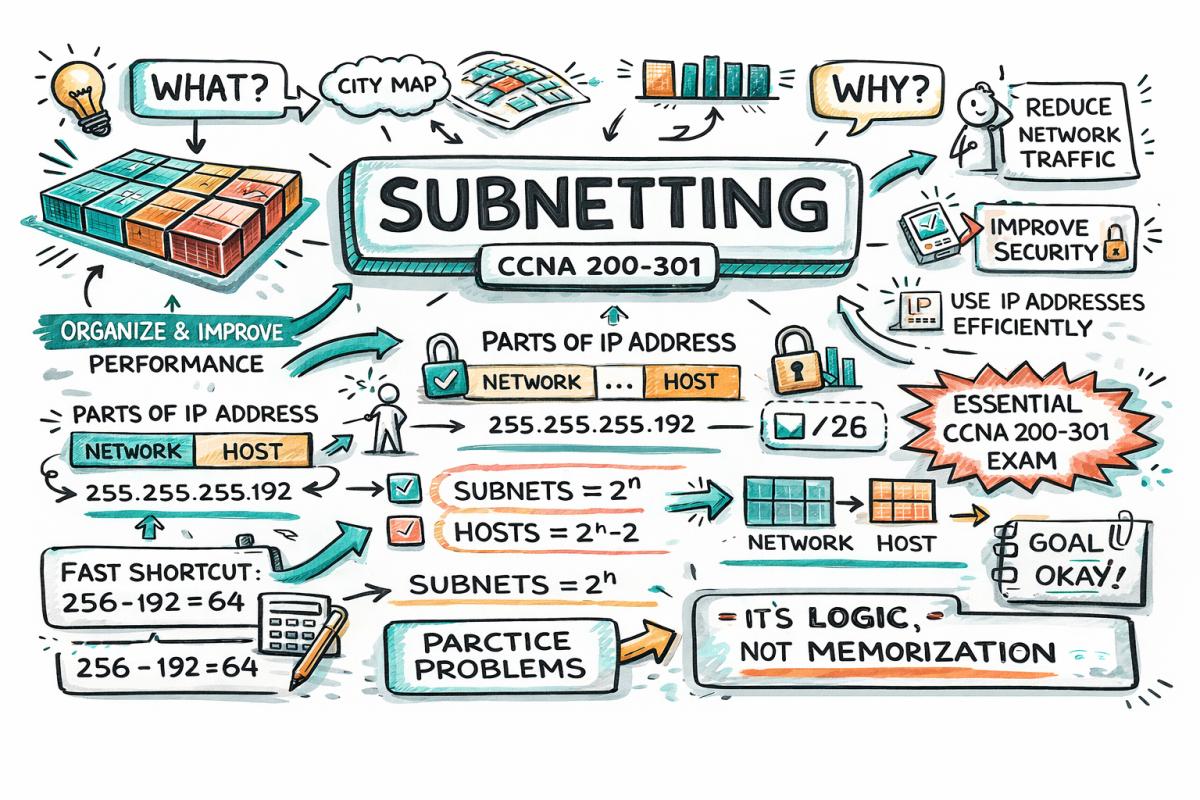
If you’re preparing for CCNA 200-301, subnetting is not just a topic — it’s a skill that separates beginners from real network engineers. Most people struggle with subnetting because they try to memorize instead of understanding the logic behind it. In this guide, we will break subnetting down step by step in a way that actually makes sense. By the end of this article, you will understand what subnetting is, why it exists, and how to solve subnetting problems confidently — even under exam pressure. What is Subnetting? Subnetting is the process of dividing a large network into smaller, manageable networks called subnets. :contentReference[oaicite:0]{index=0} Think of a big network like a city. Without division, everything becomes chaotic. Subnetting is like dividing that city into neighborhoods — making communication faster, more secure, and easier to manage. Subnetting improves network efficiency, reduces broadcast traffic, and enhances security. Better performance Improved security Efficient IP utilization Easier troubleshooting Understanding IP Address Structure Before subnetting, you must understand that every IPv4 address has two parts: Network Portion – identifies the network Host Portion – identifies devices inside that network For example: 192.168.1.10 /24 Network part: 192.168.1 Host part: .10 The subnet mask determines how many bits belong to the network and how many to the host. :contentReference[oaicite:1]{index=1} What is a Subnet Mask? A subnet mask is a 32-bit number that separates the network and host portions of an IP address. Example: IP Address: 192.168.1.10 Subnet Mask: 255.255.255.0 CIDR Notation: /24 In binary: 255 = 11111111 0 = 00000000 So: 11111111.11111111.11111111.00000000 Here: 1s → Network bits 0s → Host bits Classful Addressing (Basic Foundation) Class Range Default Mask Hosts A 1.0.0.0 – 126.255.255.255 /8 16 million+ B 128.0.0.0 – 191.255.255.255 /16 65,534 C 192.0.0.0 – 223.255.255.255 /24 254 These defaults are important because subnetting always starts from here. :contentReference[oaicite:2]{index=2} Why Subnetting is Needed Large networks create unnecessary traffic Security becomes difficult IP addresses get wasted Subnetting solves this by splitting one big network into smaller logical segments. More subnets = fewer hosts per subnet The Core Concept: Borrowing Bits Subnetting works by borrowing bits from the host portion and using them as subnet bits. Example: /24 → /26 Borrowed bits: 2 Subnets: 2² = 4 Hosts per subnet: 2⁶ – 2 = 62 Each time you borrow a bit, you double the number of subnets but reduce hosts. :contentReference[oaicite:3]{index=3} Subnetting Formula Cheat Sheet Concept Formula Subnets 2^n Hosts 2^h - 2 Block Size 256 - Subnet Mask Value Step-by-Step Subnetting Method Step 1: Identify Requirements Determine how many subnets or hosts you need. Step 2: Borrow Bits Choose how many bits to borrow from the host portion. Step 3: Calculate Subnets Use 2^n formula. Step 4: Calculate Hosts Use 2^h - 2 formula. Step 5: Determine Block Size Subtract subnet mask value from 256. Step 6: Identify Network Ranges List all subnet ranges. This structured process is exactly what makes subnetting manageable instead of confusing. :contentReference[oaicite:4]{index=4} Example 1: Basic Subnetting Network: 192.168.1.0/24 Requirement: 4 subnets 2 bits borrowed → /26 Subnet mask: 255.255.255.192 Block size: 64 Subnet Range Broadcast 1 192.168.1.0 - 63 192.168.1.63 2 192.168.1.64 - 127 192.168.1.127 3 192.168.1.128 - 191 192.168.1.191 4 192.168.1.192 - 255 192.168.1.255 Example 2: Finding Network Address IP: 192.168.5.85/24 Network address = 192.168.5.0 Broadcast address = 192.168.5.255 Hosts range = 192.168.5.1 – 192.168.5.254 This is calculated using binary AND operation between IP and subnet mask. :contentReference[oaicite:5]{index=5} Magic Number Trick (Shortcut) Instead of calculating everything manually, you can use the magic number method. Formula: 256 - subnet value = block size Example: Mask: 255.255.255.192 Magic number: 64 So subnets increase by 64: 0 64 128 192 VLSM (Variable Length Subnet Mask) VLSM allows you to create subnets of different sizes depending on requirements. Efficient IP usage Flexible design Used in real networks Example: Subnet A → 100 hosts Subnet B → 50 hosts Subnet C → 10 hosts Instead of wasting space, VLSM allocates different subnet sizes. Common Subnet Masks Table CIDR Mask Hosts /24 255.255.255.0 254 /25 255.255.255.128 126 /26 255.255.255.192 62 /27 255.255.255.224 30 /28 255.255.255.240 14 /29 255.255.255.248 6 /30 255.255.255.252 2 Common Mistakes to Avoid Forgetting to subtract 2 from host count Confusing network and broadcast addresses Not converting to binary when needed Memorizing instead of understanding Real-World Analogy Imagine an apartment building: Building = Network Floors = Subnets Rooms = Hosts Subnetting is simply organizing the building efficiently so people don’t get lost. Conclusion Subnetting may look difficult at first, but once you understand the logic behind it, it becomes one of the easiest and most powerful concepts in networking. Instead of memorizing formulas, focus on understanding how IP addresses are divided and how bits are used. For CCNA 200-301, practice is everything. The more problems you solve, the faster and more confident you become. Subnetting is not just an exam topic — it’s a real-world skill used daily by network engineers. Master it once, and it will stay with you for life.

How Packets Travel Across the Internet (Easy CCNA Explanation)
Tech

How Packets Travel Across the Internet (Easy CCNA Explanation)

In networking, one of the most important concepts to truly understand is “The Life of a Packet.” It is not just a theoretical topic for the CCNA 200-301 exam—it is the foundation of how real-world networks operate. Every time you open a website, send a message, or stream a video, packets are created, processed, transmitted, and delivered across multiple devices. This blog will take you deep into the complete journey of a packet—from the moment a user enters a URL in a browser to the point where the data reaches the destination server and returns back. We will explore OSI layers, encapsulation, ARP, DNS, switching, routing, and real-world packet flow in a structured and human-friendly way. What is a Packet? A packet is a small unit of data that travels across a network. Instead of sending large chunks of data all at once, networks break data into smaller packets so they can be transmitted efficiently and reliably. Contains data (payload) Includes headers for addressing and control Travels through multiple devices before reaching destination Each packet carries enough information so that network devices know how to handle and forward it correctly. Understanding the Scenario Let’s consider a simple real-world example: A user (Host A) wants to access www.example.com The request must travel through switches and routers A DNS server is used to resolve the domain name The packet eventually reaches a web server This entire process involves multiple protocols and steps working together seamlessly. Step 1: Application Layer – Creating Data The journey begins at the Application Layer of the OSI model. When a user types a URL into a browser: The browser generates an HTTP request This request contains the destination domain name At this stage, no IP address is known yet The system now needs to resolve the domain name into an IP address before sending the packet. Step 2: DNS Resolution Before sending actual data, the host must find the IP address of the destination server. Host sends a DNS query Query is sent to the configured DNS server DNS server responds with the IP address This is a crucial step because networks communicate using IP addresses, not domain names. Without DNS, users would have to remember IP addresses instead of domain names. Step 3: Encapsulation (OSI Model) Once the IP address is known, the data moves down the OSI layers. At each layer, headers are added—this process is called encapsulation. OSI Layer Function Application Creates data (HTTP request) Transport Adds TCP/UDP header (port numbers) Network Adds IP addresses Data Link Adds MAC addresses Physical Converts into bits for transmission By the time data reaches the physical layer, it is ready to be transmitted as electrical or wireless signals. Step 4: ARP – Finding MAC Address Even if the sender knows the destination IP, it still needs a MAC address to send data on the local network. If destination is in another network → send to default gateway Host sends ARP request (broadcast) Router replies with its MAC address This process ensures proper delivery at Layer 2. Key Concept IP address → End-to-end communication MAC address → Hop-to-hop communication Step 5: Switching Process When the packet reaches a switch: Switch checks MAC address table If known → forwards to correct port If unknown → floods to all ports Switches operate at Layer 2 and make forwarding decisions based on MAC addresses. Step 6: Routing Process When the packet reaches a router: Router checks destination IP address Looks into routing table Forwards packet to next hop Each router: Removes Layer 2 header Analyzes Layer 3 (IP) Re-encapsulates with new MAC address Important: IP addresses remain constant, but MAC addresses change at every hop. Step 7: Multiple Hops In real networks, packets travel through multiple routers before reaching the destination. Each router performs routing decisions ARP may occur at each new network Encapsulation happens repeatedly This process continues until the packet reaches the final destination network. Step 8: Reaching the Destination Server Once the packet reaches the destination: Server checks MAC address Verifies IP address Processes TCP/UDP port Then the server performs de-encapsulation: Removes Layer 2 header Removes Layer 3 header Processes Layer 4 (TCP/UDP) Passes data to application Finally, the HTTP request is processed. Step 9: Server Response The server now sends a response back to the client: Uses same process in reverse Encapsulation happens again Packet travels through routers back to source Because ARP tables and MAC tables are already populated, the return path is faster. Important Protocols Involved DNS – Resolves domain name to IP ARP – Resolves IP to MAC TCP – Reliable communication IP – Logical addressing HTTP – Web communication Real-World Flow Summary User enters URL DNS resolves IP address Packet is created and encapsulated ARP finds MAC address Switch forwards frame Router routes packet Packet reaches server Server responds back Key Differences: Switch vs Router Feature Switch Router Layer Layer 2 Layer 3 Uses MAC Address IP Address Function Forward frames Route packets Tables MAC Table Routing Table Common Interview & Exam Points Encapsulation and de-encapsulation process Role of DNS before communication Difference between IP and MAC addressing ARP working mechanism Routing decision process Why This Concept Matters Understanding the life of a packet helps you: Troubleshoot network issues Understand real traffic flow Configure routers and switches correctly Pass CCNA exam with confidence If you understand this topic clearly, you understand how the internet works. Conclusion The life of a packet is the backbone of networking. From the moment a user initiates a request to the final delivery of data, multiple layers, protocols, and devices work together in perfect coordination. Concepts like DNS resolution, ARP, encapsulation, switching, and routing are not isolated topics—they are interconnected pieces of a single process. For CCNA 200-301, mastering this concept gives you a strong foundation to understand advanced topics like VLANs, routing protocols, NAT, and network security. More importantly, it transforms your perspective from memorizing commands to actually understanding how networks function in the real world. Once you truly grasp the life of a packet, networking stops being confusing—and starts making complete logical sense.

Justice at Home: Why Maternity Leave and Adoption Support Matter More Than Ever
Exam

Justice at Home: Why Maternity Leave and Adoption Support Matter More Than Ever

The journey of motherhood is often celebrated through the lens of biology, but in the evolving social fabric of 21st-century India, adoption has emerged as a powerful, compassionate alternative for building families. However, for a long time, the legal framework governing "motherhood" remained strictly tied to biological birth. It was only recently that the Indian legal system and corporate world began to acknowledge that bonding knows no biological boundaries. As we move through 2026, the conversation around maternity leave for adoptive mothers has reached a critical juncture, involving the Central Government, the Supreme Court, and a rapidly changing private sector. This blog provides a 3000-word exhaustive analysis of every facet of adoption leave in India—exploring statutory rights, judicial interventions, the disparities between biological and adoptive parental benefits, and the roadmap for a more inclusive future. The Legislative Foundation: The Maternity Benefit (Amendment) Act, 2017 Before 2017, the original Maternity Benefit Act of 1961 made no mention of adoption. An adoptive mother was essentially expected to return to work the day after bringing a child home, or use her personal vacation time to bond with her new child. This changed significantly with the 2017 Amendment, which introduced Section 5(4), specifically addressing "Commissioning Mothers" (surrogacy) and "Adopting Mothers." What the Government Says: Current Statutory Provisions Under the current law mandated by the Ministry of Labour and Employment, the provisions for adoptive mothers are as follows: Duration of Leave: An adoptive mother is entitled to 12 weeks (84 days) of paid maternity leave. The "3-Month" Rule: This leave is only applicable if the child being adopted is below the age of three months. Commencement: The leave period begins from the date the child is handed over to the adopting mother. Eligibility: The mother must have worked for at least 80 days in the 12 months immediately preceding the date of the child's arrival. While this was a landmark move, it immediately created a hierarchy of motherhood. While biological mothers receive 26 weeks of leave, adoptive mothers receive less than half that amount, and only under the strict condition that the infant is a newborn. The Supreme Court’s Intervention and the Fight for Parity The "3-month rule" has been the subject of intense legal scrutiny. In reality, adopting a child under three months in India is statistically rare due to the stringent procedures of the Central Adoption Resource Authority (CARA). By the time legal formalities are completed, most children are older than three months, effectively disqualifying thousands of mothers from any leave at all. Significant Judicial Observations "The law must recognize that the need for bonding is as acute, if not more, in adoption. A child who has spent time in an institutional setting requires intensive emotional investment from the new parent to transition into a family environment." In recent years, several High Courts and the Supreme Court of India have entertained Public Interest Litigations (PILs) challenging the constitutionality of Section 5(4). The primary arguments presented to the court include: Violation of Article 14: The disparity between 26 weeks for biological mothers and 12 weeks for adoptive mothers is argued to be discriminatory and arbitrary. Violation of Article 21: The right to a dignified life includes the right of a child to receive adequate care and the right of a mother to provide it. The "Age" Paradox: Critics argue that an older child (e.g., a 2-year-old) adopted from an orphanage may actually require more time to bond than a newborn, as they may have trauma or attachment issues. In 2024 and 2025, the Supreme Court issued notices to the Union Government to explain the rationale behind the 12-week cap and the age limit. The judiciary has increasingly leaned toward a "Care-Giving Model" rather than a "Physical Recovery Model," acknowledging that maternity leave is not just for the mother’s physical healing after birth, but for the child’s development. Adoption Leave in the Private Sector: Leading the Change While the government sets the "minimum" standard, India's private sector—particularly in the tech and consulting industries—has often gone far beyond the law. Many companies in 2026 have recognized that inclusive policies are essential for talent retention and Diversity, Equity, and Inclusion (DEI) goals. Private Sector vs. Government Standards Aspect Government (Statutory) Leading Private Companies Duration 12 Weeks 26 Weeks (Standard in many MNCs) Child's Age Limit Under 3 Months only No age limit (up to 18 years in some cases) Paternity/Partner Leave Not Mandated 4 to 12 Weeks Adoption Allowance None Financial assistance for legal fees (e.g., ₹50,000 - ₹2,00,000) Companies like Microsoft, Google, Accenture, and Tata Consultancy Services (TCS) have implemented policies that treat biological and adoptive mothers equally. They argue that a "mother is a mother," regardless of how the child entered the home. This cultural shift in the private sector is putting pressure on the government to amend the law to match modern corporate empathy. Pros and Cons of the Current Adoption Leave Framework Understanding the current state of maternity leave for adoption requires a balanced look at its benefits and its glaring gaps. The Pros (Benefits) Formal Recognition: For the first time in Indian history, adoptive mothers are legally entitled to paid time off. This validates adoption as a legitimate way of forming a family. Support for Newcomers: The 12-week period, though short, provides a crucial window for "attachment parenting," which is vital for the child's psychological health. Job Security: The Act protects women from being terminated during their leave, ensuring that choosing to adopt doesn't mean choosing to end a career. Incentivizing Adoption: Better leave policies encourage more families to consider adoption, potentially reducing the number of children in institutional care. The Cons (Drawbacks) The Age Barrier: The 3-month cap is the biggest hurdle. Since most adoptions involve children older than 6 months, the vast majority of adoptive mothers are legally excluded from benefits. Duration Disparity: Offering 14 weeks less than biological mothers sends a subtle message that adoptive motherhood is "secondary" or less demanding. Exclusion of Fathers: By focusing almost entirely on "maternity" leave, the law ignores the role of the father in the adoption process, placing the entire burden of care on the woman. SME Compliance: While large MNCs follow these rules, small and medium enterprises (SMEs) often view adoption leave as a "burden," leading to indirect discrimination during the hiring of women. The Psychological and Developmental Perspective Child psychologists argue that the "Golden Period" of attachment is most critical in the first few months after a child joins a new home. For an adoptive child, the world is a series of broken promises—lost biological parents, changing foster care, or orphanage staff. When they enter a "forever home," the presence of the primary caregiver must be consistent. Bonding Beyond Biology: Adoption experts suggest that the "12-week" rule is based on a fundamental misunderstanding of adoption. Unlike a newborn who has been in the womb for 9 months, an adoptive child and mother are strangers. They need more time to synchronize their routines, understand cues, and build trust. This is often referred to as "re-parenting" or "attachment-focused parenting." Suggestions for Future Policy Reform As the Indian government considers further amendments to the Maternity Benefit Act in 2026, experts suggest the following improvements: Remove the Age Limit: The 3-month rule should be abolished. Leave should be granted regardless of the child's age, as the "adjustment period" remains the same. Equalize Leave Duration: Adoptive mothers should be granted the full 26 weeks, matching biological mothers. Introduce Shared Parental Leave: Allow the 26 weeks to be split between both parents (mother and father) to encourage gender-neutral caregiving. Government Subsidies for SMEs: To prevent discrimination, the government could subsidize a portion of the maternity wages for small businesses, as seen in many European countries. Conclusion Maternity leave for adoptive mothers in India has come a long way from the total exclusion of the pre-2017 era, but the journey toward true equity is far from over. While the law currently offers a 12-week window for those adopting infants under three months, this "provision" serves only a tiny fraction of the adoptive community. The Supreme Court's ongoing deliberations and the progressive policies of the private sector are clear indicators that change is inevitable. Motherhood is defined by care, sacrifice, and the commitment to nurture a life—qualities that are not determined by DNA. For India to truly support the "Best Interests of the Child," its laws must evolve to treat every mother with equal dignity and every child with an equal right to their parent’s time and presence. The future of Indian family law lies in a gender-neutral, adoption-inclusive, and empathy-driven framework that recognizes all families as equally valid.

Muslim Inheritance Law in India (2026): What the Supreme Court’s New Observations Mean for Your Property
Exam

Muslim Inheritance Law in India (2026): What the Supreme Court’s New Observations Mean for Your Property

The Muslim Law of Inheritance in India is a sophisticated legal framework that blends ancient religious tenets with modern judicial interpretations. Unlike other communities in India whose succession is largely codified under the Indian Succession Act of 1925, Muslims are governed by their personal laws, primarily the Muslim Personal Law (Shariat) Application Act of 1937. This blog provides an exhaustive look into the history, rules, global comparisons, and the contemporary debate surrounding these laws in 2026. History of Muslim Inheritance Law The roots of Islamic inheritance law, known as Faraid, date back to the 7th century. Before the advent of Islam, pre-Islamic Arabian customs were heavily biased toward agnatic male relatives (those related through males). Women and minors were frequently excluded from inheritance because they did not participate in tribal warfare. The Quranic Revolution The introduction of Islam brought a revolutionary change by recognizing women as legal heirs. The Quran (specifically Surah An-Nisa) prescribed fixed shares for daughters, mothers, and wives, ensuring they held independent property rights. This was one of the earliest instances in legal history where women were granted the right to own and inherit property in their own name. The Indian Context: Colonial to Post-Independence During the British Raj, many Indian Muslims followed local customs that often denied women inheritance. To curb these "un-Islamic" practices, the Shariat Application Act of 1937 was passed. This Act mandated that in matters of succession, marriage, and divorce, Muslims would be governed by Islamic law rather than local customs. Since then, these rules have remained largely untouched by the legislature, though they are frequently interpreted by the Supreme Court of India. The Legal Framework in India In India, the application of inheritance law depends on the sect of the deceased—Sunni or Shia. While both follow the Quran, their methods of distribution differ significantly. 1. General Principles No Birthright: Unlike Hindu Law (Mitakshara), a child does not get a right to property by birth. The right only arises upon the death of the ancestor. Total Estate: Inheritance applies to the net estate after paying funeral expenses, debts, and any valid Mahr (dower) to the widow. Testamentary Limitation (The One-Third Rule): A Muslim cannot "will away" more than one-third of their property. The remaining two-thirds must follow the mandatory rules of inheritance. 2. Classification of Heirs Muslim law divides heirs into specific categories to ensure a wide distribution of wealth: Category Description Examples Sharers (Quranic Heirs) Those entitled to a fixed fraction of the estate. Husband, Wife, Daughter, Father, Mother. Residuaries (Asaba) Those who take the remaining property after Sharers are paid. Sons, Brothers, Paternal Uncles. Distant Kindred Relatives who inherit only if there are no Sharers or Residuaries. Maternal uncles, aunts, great-grandchildren. 3. Specific Shares for Primary Heirs The quantum of shares is precisely defined: Wife/Widow: Gets 1/8 if there are children, and 1/4 if there are no children. Husband/Widower: Gets 1/4 if there are children, and 1/2 if there are no children. Daughters: A single daughter gets 1/2. Two or more daughters share 2/3. If there is a son, the daughter becomes a residuary and receives half of what the son gets. Parents: Each usually gets 1/6 if there are children. Comparison: India vs. The World How India handles Muslim inheritance is unique compared to both Islamic nations and Western secular states. In Islamic Nations (e.g., UAE, Saudi Arabia, Pakistan) In many of these countries, Sharia is the law of the land, often codified into modern statutes. Some countries have introduced reforms to protect grandchildren (through the "Obligatory Bequest" or Wasiyyah Wajibah), which India currently lacks. In Western Nations (e.g., UK, USA) In the West, Testamentary Freedom is the rule. A person can leave 100% of their property to anyone. However, Muslims in these countries often write "Islamic Wills" to ensure their estate is distributed according to religious law within the secular legal framework. The Indian Hybrid India is one of the few secular countries that maintains a Personal Law system. However, if a Muslim marries under the Special Marriage Act, 1954, they are governed by the secular Indian Succession Act instead of Shariat. Benefits and Pros of Muslim Inheritance Law "The Islamic law of inheritance is often called the 'science of the shares' because of its mathematical precision and focus on social security." Financial Security for Women: It was the first system to guarantee women a share that cannot be taken away by a father's or husband's will. Prevention of Wealth Concentration: By limiting the power of a Will to one-third, the law ensures that wealth is distributed among a large circle of relatives rather than being concentrated in the hands of one favorite child. Clarity and Predictability: Because shares are fixed by scripture, there is often less room for litigation regarding "who gets what" compared to systems based on discretionary wills. Immediate Vesting: Ownership transfers immediately upon death, allowing heirs to manage assets without waiting for lengthy probate in many cases. Cons and Challenges Despite its historical strengths, the law faces criticism in 2026 for failing to adapt to modern family dynamics. Gender Imparity: The 2:1 ratio (son getting double the daughter's share) is the most debated aspect. While traditionally justified by the male's obligation to provide maintenance (Nafaqah), critics argue this doesn't reflect modern reality where women are often primary breadwinners. Exclusion of Orphaned Grandchildren: In Sunni law, if a son dies before the father, the son's children (the grandchildren) are often excluded from inheritance by their surviving uncles. This has led to many cases of poverty. Strictness of Wills: The inability to will away more than one-third can be restrictive for individuals who wish to support charities or non-Muslim family members. Conflict with Constitutional Rights: Critics argue that provisions in the 1937 Act violate Article 14 (Equality) and Article 15 (Non-discrimination) of the Indian Constitution. Government Measures and Recent Trends (2026) As of March 2026, the legal landscape in India is shifting. The government and the judiciary have taken several significant steps: 1. The Uniform Civil Code (UCC) Debate The Supreme Court of India recently (March 10, 2026) observed that the Uniform Civil Code is the most effective answer to address discriminatory provisions in personal laws. While the Court is hesitant to strike down the 1937 Act judicially to avoid a legal vacuum, it has urged the Parliament to legislate a common code for all citizens. 2. The Uttarakhand Model Uttarakhand has become the first state to implement a State UCC, which provides for equal inheritance rights for sons and daughters across all religions, effectively overriding Shariat rules for residents of that state. 3. Judicial Interventions Courts are increasingly looking at "Gender Justice" as a core constitutional value. Following the Shayara Bano (Triple Talaq) precedent, there is an ongoing push to ensure that personal laws do not override fundamental rights. Suggestions for Reform For those looking to balance religious adherence with modern equity, the following steps are often suggested: Voluntary Use of Hiba (Gifts): A person can gift any amount of property to their daughters or wife during their lifetime without any restrictions. Wasiyat for Grandchildren: Using the 1/3rd "willable" portion to provide for orphaned grandchildren or others excluded by the primary rules. Legislative Codification: Like Pakistan or Egypt, India could codify Shariat to include "Obligatory Bequests" for grandchildren while maintaining the core Islamic structure. Conclusion The Muslim Law of Inheritance in India is a testament to a rich legal tradition that sought to bring order and justice to property distribution centuries ago. Its fixed-share system provides a safety net for many relatives and prevents the total disinheritance of family members. However, in 2026, the law stands at a crossroads. The growing demand for gender equality and the push for a Uniform Civil Code (UCC) suggest that the current framework may soon undergo significant evolution. Whether through judicial interpretation or legislative reform, the goal remains the same: ensuring that the "science of shares" remains a tool for justice in the modern age. Would you like me to create a sample distribution chart for a specific family scenario to show how the shares would be calculated?

Oscars 2026 Winners Full List: Complete Academy Awards Results & Country-Wise Breakdown
Exam

Oscars 2026 Winners Full List: Complete Academy Awards Results & Country-Wise Breakdown

The 98th Academy Awards, held on March 15, 2026, at the iconic Dolby Theatre in Hollywood, proved to be one of the most competitive and historically significant ceremonies in recent memory. Hosted by the sharp-witted Conan O'Brien, the night was defined by a cinematic "clash of titans" between Paul Thomas Anderson’s political epic One Battle After Another and Ryan Coogler’s vampire blockbuster Sinners. While Sinners entered the night with a record-breaking 16 nominations, it was One Battle After Another that ultimately took home the evening's top prize: Best Picture. This year’s ceremony was also a milestone for industry recognition, as the Academy presented the first-ever Oscar for Achievement in Casting. Additionally, the night saw history made in the technical categories, with Autumn Durald Arkapaw becoming the first woman ever to win the Academy Award for Best Cinematography. From emotional first-time wins to a rare tie in the short film category, the 2026 Oscars celebrated the global reach and technical evolution of modern filmmaking. Full List of Winners and Nominees The following table provides the comprehensive results for all 23 categories presented at the 98th Academy Awards. Winners are highlighted and marked accordingly. Category Winner Other Nominees Best Picture One Battle After Another Bugonia, F1, Frankenstein, Hamnet, Marty Supreme, The Secret Agent, Sentimental Value, Sinners, Train Dreams Best Director Paul Thomas Anderson (One Battle After Another) Chloé Zhao (Hamnet), Josh Safdie (Marty Supreme), Joachim Trier (Sentimental Value), Ryan Coogler (Sinners) Best Actor Michael B. Jordan (Sinners) Timothée Chalamet (Marty Supreme), Leonardo DiCaprio (One Battle After Another), Ethan Hawke (Blue Moon), Wagner Moura (The Secret Agent) Best Actress Jessie Buckley (Hamnet) Rose Byrne (If I Had Legs I'd Kick You), Kate Hudson (Song Sung Blue), Renate Reinsve (Sentimental Value), Emma Stone (Bugonia) Best Supporting Actor Sean Penn (One Battle After Another) Benicio del Toro (One Battle After Another), Jacob Elordi (Frankenstein), Delroy Lindo (Sinners), Stellan Skarsgård (Sentimental Value) Best Supporting Actress Amy Madigan (Weapons) Elle Fanning (Sentimental Value), Inga Ibsdotter Lilleaas (Sentimental Value), Wunmi Mosaku (Sinners), Teyana Taylor (One Battle After Another) Best Original Screenplay Sinners (Ryan Coogler) Blue Moon, It Was Just an Accident, Marty Supreme, Sentimental Value Best Adapted Screenplay One Battle After Another (Paul Thomas Anderson) Bugonia, Frankenstein, Hamnet, Train Dreams Best Animated Feature KPop Demon Hunters Arco, Elio, Little Amélie or The Character of Rain, Zootopia 2 Best International Feature Sentimental Value (Norway) The Secret Agent (Brazil), It Was Just an Accident (France), Sirāt (Spain), The Voice of Hind Rajab (Tunisia) Best Documentary Feature Mr. Nobody Against Putin The Alabama Solution, Come See Me in the Good Light, Cutting Through Rocks, The Perfect Neighbor Best Cinematography Autumn Durald Arkapaw (Sinners) Frankenstein, Marty Supreme, One Battle After Another, Train Dreams Best Film Editing Andy Jurgensen (One Battle After Another) F1, Marty Supreme, Sentimental Value, Sinners Best Production Design Frankenstein Hamnet, Marty Supreme, One Battle After Another, Sinners Best Costume Design Frankenstein (Kate Hawley) Avatar: Fire and Ash, Hamnet, Marty Supreme, Sinners Best Makeup and Hairstyling Frankenstein Kokuho, Sinners, The Smashing Machine, The Ugly Stepsister Best Original Score Ludwig Göransson (Sinners) Bugonia, Frankenstein, Hamnet, One Battle After Another Best Original Song "Golden" (KPop Demon Hunters) "Dear Me" (Relentless), "I Lied to You" (Sinners), "Sweet Dreams of Joy" (Viva Verdi!), "Train Dreams" (Train Dreams) Best Sound F1 Frankenstein, One Battle After Another, Sinners, Sirāt Best Visual Effects Avatar: Fire and Ash F1, Jurassic World Rebirth, The Lost Bus, Sinners Best Casting One Battle After Another (Cassandra Kulukundis) Hamnet, Marty Supreme, The Secret Agent, Sinners Best Animated Short The Girl Who Cried Pearls Butterfly, Forevergreen, Retirement Plan, The Three Sisters Best Documentary Short All the Empty Rooms Armed Only With a Camera, Children No More, The Devil Is Busy, Perfectly a Strangeness Best Live Action Short The Singers & Two People Exchanging Saliva (TIE) Butcher's Stain, A Friend of Dorothy, Jane Austen's Period Drama A Global Celebration: Winners by Country The 2026 Oscars highlighted the increasing internationalization of the Academy. While American productions dominated the major categories, several countries took home prestigious statues, showcasing the diversity of global storytelling. United States The U.S. led the pack with the majority of wins, anchored by the success of One Battle After Another and Sinners. This year marked a massive victory for Warner Bros., which tied a record by securing 11 total awards across its slate. Best Picture: One Battle After Another Best Director: Paul Thomas Anderson Best Actor: Michael B. Jordan Best Supporting Actress: Amy Madigan Best Original Screenplay: Ryan Coogler Norway Norway had a stellar night, primarily due to the success of Joachim Trier's Sentimental Value. The film was a critical darling throughout the season and solidified its status by winning the top prize for international cinema. Best International Feature Film: Sentimental Value Canada Canadian talent shone brightly in the technical and animated categories. From production design to animated shorts, the Great White North was well-represented on the winners' podium. Best Animated Short Film: The Girl Who Cried Pearls (Directed by Chris Lavis and Maciek Szczerbowski) Best Production Design: Tamara Deverell and Shane Vieau (Frankenstein) Best Makeup and Hairstyling: Jordan Samuel and Cliona Furey (Frankenstein) Sweden Sweden celebrated a major win through composer Ludwig Göransson, who secured his third career Oscar for the haunting score of Sinners. Additionally, Swedish acting legend Stellan Skarsgård received high praise for his nomination in Sentimental Value. Best Original Score: Ludwig Göransson United Kingdom / Ireland Ireland's own Jessie Buckley delivered one of the most emotional speeches of the night after winning Best Actress for her performance as Agnes Shakespeare in Hamnet. The film, a UK-Ireland co-production, was a major force in the acting and writing categories. Best Actress: Jessie Buckley (Hamnet) Major Highlights and Breakdown of the Night The "One Battle" Sweep Paul Thomas Anderson’s One Battle After Another ended the night with six Oscars. A satirical action-thriller based on Thomas Pynchon’s Vineland, the film resonated with voters for its timely exploration of American extremism. Anderson, who had been nominated 11 times previously without a win, finally secured his first, second, and third Oscars in a single night for Picture, Director, and Adapted Screenplay. "I wrote this movie for my kids to say sorry for the housekeeping mess we left in this world we’re handing off to them." — Paul Thomas Anderson during his Best Director acceptance speech. A Historic Night for Women in Film Perhaps the most significant moment for the industry was Autumn Durald Arkapaw's win for Best Cinematography. For 98 years, this category had never seen a female winner. Arkapaw’s work on Sinners was praised for its innovative use of light and shadow, and her win was met with a standing ovation that lasted nearly two minutes. The First Casting Oscar For the first time in history, the Academy recognized the vital role of casting directors. Cassandra Kulukundis took home the inaugural trophy for One Battle After Another, acknowledging her work in assembling a massive ensemble cast that included Leonardo DiCaprio, Sean Penn, and breakout star Chase Infiniti. The Rare Tie In a shocking twist, the category of Best Live Action Short Film resulted in a tie between The Singers and Two People Exchanging Saliva. This marks only the seventh time in Oscar history that two nominees have shared a win in a single category. Category Analysis: The Big Wins Best Actor: Michael B. Jordan's Ascent After years of delivering powerhouse performances in the Creed and Black Panther franchises, Michael B. Jordan finally secured his first Academy Award. In Sinners, Jordan played a dual role that required immense physical and emotional range. His victory over veteran Leonardo DiCaprio was considered one of the most difficult categories to call leading up to the ceremony. Best Animated Feature: The Rise of KPop KPop Demon Hunters beat out heavy hitters like Disney’s Zootopia 2 and Pixar’s Elio. The film, directed by Maggie Kang and Chris Appelhans, was lauded for its vibrant animation style and its celebration of Korean culture. Its win for Best Original Song ("Golden") further proved its dominance in the animation sector this year. Technical Dominance: Frankenstein Guillermo del Toro’s Frankenstein was the night’s technical powerhouse, winning three Oscars for Production Design, Costume Design, and Makeup and Hairstyling. The film’s gothic aesthetic and practical effects work were widely considered the gold standard for 2025 releases. Conclusion The 98th Academy Awards will be remembered as a night where the "old guard" and the "new wave" of Hollywood met in a spectacular display of artistic achievement. By honoring Paul Thomas Anderson’s career-defining work and simultaneously breaking barriers with Autumn Durald Arkapaw’s historic win, the Academy demonstrated a commitment to both cinematic tradition and progressive change. The global diversity reflected in winners from Norway, Canada, and the UK reinforces the Oscars' position as the ultimate benchmark for international excellence in film. As the curtain falls on the 2026 awards season, the industry looks forward to the road to the centennial 100th Oscars, with One Battle After Another standing tall as a definitive masterpiece of its era.

NVIDIA DLSS 5 Explained: Next-Gen AI Graphics, Massive FPS Boost, and the Future of Gaming
Tech

NVIDIA DLSS 5 Explained: Next-Gen AI Graphics, Massive FPS Boost, and the Future of Gaming

Deep Learning Super Sampling (DLSS) has revolutionized the gaming and graphics industry by leveraging artificial intelligence to enhance performance and visual fidelity. With each iteration, NVIDIA has pushed the boundaries of what is possible in real-time rendering. Now, with the anticipated DLSS 5, we are entering a new era where AI does not just upscale images but fundamentally reshapes how frames are generated, optimized, and experienced. This article provides a comprehensive deep dive into DLSS 5, exploring its architecture, features, advancements, comparisons with previous versions, and its impact on gaming, content creation, and the broader computing ecosystem. Understanding DLSS: A Brief Overview Before diving into DLSS 5, it is essential to understand the foundation upon which it is built. DLSS is a neural network-based upscaling technology that allows games to render at a lower resolution and then upscale to higher resolutions using AI. Improves performance (higher FPS) Maintains or enhances image quality Reduces GPU workload Enables advanced features like ray tracing Evolution of DLSS Version Key Features DLSS 1.0 AI upscaling but limited quality DLSS 2.0 Temporal upscaling, major quality improvements DLSS 3 Frame Generation using AI DLSS 4 Multi-frame generation, latency reduction DLSS 5 Full AI-rendered pipeline and predictive rendering What is DLSS 5? DLSS 5 represents a paradigm shift from enhancement technology to AI-driven rendering architecture. Instead of simply improving existing frames, DLSS 5 actively participates in generating, predicting, and refining frames using advanced neural networks. DLSS 5 is not just an upgrade—it is a transition toward AI-native graphics rendering. Core Features of DLSS 5 1. Neural Frame Synthesis DLSS 5 introduces Neural Frame Synthesis, where multiple frames are generated entirely by AI rather than traditional rasterization. Reduces dependency on raw GPU rendering Enables ultra-high frame rates Improves smoothness in fast-paced games 2. Predictive Rendering Engine One of the most groundbreaking features is predictive rendering, where AI anticipates future frames based on player input and scene data. Analyzes motion vectors Predicts next frame positions Generates frames before GPU completes rendering This results in near-zero perceived latency. 3. Advanced Ray Reconstruction DLSS 5 enhances ray tracing with improved AI-based reconstruction: More accurate reflections Better global illumination Reduced noise in complex scenes 4. AI Latency Compensation Latency has always been a concern with frame generation. DLSS 5 addresses this using: AI-based input prediction Frame pacing optimization Reflex-like integration at a deeper level 5. Multi-Resolution Intelligence DLSS 5 dynamically adjusts rendering resolution based on: Scene complexity Player focus area Motion intensity DLSS 5 Architecture The architecture of DLSS 5 is significantly more complex than its predecessors. It integrates multiple AI models working in parallel. Key Components Super Resolution Network Frame Generation Model Prediction Engine Ray Reconstruction AI Latency Optimization Layer These components communicate in real time, creating a hybrid rendering pipeline that blends traditional GPU rendering with AI-generated content. DLSS 5 vs DLSS 4 Feature DLSS 4 DLSS 5 Frame Generation Multi-frame Neural synthesis Latency Reduced Near-zero predictive Ray Tracing Enhanced AI reconstructed AI Role Assistive Core rendering component Performance Benefits DLSS 5 dramatically improves performance metrics: Up to 5x FPS improvement Lower GPU power consumption Better thermal efficiency Real-World Impact Gamers can expect: 4K gaming on mid-range GPUs 8K gaming becoming practical Ultra-smooth VR experiences Impact on Game Development DLSS 5 changes how developers approach rendering pipelines. Benefits for Developers Reduced need for heavy optimization Faster development cycles More creative freedom New Challenges AI training integration Balancing realism with prediction Debugging AI-generated frames DLSS 5 in Competitive Gaming Competitive gaming demands low latency and high frame rates. DLSS 5 addresses both. Higher responsiveness Improved motion clarity Reduced input lag DLSS 5 could redefine esports standards by making ultra-high FPS accessible to all players. Use Cases Beyond Gaming DLSS 5 is not limited to gaming. It has applications in various industries: 1. Film and Animation Real-time rendering for CGI Faster production pipelines 2. Architecture Visualization Realistic walkthroughs Instant rendering updates 3. Virtual Reality Smoother experiences Reduced motion sickness 4. AI Research Advanced neural rendering models Simulation environments Hardware Requirements DLSS 5 is expected to require next-generation GPUs with enhanced Tensor Cores. Advanced AI processing units High memory bandwidth Improved power efficiency Limitations of DLSS 5 Despite its advancements, DLSS 5 is not without limitations: Dependence on AI accuracy Potential artifacts in fast scenes Hardware exclusivity The Future of AI Rendering DLSS 5 represents a step toward fully AI-driven rendering systems where traditional rendering may become secondary. AI-generated worlds Real-time procedural content Minimal hardware dependency Industry Implications DLSS 5 will influence the entire tech ecosystem: GPU design evolution Game engine innovations New AI-driven workflows Comparison with Other Technologies Technology Approach Performance DLSS 5 AI-driven rendering Very High FSR Spatial upscaling Moderate XeSS AI + DP4a High Why DLSS 5 Matters DLSS 5 is not just about better graphics—it is about redefining computing efficiency and visual realism. Brings high-end gaming to more users Reduces environmental impact through efficiency Accelerates innovation in multiple industries Conclusion DLSS 5 marks a revolutionary leap in graphics technology, transitioning from traditional rendering techniques to a fully AI-integrated pipeline. By combining neural frame synthesis, predictive rendering, and advanced ray reconstruction, it sets a new benchmark for performance and visual fidelity. While challenges such as hardware requirements and AI limitations remain, the potential of DLSS 5 far outweighs its drawbacks. As the industry moves forward, DLSS 5 is poised to become a cornerstone of next-generation computing, influencing not only gaming but also film, virtual reality, and AI research. It represents the beginning of a future where artificial intelligence is not just a tool but the foundation of digital rendering itself.

How to Get Free Unlimited Custom Domain Email Addresses Using Gmail and Cloudflare
Tech

How to Get Free Unlimited Custom Domain Email Addresses Using Gmail and Cloudflare

Transitioning from a standard "@gmail.com" address to a custom domain email like "contact@yourcompany.com" is a critical step in establishing digital authority. While traditional providers often charge $6 to $15 per user monthly, this architectural guide details how to build a zero-cost, professional-grade email infrastructure using Cloudflare's global edge network and Gmail’s robust interface. This system allows for infinite aliases, all centralized within a single dashboard. By the end of this guide, you will have a sophisticated mail-flow system that leverages Cloudflare Email Routing for incoming traffic and Google SMTP Relay for outgoing traffic. Phase 1: DNS Authority and Cloudflare Integration Before managing email, Cloudflare must become the "source of truth" for your domain's DNS. This ensures that when an email server attempts to deliver a message to your domain, it reaches Cloudflare first. 1.1 Onboarding the Domain Log into your Cloudflare account and select Add a Site. Input your domain name (e.g., quantum-digital.io). Choose the Free Tier—this plan includes all the email routing features necessary for this setup. Cloudflare will perform a scan of your existing DNS records. 1.2 Name Server Migration Cloudflare will provide you with two specific Name Servers (e.g., https://www.google.com/search?q=dean.ns.cloudflare.com). You must log into your domain registrar (such as Namecheap, GoDaddy, or Porkbun) and locate the Custom DNS or Name Server settings. Replace the registrar’s default servers with Cloudflare’s. Note: This change triggers a global propagation period. While often instant, it can take several hours for the world to recognize Cloudflare as your new DNS manager. Phase 2: Constructing the Incoming Mail Pipeline With DNS control established, we configure the "catch-and-forward" mechanism. This phase ensures that any email sent to your custom domain is intercepted by Cloudflare and securely handed off to Gmail. 2.1 Initializing Email Routing On your Cloudflare dashboard, navigate to Email > Email Routing. Click "Enable Email Routing." Cloudflare will prompt you to verify your destination address. This is your existing personal yourname@gmail.com account. 2.2 The Verification Loop Cloudflare sends a security verification email to your Gmail. You must click the link within that email to authorize Cloudflare to forward mail to that specific inbox. This prevents the system from being used for malicious forwarding or spam loops. 2.3 Implementing DNS Records For the internet to know where to send your mail, your DNS must have MX (Mail Exchange) records. Cloudflare requires three specific MX records and one SPF (Sender Policy Framework) record. The SPF record is vital as it tells other mail servers that Cloudflare is authorized to handle your mail, preventing your domain from being flagged as a source of "spoofed" emails. Click Add Records and Enable to let Cloudflare automate this complex entry process. Phase 3: The "Send Mail As" Configuration Receiving mail is passive; sending mail requires active authentication. To send an email from Gmail that appears to originate from your custom domain, you must trick Gmail into using its own internal SMTP servers as a relay for your alias. 3.1 Securing the Google Account Standard passwords will not work for this integration. You must first ensure 2-Step Verification is active on your Google Account. Once active, navigate to the Security tab and search for App Passwords. 3.2 Generating the SMTP Key Create a new App Password and name it something specific, like "Custom Domain SMTP Relay." Google will generate a 16-character code. Copy this code immediately. This is a unique "key" that allows the Gmail mail-server to log back into your own account to send mail on your behalf. 3.3 Adding the Alias in Gmail In your Gmail settings (Gear Icon > See all settings > Accounts and Import), find the "Send mail as" section and click Add another email address. A yellow popup window will appear. Name: Your professional name or brand. Email Address: Your new custom address (e.g., hello@quantum-digital.io). Treat as an alias: Ensure this remains checked. 3.4 Entering the Technical SMTP Credentials The next screen requires specific server details to bridge the gap between your alias and the outgoing mail server: Field Required Value SMTP Server smtp.gmail.com Port 587 Username Your full @gmail.com address (not the custom one) Password The 16-character App Password (no spaces) Secured Connection TLS (Recommended) Click Add Account. Gmail will send a confirmation code to your custom address. Since Phase 2 is complete, this code will be forwarded by Cloudflare and appear in your Gmail inbox. Enter the code to finalize the link. Phase 4: Optimization and Advanced Workflow To make this setup truly seamless for daily use, you must adjust how Gmail handles replies and multiple aliases. 4.1 Intelligent Reply Settings Under the Accounts and Import tab in Gmail settings, locate the "When replying to a message" section. Select "Reply from the same address the message was sent to." This is crucial; without it, if a client emails your professional address and you hit reply, Gmail might accidentally use your personal @gmail.com address, breaking the professional facade. 4.2 Creating Unlimited Aliases Because Cloudflare handles the routing, you can return to the Cloudflare dashboard at any time to create new aliases (e.g., billing@, support@, dev@). You only need to repeat the "Send mail as" steps in Gmail for each one you wish to send from. There is no additional cost for adding 10, 20, or 100 aliases. Phase 5: Performance and Security Considerations While this system is robust, maintaining high deliverability (ensuring your emails don't hit the recipient's spam folder) requires understanding two technical concepts: SPF (Sender Policy Framework): Cloudflare sets this up for you. It lists the "approved" IP addresses that can send mail for your domain. DKIM (DomainKeys Identified Mail): This adds a digital signature to your emails. While Gmail's SMTP relay handles most of this, using a custom domain via a relay can sometimes result in "via gmail.com" appearing in the header. For a free solution, this is a minor trade-off for the functionality provided. DMARC: For advanced users, adding a DMARC record to your Cloudflare DNS can further protect your domain from being used by scammers, ensuring your brand's reputation remains untarnished. Conclusion By integrating Cloudflare's edge routing with Gmail’s infrastructure, you have effectively bypassed the need for expensive enterprise email suites. This architecture provides the scalability of a professional organization with the simplicity of a personal inbox. You now possess the ability to manage infinite professional touchpoints—sales, support, and personal branding—all from one centralized, secure, and free platform. This setup is not merely a "workaround" but a powerful utilization of modern cloud technology to streamline your digital communications. As your project grows, this infrastructure will scale with you, providing a legitimate and polished experience for every recipient you contact.

The Reader's Toolkit

Premium Reading Tools

📖
Smart Dictionary

Double-click any word to see its meaning and pronunciation instantly.

Highlight to Share

Select any text to instantly share quotes via X or WhatsApp.

Curated Perspectives

Deep-dive into related insights at the end of every article.