
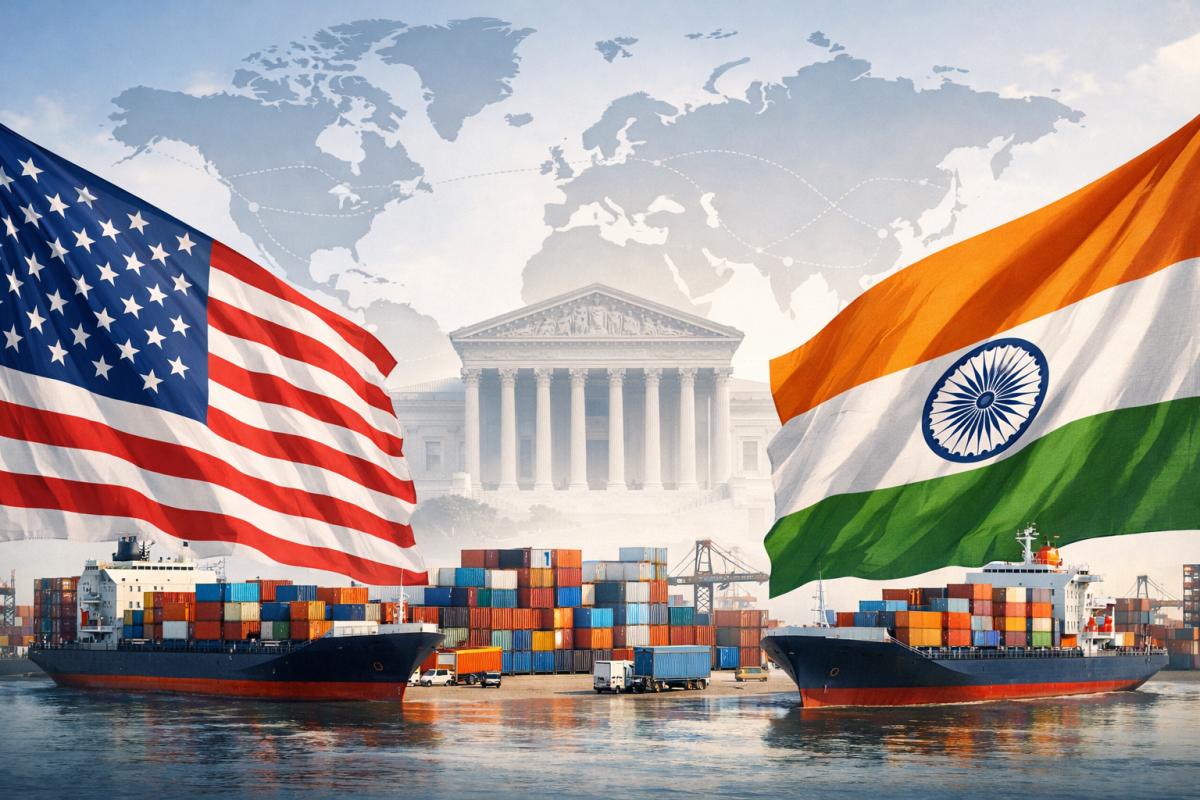

The economic and geopolitical relationship between the United States and India has evolved into one of the most consequential bilateral partnerships of the 21st century. Built on shared democratic values, expanding trade volumes, and converging strategic interests—particularly in the Indo-Pacific—the relationship has deepened significantly over the past two decades. Yet, despite strong alignment in technology, defense, and energy cooperation, trade tensions remain persistent.
Recent legal developments in the United States, including a Supreme Court ruling restricting certain executive-imposed tariffs, have introduced a new dimension into this already complex relationship. The ruling has led to the removal or suspension of some import duties affecting Indian exports and temporarily halted ongoing trade negotiations. At the same time, India’s domestic economic strategy—focused on industrial self-reliance, rare earth supply chains, and advanced manufacturing—signals that the country is positioning itself not merely as a trading partner but as a global economic competitor and strategic equal.
Trade disputes may slow negotiations, but deep economic integration ensures the partnership continues to evolve.
The Foundation of US–India Economic Integration
Trade between the United States and India has grown dramatically since the early 2000s. What was once a relatively modest economic exchange has expanded into a multifaceted relationship encompassing goods, services, technology, defense, and energy.
Today, the United States is one of India’s largest trading partners, and India is among the fastest-growing major export markets for American companies. Bilateral trade has crossed well over $190 billion annually when goods and services are combined, and both governments have publicly committed to doubling that figure by 2030.
Major Indian Exports to the United States
- Pharmaceuticals and generic medicines
- Information technology services
- Textiles and apparel
- Engineering goods and machinery
- Automotive components
- Chemicals and petroleum products
Major US Exports to India
- Aircraft and aviation equipment
- Crude oil and liquefied natural gas
- Defense equipment
- Semiconductors and electronics
- Agricultural products
Trade Volume Overview
| Category | Exports from India | Exports from US |
|---|---|---|
| Technology | IT services, software | Semiconductors, hardware |
| Energy | Refined petroleum | Crude oil, LNG |
| Manufacturing | Engineering goods | Aircraft components |
| Healthcare | Generic medicines | Medical devices |
The Tariff Dispute: Origins and Escalation
Trade tensions intensified when tariffs were imposed by executive authority in the United States. These tariffs were designed to protect domestic industries but affected Indian exports significantly.
India responded with retaliatory tariffs on American products, escalating the dispute and complicating trade negotiations.
Key Areas of Disagreement
- Agricultural Subsidies – The US criticized India’s farmer support programs.
- Market Access Restrictions – US firms raised concerns over regulatory barriers.
- Digital Trade Regulations – Data localization and taxation policies created friction.
- Industrial Tariffs – Steel, aluminum, and manufacturing goods were heavily affected.
The US Supreme Court Tariff Ruling: A Turning Point
The Supreme Court ruling determined that certain tariffs imposed under executive authority exceeded legal limits or lacked sufficient statutory justification.
Immediate Effects
- Removal or suspension of tariffs affecting Indian exports
- Temporary pause in ongoing trade negotiations
- Greater legal scrutiny of future tariff actions
- Improved predictability for exporters
For Indian exporters, this development provides relief after years of uncertainty and reduced competitiveness caused by trade barriers.
Impact on Key Indian Industries
Manufacturing and Engineering
Indian manufacturing firms exporting machinery and engineering products will benefit from improved price competitiveness and increased demand from US buyers.
Steel and Metal Industry
Metal exporters, previously affected by tariffs, can regain market access and expand export volumes.
Pharmaceutical Sector
India’s pharmaceutical industry plays a crucial role in supplying affordable generic medicines to the US, supporting healthcare affordability.
Textile and Apparel Industry
Reduced tariffs strengthen India’s competitiveness against other textile-exporting nations.
India’s Domestic Industrial Strategy
India is pursuing industrial growth and technological independence through strategic investments.
Priority Sectors
- Rare earth mineral processing
- Renewable energy production
- Defense manufacturing
- Semiconductor fabrication
- Electronics manufacturing
These initiatives aim to reduce dependence on imports while expanding export capacity.
Energy Cooperation
Energy has become a central pillar of US–India economic relations.
- The US supplies crude oil and LNG to India
- India invests in renewable energy infrastructure
- Both countries collaborate on clean energy technologies
Technology and Innovation Partnership
Technology cooperation is one of the fastest-growing areas of collaboration.
- Artificial intelligence research partnerships
- Cloud computing and digital infrastructure expansion
- Semiconductor manufacturing investment
- Cybersecurity cooperation
American technology firms employ millions in India, while Indian technology firms support thousands of jobs in the United States.
Geopolitical and Strategic Factors
Trade relations are closely tied to geopolitical considerations. Both nations share strategic interests in maintaining stability in the Indo-Pacific region.
Defense cooperation has expanded through joint exercises, technology transfers, and manufacturing partnerships.
Private Sector Investment and Business Leadership
Private companies play a major role in strengthening economic ties.
- American firms investing in Indian manufacturing
- Indian companies expanding operations in the US
- Technology companies building joint research facilities
- Energy companies developing infrastructure projects
Private sector investment remains the strongest and most consistent driver of US–India economic integration.
Supply Chain Diversification
Global companies are diversifying manufacturing locations to reduce risk. India is emerging as a major alternative manufacturing destination.
This shift benefits both countries by strengthening supply chain resilience and reducing dependency on single-country production hubs.
Challenges That Remain
- Regulatory complexity and compliance barriers
- Agricultural trade disputes
- Digital trade and data localization issues
- Policy uncertainty and legal challenges
Future Growth Opportunities
| Sector | Opportunity | Impact |
|---|---|---|
| Semiconductors | Joint manufacturing | Supply chain resilience |
| Renewable Energy | Solar and hydrogen projects | Energy security |
| Defense | Co-production agreements | Strategic alignment |
| Technology | AI and digital services | Innovation growth |
Roadmap to Doubling Trade by 2030
Both governments aim to double bilateral trade by 2030. Achieving this goal will require coordinated policy reforms and investment expansion.
- Reducing tariff barriers
- Encouraging private sector investment
- Improving regulatory transparency
- Strengthening supply chains
- Expanding technology partnerships
Conclusion
The US Supreme Court tariff ruling marks a significant turning point in US–India trade relations. By limiting certain tariff authorities and removing barriers affecting Indian exports, the ruling provides immediate economic relief and creates new opportunities for exporters. However, underlying structural challenges—including regulatory differences, agricultural disputes, and geopolitical considerations—continue to shape the relationship.
Despite these challenges, the long-term outlook remains highly positive. Strong private sector investment, expanding cooperation in technology and energy, and shared strategic interests ensure that both nations remain deeply interconnected. India’s push toward advanced manufacturing and technological independence aligns with American goals of resilient supply chains and diversified production.
If both countries continue to resolve disputes while expanding cooperation, the US–India economic partnership will not only grow stronger but also play a defining role in shaping the global economic and strategic order for decades to come.

Community Insights