
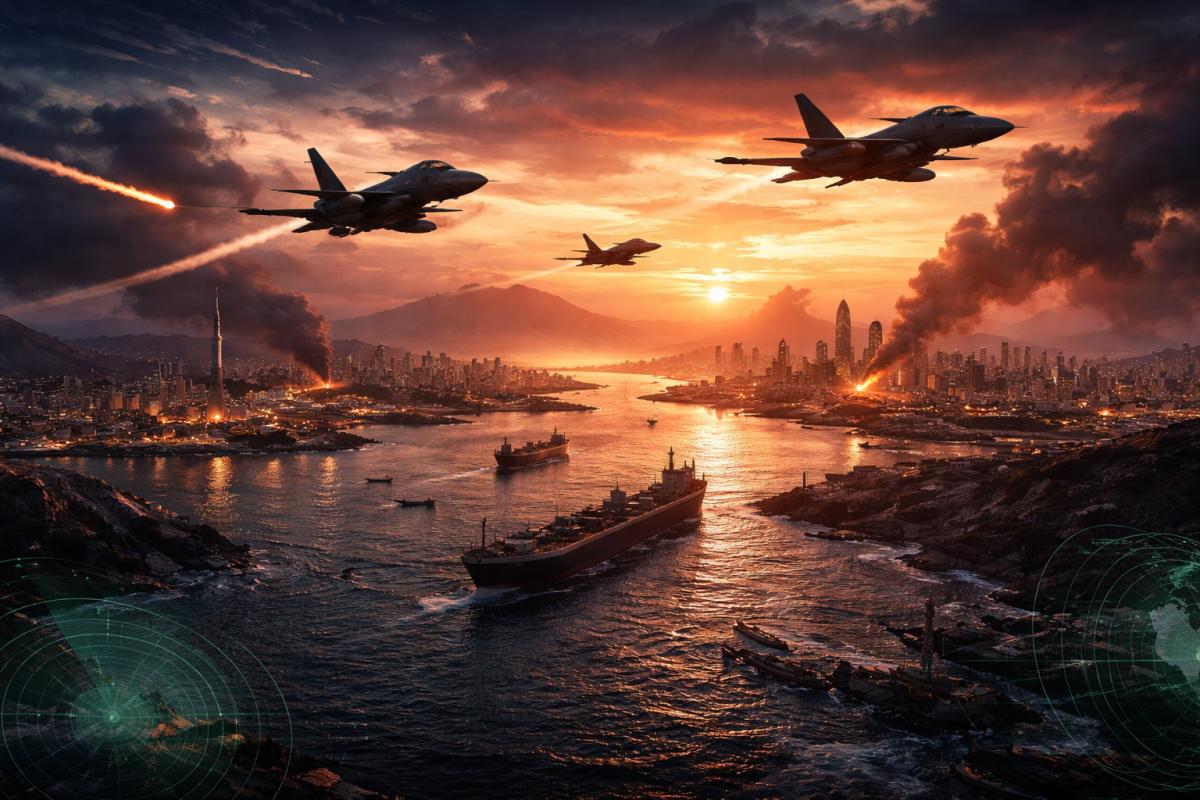

The sudden escalation of military conflict in the Middle East has sent shockwaves across the globe, transforming the region into an active warzone overnight. What started as localized geopolitical friction has erupted into a full-scale military confrontation involving multiple global and regional powers. For global citizens, the reality of war became immediate—through airspace closures, disrupted trade routes, and widespread fear across strategic cities and infrastructure hubs.
This deep dive analyzes the current military situation, historical and political roots, global consequences, and possible future outcomes of the Iran-Israel confrontation. Understanding this conflict requires examining not only battlefield events but also decades of diplomatic breakdown, nuclear tensions, economic instability, and political survival strategies.
The Current Scenario: A Region Under Siege
The present crisis represents one of the most dangerous escalations in modern Middle Eastern history. Military operations expanded rapidly, involving airstrikes, missile retaliation, cyber warfare, and strategic infrastructure targeting.
Major Military Operations
| Operation Name | Primary Actor | Objective | Impact |
|---|---|---|---|
| Operation Rising Lion | Israel | Target nuclear, military, and command infrastructure | Large-scale destruction of strategic facilities and leadership losses |
| Operation Epic Fury | United States and Allies | Destroy underground nuclear and missile infrastructure | Deployment of bunker-buster bombs and long-range missile strikes |
| Operation True Promise 4 | Iran | Retaliation against foreign military bases and allied infrastructure | Missile and drone attacks across regional military installations |
Key Military Developments
- Large-scale aerial strikes targeted military bases, missile storage facilities, and nuclear infrastructure.
- Strategic underground enrichment facilities were primary targets due to their hardened defensive construction.
- Long-range bombers and submarine-launched cruise missiles demonstrated global strike capability.
- Missile defense systems across the region intercepted large numbers of incoming projectiles.
- Civilian infrastructure disruptions included airport closures, flight cancellations, and emergency evacuations.
Humanitarian Consequences
The civilian population has faced severe consequences, including displacement, infrastructure destruction, and loss of life. Schools, residential areas, and transportation hubs have been affected, highlighting the devastating human cost of modern warfare.
War in the modern era is no longer confined to battlefields; it disrupts entire societies, economies, and generations.
The Historical Roots: How the Conflict Developed
The Iran-Israel confrontation did not begin suddenly. It is the result of decades of ideological hostility, nuclear tensions, and geopolitical rivalry.
The Nuclear Issue
Iran's nuclear program has been the central point of international concern. Uranium enrichment levels determine whether nuclear material can be used for civilian energy or military weapons.
| Enrichment Level | Purpose | Risk Level |
|---|---|---|
| 3–5% | Civilian nuclear energy | Low |
| 20% | Research reactors | Medium |
| 60% | Near weapons-grade capability | High |
| 90% | Nuclear weapons-grade | Critical |
The 2015 Nuclear Agreement
A major diplomatic breakthrough occurred in 2015 when Iran agreed to limit enrichment and allow inspections in exchange for sanctions relief. This agreement reduced immediate nuclear risks and stabilized regional tensions.
- Strict limits on uranium enrichment levels
- International inspections and monitoring
- Sanctions relief to support economic recovery
- International cooperation and oversight
However, the withdrawal of major stakeholders from the agreement led to renewed sanctions and the gradual expansion of Iran’s nuclear activities.
Regional Rivalry and Strategic Competition
Beyond nuclear concerns, the conflict reflects broader strategic competition for regional influence. Both sides perceive the other as an existential threat.
- Ideological opposition and political hostility
- Military alliances and proxy conflicts
- Competition for regional leadership
- Security concerns related to missile and defense capabilities
Political and Economic Pressures
Domestic Political Factors
Internal political challenges often influence foreign policy decisions. Leaders facing domestic instability, protests, or declining public support may adopt aggressive external policies to consolidate authority.
- Economic crises and inflation
- Public protests and political dissent
- Leadership legitimacy challenges
- Military and national security narratives
Economic Collapse and Sanctions
Sanctions have significantly weakened Iran’s economy, causing currency depreciation, inflation, and reduced purchasing power. Economic instability has increased social unrest and political pressure.
| Economic Factor | Impact |
|---|---|
| Currency devaluation | Reduced purchasing power |
| Sanctions | Limited trade and investment |
| Inflation | Higher food and energy costs |
| Unemployment | Social and political instability |
Global Impact: Economic and Strategic Consequences
Energy and Oil Supply Risk
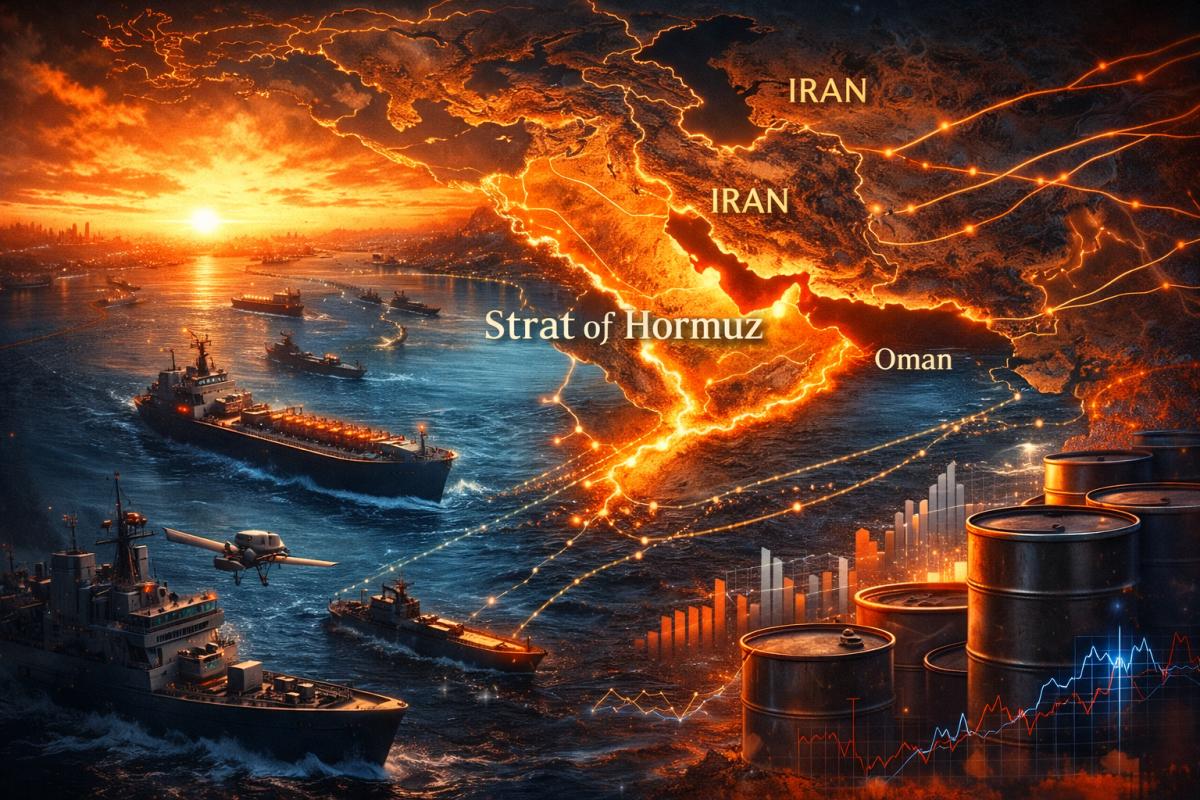
The Middle East controls a large portion of global oil supply. Disruption to shipping routes creates immediate global economic consequences.
- Oil price volatility
- Increased transportation costs
- Inflation in importing countries
- Global market uncertainty
The Strategic Importance of Maritime Routes
The Strait of Hormuz is one of the most critical maritime choke points in the world.
| Route | Importance | Risk if Disrupted |
|---|---|---|
| Strait of Hormuz | Major global oil transit route | Global fuel shortages |
| Red Sea Routes | International shipping corridor | Trade disruption |
| Persian Gulf Airspace | International aviation corridor | Flight cancellations |
Impact on Global Workforce and Diaspora
Millions of expatriate workers live in Middle Eastern countries. Any large-scale conflict creates risks including evacuation challenges, employment disruptions, and safety concerns.
- Flight suspensions and evacuation challenges
- Economic impact on families dependent on remittances
- Disruption to education and employment
- Safety concerns in urban areas
Military Effectiveness and Strategic Outcomes
Infrastructure Damage vs Long-Term Capability
Military strikes can destroy facilities but often fail to eliminate technical knowledge or rebuild capability. Underground infrastructure and dispersed assets increase resilience.
- Above-ground facilities vulnerable to airstrikes
- Underground facilities more difficult to destroy
- Technical expertise cannot be eliminated by bombing
- Programs can be rebuilt over time
The Deterrence Factor
Military conflicts often increase the perceived importance of deterrence. Nations may accelerate weapons development if they believe it ensures survival.
Deterrence is driven not only by weapons, but by the perception of vulnerability.
Future Risks and Possible Scenarios
Scenario 1: Escalation into Wider Regional War
- Expansion into neighboring countries
- Direct involvement of additional global powers
- Severe disruption of global energy supply
Scenario 2: Nuclear Proliferation Risk
- Acceleration of nuclear weapons development
- Regional arms race
- Increased global nuclear risk
Scenario 3: Internal Political Collapse
- Government instability
- Civil unrest and internal conflict
- Humanitarian crisis
Scenario 4: Diplomatic Resolution
- Renewed nuclear agreements
- Sanctions relief in exchange for compliance
- International monitoring and inspections
- Gradual stabilization of the region
The Role of Diplomacy
Diplomacy remains the most effective method of preventing escalation. Negotiated agreements provide verification, accountability, and reduced military risk.
- International nuclear monitoring
- Economic incentives for compliance
- Security guarantees
- Regional cooperation frameworks
Diplomatic engagement requires political will, trust-building measures, and international cooperation.
Conclusion
The Iran-Israel conflict represents one of the most dangerous geopolitical confrontations of the modern era, shaped by decades of mistrust, nuclear tensions, political rivalry, and economic pressure. Military strikes have demonstrated technological power but have not eliminated the underlying causes of hostility. Instead, they have increased instability, economic uncertainty, and the risk of future escalation.
The global consequences extend far beyond the Middle East, affecting energy markets, international trade, and millions of civilians. While military action can achieve short-term tactical objectives, long-term stability can only be achieved through diplomacy, verification agreements, and sustained international cooperation.
The future of the region depends on whether global and regional leaders choose escalation or negotiation. Without a renewed commitment to diplomacy and conflict resolution, the world risks entering a prolonged period of instability, economic disruption, and increased nuclear danger that could shape global security for decades.

Community Insights