
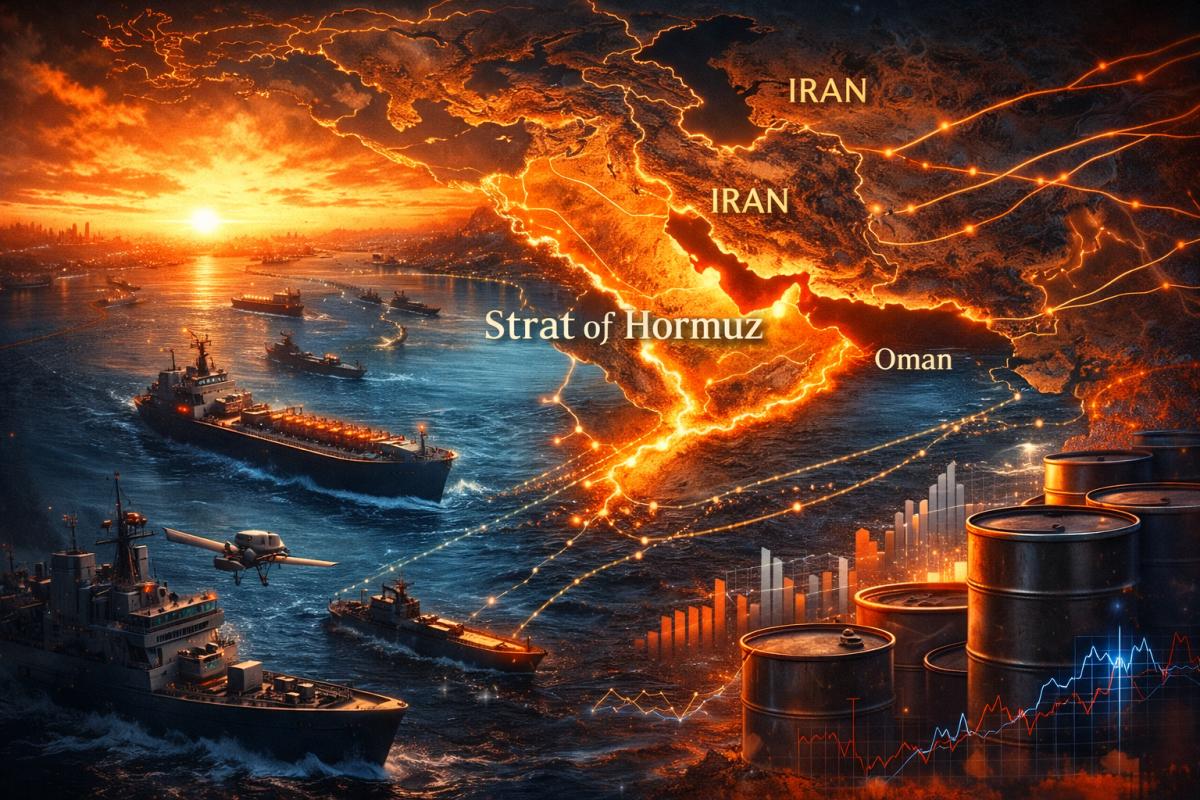

The Strait of Hormuz is one of the most strategically important maritime passages in the world. Located between Iran and Oman, this narrow waterway connects the Persian Gulf to the Gulf of Oman and the Arabian Sea. Despite its relatively small geographic size, the strait plays an enormous role in global energy transportation. A large percentage of the world's oil exports travel through this critical chokepoint every day.
Whenever geopolitical tensions rise in the Middle East, the Strait of Hormuz becomes a central topic of global concern. Political disputes, military threats, and economic sanctions involving Iran often raise fears that the passage could be disrupted. If such a disruption occurs, the consequences would extend far beyond the region, affecting energy prices, shipping routes, and economic stability worldwide.
For countries heavily dependent on imported oil, especially developing economies like India, any disruption in the Strait of Hormuz could create serious economic challenges. Rising fuel prices, inflation, and supply shortages could quickly ripple through industries and households alike.
Understanding the Strait of Hormuz
The Strait of Hormuz is a narrow channel approximately 33 kilometers wide at its narrowest point. Despite this limited width, it serves as a primary gateway for oil and natural gas shipments from some of the world's largest energy-producing countries.
Countries surrounding the Persian Gulf, including Saudi Arabia, Iraq, Kuwait, the United Arab Emirates, and Qatar, rely heavily on this route to transport energy resources to global markets. Oil tankers carrying millions of barrels of crude oil pass through the strait every single day.
Key Facts About the Strait of Hormuz
- One of the world's most important oil shipping routes
- Handles a large share of global petroleum exports
- Connects the Persian Gulf to international sea routes
- Strategically located between Iran and Oman
Because so much global energy trade depends on this passage, even minor disruptions can create panic in international markets.
Why the Strait of Hormuz Is Strategically Important
Energy security is one of the most critical concerns for modern economies. The Strait of Hormuz sits at the center of global oil transportation, making it one of the most sensitive geopolitical locations in the world.
Every day, oil tankers transporting millions of barrels of crude oil pass through this narrow waterway. The smooth functioning of this route ensures stable oil supplies to countries across Asia, Europe, and North America.
If the strait were to be blocked or disrupted, the global energy supply chain would immediately experience significant pressure.
| Factor | Importance |
|---|---|
| Global Oil Transport | Major share of global crude exports passes through the strait |
| Energy Security | Essential route for oil-importing countries |
| Strategic Military Location | Highly monitored by regional and international forces |
| Global Economic Stability | Disruptions can trigger price shocks worldwide |
The Role of Iran in the Strait of Hormuz
Iran occupies a dominant geographic position along the northern coastline of the Strait of Hormuz. This strategic location allows the country to exert influence over maritime activities in the region.
Over the years, Iran has repeatedly warned that it could restrict access to the strait if its economic interests are threatened. These warnings usually arise during periods of heightened tensions with Western countries, especially when economic sanctions are imposed on Iran.
Iran views the strait not only as a commercial shipping route but also as a strategic tool in international diplomacy.
Control over the Strait of Hormuz has long been considered one of the most powerful geopolitical leverage points in the global energy system.
Geopolitical Tensions in the Region
The Middle East has historically been a region marked by political instability, rivalries, and conflicts. These tensions often intersect with global energy politics, making the Strait of Hormuz a focal point during international disputes.
Conflicts involving Iran, the United States, and regional allies have frequently raised concerns about the security of shipping routes in the Persian Gulf.
Major Sources of Tension
- Economic sanctions imposed on Iran
- Military presence of global powers in the Gulf
- Regional rivalries between Middle Eastern countries
- Concerns over nuclear development programs
Whenever tensions escalate, global markets closely monitor developments in the region due to the potential impact on oil supplies.
How a Strait of Hormuz Crisis Could Impact Global Oil Prices
Energy markets are extremely sensitive to geopolitical developments. Even the possibility of disruption in the Strait of Hormuz can lead to sharp increases in oil prices.
Oil traders react quickly to geopolitical uncertainty. If shipping routes appear threatened, market participants anticipate supply shortages and begin bidding up prices.
Higher oil prices can quickly spread throughout the global economy, affecting transportation costs, manufacturing expenses, and consumer prices.
Possible Economic Effects
- Rapid increase in global oil prices
- Higher transportation and shipping costs
- Rising inflation across multiple sectors
- Economic slowdown in oil-importing countries
Because energy is a fundamental component of modern economies, any disruption in oil supply chains can have widespread consequences.
India’s Dependence on Middle Eastern Oil
India is one of the world's largest energy consumers. As the country's economy continues to grow, its demand for oil and natural gas continues to increase.
A significant portion of India's oil imports comes from countries in the Middle East. These shipments typically travel through the Strait of Hormuz before reaching Indian ports.
This dependency means that any disruption in the strait could significantly affect India's energy security.
- India imports a large share of its crude oil
- Middle Eastern countries are key suppliers
- Most shipments travel through the Strait of Hormuz
Because of this reliance, India closely monitors geopolitical developments in the Persian Gulf region.
Potential Impact on India’s Economy
If tensions in the Strait of Hormuz lead to supply disruptions or price spikes, India's economy could face multiple challenges.
Fuel prices in India are closely tied to international oil markets. When global crude prices rise, domestic fuel costs often increase as well.
Higher fuel costs can affect everything from transportation and logistics to food prices and manufacturing expenses.
Possible Economic Consequences for India
- Increase in petrol and diesel prices
- Higher inflation and cost of living
- Pressure on government subsidies
- Rising transportation and production costs
These factors could collectively influence economic growth and consumer spending.
Military Presence in the Strait of Hormuz
Because of its strategic importance, the Strait of Hormuz is closely monitored by military forces from several countries.
Naval patrols, surveillance systems, and international coalitions often operate in the region to ensure the safety of commercial shipping.
The presence of military forces aims to prevent piracy, protect oil tankers, and maintain stability in the region.
Key Military Objectives
- Protect international shipping lanes
- Ensure uninterrupted energy transport
- Monitor regional security developments
- Prevent escalation of conflicts
These security measures help reduce the likelihood of disruptions but cannot entirely eliminate geopolitical risks.
Alternative Oil Routes and Strategies
Because of the risks associated with the Strait of Hormuz, some countries and companies have explored alternative transportation routes for oil exports.
Pipelines, alternative ports, and diversified supply chains are often discussed as potential strategies to reduce dependence on the strait.
| Strategy | Description |
|---|---|
| Pipeline Transport | Oil transported through land pipelines bypassing the strait |
| Diversified Suppliers | Importing oil from multiple regions |
| Strategic Reserves | Maintaining emergency oil stockpiles |
However, these alternatives cannot fully replace the massive volume of oil that currently flows through the Strait of Hormuz.
Global Economic Consequences of a Major Disruption
A severe disruption in the Strait of Hormuz would likely trigger a chain reaction across the global economy.
Energy markets would respond immediately, with oil prices potentially reaching extreme levels. This would affect industries ranging from aviation and shipping to agriculture and manufacturing.
Countries with strong domestic energy production might weather the crisis better, while import-dependent nations could face significant economic pressure.
Industries Most Likely to Be Affected
- Transportation and aviation
- Manufacturing and heavy industry
- Agriculture and food distribution
- Shipping and logistics
The interconnected nature of modern economies means that disruptions in energy supply can quickly affect global trade and economic growth.
Long-Term Energy Security Strategies
In response to recurring geopolitical risks, many countries have begun developing long-term strategies to reduce dependence on vulnerable energy routes.
Renewable energy development, strategic oil reserves, and diversification of energy suppliers are becoming increasingly important components of national energy policies.
- Investment in renewable energy sources
- Expansion of strategic petroleum reserves
- Diversification of oil import partners
- Improvement of energy efficiency technologies
These strategies aim to reduce the impact of geopolitical disruptions on national economies.
Conclusion
The Strait of Hormuz remains one of the most critical chokepoints in the global energy system. Its strategic location between Iran and Oman makes it a vital gateway for oil shipments traveling from the Persian Gulf to international markets. Because a large portion of the world's petroleum exports passes through this narrow passage, any disruption could have far-reaching economic consequences.
Geopolitical tensions involving Iran, regional conflicts, and international sanctions have repeatedly raised concerns about the stability of shipping routes in the region. For energy-importing countries like India, the stakes are particularly high, as disruptions could lead to rising fuel prices, inflation, and economic pressure.
As global energy demand continues to grow, ensuring the security of critical trade routes like the Strait of Hormuz will remain a top priority for governments and international organizations. The situation highlights the importance of diversified energy sources, strategic reserves, and international cooperation to maintain stability in the global energy market.


Community Insights