
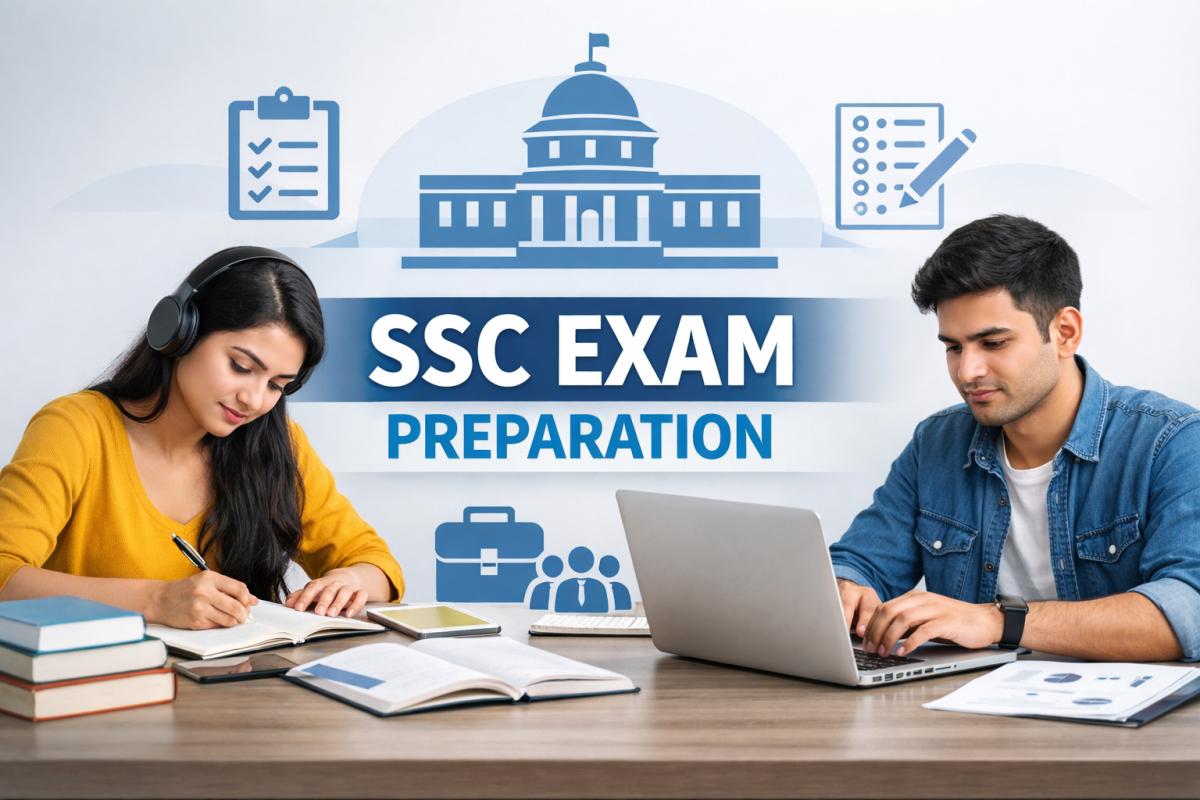

The Staff Selection Commission (SSC) is one of the most important recruitment bodies in India responsible for conducting competitive examinations for various government departments and ministries. Every year, millions of aspirants apply for SSC examinations to secure stable and prestigious government jobs. SSC exams provide opportunities for candidates with qualifications ranging from 10th pass to graduates and engineering graduates.
The SSC releases a tentative examination calendar every year listing the upcoming recruitment examinations, application dates, and exam schedules. According to the official SSC examination calendar for upcoming years, several major recruitment exams such as CGL, CHSL, MTS, JE, Stenographer, Selection Post, and GD Constable are conducted annually. :contentReference[oaicite:0]{index=0}
This comprehensive guide explains:
- Which exams are conducted by SSC
- Eligibility criteria for each exam
- Application procedure
- Exam pattern and stages
- Selection process
- Important SSC exam calendar information
What is the Staff Selection Commission (SSC)?
The Staff Selection Commission (SSC) is a central government organization under the Department of Personnel and Training (DoPT). It was established to recruit staff for various ministries, departments, and subordinate offices of the Government of India.
SSC conducts multiple national-level competitive examinations each year to recruit candidates for Group B and Group C posts. These exams are highly competitive because they provide job security, attractive salary, pension benefits, and career growth.
Main Objectives of SSC
- Recruit candidates for central government departments
- Ensure transparent and merit-based recruitment
- Conduct nationwide competitive examinations
- Fill vacancies across ministries and organizations
List of Major Exams Conducted by SSC
According to the official SSC tentative examination calendars, several major recruitment exams are conducted annually. :contentReference[oaicite:1]{index=1}
| Exam Name | Qualification Required | Level |
|---|---|---|
| SSC CGL (Combined Graduate Level) | Graduate | Graduate Level |
| SSC CHSL (Combined Higher Secondary Level) | 12th Pass | Higher Secondary |
| SSC MTS (Multi Tasking Staff) | 10th Pass | Matric Level |
| SSC JE (Junior Engineer) | Engineering Degree/Diploma | Technical |
| SSC Stenographer | 12th Pass | Skill Based |
| SSC GD Constable | 10th Pass | Defence/Police |
| SSC Selection Post | 10th/12th/Graduate | Various |
| SSC CPO (Sub-Inspector) | Graduate | Police Recruitment |
| SSC JHT (Junior Hindi Translator) | Post Graduate | Language Specialist |
SSC Exam Calendar Overview
The SSC releases an official tentative calendar every year that contains notification dates, application deadlines, and exam schedules. For example, several key examinations are scheduled throughout the year including:
- Selection Post Examination
- Stenographer Grade C & D Examination
- Combined Graduate Level Examination
- Sub-Inspector in Delhi Police and CAPFs
- Combined Higher Secondary Examination
- Multi Tasking Staff Examination
- Junior Engineer Examination
- Constable (GD) Examination
The SSC calendar indicates that most examinations are conducted through Computer Based Examination (CBE) across different examination centers in India. :contentReference[oaicite:2]{index=2}
Detailed Explanation of Major SSC Exams
1. SSC Combined Graduate Level (CGL)
The SSC CGL exam is one of the most popular government exams in India. It recruits graduates for prestigious posts in central government ministries and departments.
Posts Under SSC CGL
- Assistant Section Officer
- Income Tax Inspector
- Central Excise Inspector
- Assistant Enforcement Officer
- Sub Inspector (CBI)
- Auditor
- Accountant
- Tax Assistant
Eligibility
- Bachelor's degree from a recognized university
- Age: generally 18–32 years depending on the post
Exam Pattern
- Tier 1 – Computer Based Test
- Tier 2 – Advanced CBT
- Tier 3 – Descriptive Test
- Tier 4 – Skill Test / Document Verification
2. SSC Combined Higher Secondary Level (CHSL)
The SSC CHSL exam recruits candidates for clerical and data entry positions in central government offices.
Posts Under CHSL
- Lower Division Clerk (LDC)
- Junior Secretariat Assistant (JSA)
- Data Entry Operator (DEO)
Eligibility
- Must have passed 12th standard
- Age limit: 18–27 years
Exam Stages
- Tier 1 – Objective CBT
- Tier 2 – Descriptive paper
- Tier 3 – Skill/Typing Test
3. SSC Multi Tasking Staff (MTS)
SSC MTS is a recruitment exam for non-technical Group C posts in government departments.
Eligibility
- Minimum qualification: 10th pass
- Age: 18–25 or 18–27 depending on the post
Job Responsibilities
- Office maintenance
- File movement
- Clerical assistance
- Routine administrative work
4. SSC Junior Engineer (JE)
The SSC JE exam recruits engineering graduates or diploma holders for technical posts in government departments.
Engineering Branches
- Civil Engineering
- Mechanical Engineering
- Electrical Engineering
Exam Pattern
- Paper 1 – Objective CBT
- Paper 2 – Descriptive technical exam
The SSC calendar indicates that the Junior Engineer examination is conducted annually with computer-based testing followed by technical evaluation. :contentReference[oaicite:3]{index=3}
5. SSC Stenographer Exam
This exam recruits candidates for stenographer posts in government offices.
Posts
- Stenographer Grade C
- Stenographer Grade D
Eligibility
- 12th pass
- Typing and stenography skills required
6. SSC GD Constable Exam
This exam recruits candidates for security forces.
Forces Included
- BSF
- CISF
- CRPF
- ITBP
- SSB
- Assam Rifles
- NIA
Selection Stages
- Computer Based Test
- Physical Efficiency Test
- Medical Examination
7. SSC CPO (Sub-Inspector) Exam
This exam recruits Sub-Inspectors in Delhi Police and Central Armed Police Forces.
Eligibility
- Graduation from recognized university
- Physical standards required
Selection Process
- Paper 1 – Computer Based Test
- Physical Efficiency Test
- Paper 2 – Written exam
- Medical examination
SSC Selection Post Examination
The Selection Post examination recruits candidates for various posts in government departments depending on educational qualification levels:
- Matriculation level posts
- Higher secondary posts
- Graduate level posts
This exam is conducted in multiple phases every year, such as Phase XII and Phase XIII. :contentReference[oaicite:4]{index=4}
Eligibility Criteria for SSC Exams
Eligibility requirements vary depending on the exam. However, the major criteria include:
Educational Qualification
| Exam | Qualification |
|---|---|
| MTS | 10th Pass |
| CHSL | 12th Pass |
| CGL | Graduate |
| JE | Engineering Degree/Diploma |
| JHT | Post Graduate |
Age Limit
- Minimum age: 18 years
- Maximum age: 27 to 32 years depending on post
- Age relaxation for reserved categories
SSC Exam Application Procedure
The application process for SSC exams is conducted online through the official SSC portal.
Step-by-Step Process
- Visit the official SSC website
- Create a registration account
- Fill personal details and educational qualifications
- Upload photograph and signature
- Select exam center
- Pay application fee
- Submit the form
Application Fee
- General/OBC candidates: ₹100
- Women candidates: Free
- SC/ST candidates: Free
SSC Exam Pattern (Common Structure)
Most SSC exams follow a similar exam structure consisting of multiple tiers.
Tier 1 (Preliminary Exam)
| Subject | Marks |
|---|---|
| General Intelligence | 50 |
| General Awareness | 50 |
| Quantitative Aptitude | 50 |
| English | 50 |
Tier 2 (Advanced Exam)
This stage includes advanced mathematics, reasoning, and English depending on the specific exam.
Skill Test
- Typing test
- Data entry speed test
- Stenography test
Advantages of SSC Jobs
Government jobs through SSC are considered among the most secure and prestigious employment opportunities in India.
- Job security
- Stable salary
- Pension benefits
- Medical facilities
- Work-life balance
- Career growth opportunities
Preparation Strategy for SSC Exams
1. Understand the syllabus
Candidates must carefully analyze the syllabus and exam pattern before starting preparation.
2. Practice previous year papers
Previous year question papers help understand exam trends and difficulty level.
3. Improve speed and accuracy
Since SSC exams are time-based, candidates must practice mock tests regularly.
4. Focus on core subjects
- Quantitative aptitude
- Reasoning
- English language
- General knowledge
5. Revision
Regular revision is essential for retaining concepts and improving exam performance.
Future of SSC Examinations
SSC continues to modernize the recruitment process with computer-based examinations, digital evaluation, and improved transparency. With increasing government vacancies and retirement of older employees, SSC exams will continue to provide employment opportunities for millions of candidates across India.
Conclusion
The Staff Selection Commission (SSC) plays a crucial role in recruiting candidates for various central government jobs. Through exams such as CGL, CHSL, MTS, JE, GD Constable, Stenographer, and Selection Post, SSC provides employment opportunities for candidates with different educational qualifications ranging from 10th pass to postgraduate level.
The SSC examination system follows a structured recruitment process including computer-based tests, skill tests, and document verification to ensure transparent and merit-based selection. The official SSC examination calendar provides candidates with important information about upcoming exams, notification dates, and examination schedules so that aspirants can plan their preparation effectively.
For candidates aspiring to secure a stable government career, SSC exams remain one of the most accessible and rewarding pathways. With proper preparation, consistent practice, and a clear understanding of the eligibility criteria and exam pattern, aspirants can successfully crack SSC examinations and build a promising future in the Indian government sector.

Community Insights