


The persistent shadow of gender-based violence has once again cast a dark pall over the nation, serving as a chilling reminder of the deep-rooted vulnerabilities faced by young girls in rural India. A horrific incident recently unfolded in the Saran district of Bihar, leaving a family shattered, a community in uproar, and a country demanding immediate, uncompromising justice. The tragic gang rape and murder of a 16-year-old Class X student in March 2026 is not merely a localized crime; it is a profound societal failure that urges us to confront uncomfortable realities about safety, law enforcement, and systemic reform.
This comprehensive analysis seeks to detail the events as they transpired, examine the socio-legal frameworks in place to handle such heinous crimes, and explore the broader implications for women's safety in India. Through a careful review of the facts, legal procedures, and community responses, we must ask ourselves how many more tragedies must occur before the systemic gaps are permanently closed.
The Incident: What Transpired in Saran?
The details emerging from the Saran district are both harrowing and deeply distressing. According to official police statements and accounts from the victim's traumatized family, the sequence of events paints a picture of premeditated cruelty.
The Fateful Evening
The victim, a 16-year-old schoolgirl studying in Class X, lived in a rural village in the Saran district with her mother and sister, while her father worked outside the state to provide for the family. Late on a Wednesday evening, the young girl walked towards her family's older, unoccupied house within the village. It was during this short, seemingly mundane walk that she was ambushed.
Reports indicate that five youths—all residents of the same village and known to the family—followed and cornered her. The assailants forcibly dragged the screaming teenager into a nearby bathroom. Despite her desperate cries for help, the perpetrators committed the heinous act of gang rape.
The Discovery and the Cruel Aftermath
The mother of the victim, alerted by her daughter's frantic screams, rushed to the scene alongside other family members. However, the perpetrators' cruelty did not end with the assault. Upon seeing the family approaching, the accused physically grabbed the girl by her legs, dragged her away from the immediate scene, and callously threw her into a nearby well before fleeing into the surrounding agricultural fields.
"All the youths together dragged my daughter... Meanwhile, my daughter kept screaming for help. Hearing her screams, we reached the spot. Seeing us, they grabbed her by the legs, threw her into a well and fled." — Statement from the victim's grieving mother
The family's desperate attempts to save her were in vain. The trauma of the assault, combined with being thrown into the well, led to the young girl's tragic death. It was later revealed by the mother that one of the accused had previously attempted to assault the teenager—a glaring red flag that underscores the frequent escalation of unchecked predatory behavior in tight-knit communities.
Law Enforcement Response and Community Outrage
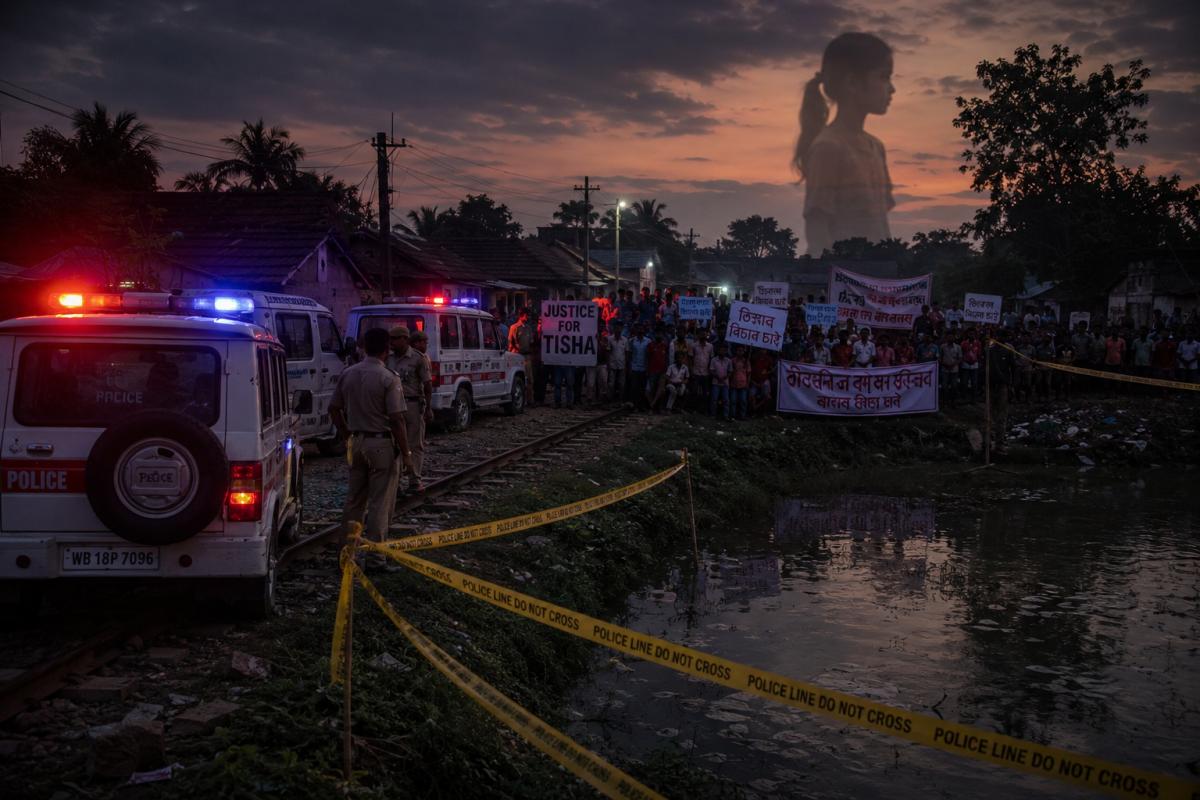
The immediate aftermath of the crime was characterized by immense grief and explosive anger. As news of the brutal murder spread through the village, irate residents gathered at the crime scene, creating a massive uproar. The collective trauma of the community manifested in demands for immediate arrests and mob justice, reflecting a deep-seated frustration with the often-sluggish pace of rural law enforcement.
Police Intervention
The local police arrived promptly to prevent the situation from deteriorating into a severe law-and-order crisis. Their initial actions included:
- Pacifying the Mob: Officers had to reassure the angry villagers that swift action would be taken, preventing the destruction of potential evidence at the crime scene.
- Initial Detentions: The police took one woman into custody for questioning to understand the sequence of events and the whereabouts of the fleeing suspects.
- Body Recovery and Forensics: The victim's body was recovered from the well and sent to the Chhapra Sadar Hospital for a detailed post-mortem examination to officially determine the cause of death and secure vital biological evidence.
- Arrest of the Accused: Following immediate investigations, the Saran Police successfully apprehended one named accused, identified as Yuvraj Kumar. A massive manhunt was launched to trace the remaining four perpetrators who had absconded into the fields.
The Legal Framework: Navigating Justice for Minors
When a crime of this magnitude occurs involving a minor, the Indian legal system invokes its most stringent frameworks. The intersection of sexual violence, murder, and the victim's age requires prosecutors to build an airtight case utilizing specific statutes designed to protect children and deter heinous crimes.
Key Statutes Invoked
The prosecution of the accused in the Saran case will primarily rely on the provisions of the Protection of Children from Sexual Offences (POCSO) Act, 2012, alongside the newly implemented criminal codes (or the corresponding Indian Penal Code sections, depending on exact jurisdictional filing dates).
| Legal Statute | Relevant Sections | Description and Implications |
|---|---|---|
| POCSO Act, 2012 | Section 6 / Section 4 | Deals with aggravated penetrative sexual assault against a minor. It carries mandatory minimum sentences and can lead to life imprisonment or the death penalty, ensuring no leniency is granted. |
| Bharatiya Nyaya Sanhita (BNS) / IPC | Section 70 (BNS) / Section 376D (IPC) | Pertains specifically to gang rape. The law holds all participating individuals equally liable for the crime, regardless of who committed which specific act during the assault. |
| Bharatiya Nyaya Sanhita (BNS) / IPC | Section 103 (BNS) / Section 302 (IPC) | The charge of murder. Given that the perpetrators threw the victim into a well to silence her and evade capture, this constitutes premeditated murder to destroy evidence. |
| Bharatiya Nyaya Sanhita (BNS) / IPC | Section 238 (BNS) / Section 201 (IPC) | Causing disappearance of evidence of offense, or giving false information to screen the offender. Throwing the body into the well directly triggers this clause. |
The Role of Fast Track Special Courts (FTSCs)
Following the harrowing 2012 Nirbhaya case and subsequent amendments to criminal law in 2018, the Indian government mandated the creation of Fast Track Special Courts (FTSCs) specifically designed to handle Rape and POCSO cases. The objective is to ensure that trials are completed within a stringent, time-bound framework.
For the family of the Saran victim, the transfer of this case to a designated POCSO Fast Track Court is absolutely crucial. These courts are intended to:
- Minimize the trauma faced by the victim's family during lengthy, drawn-out legal proceedings.
- Ensure specialized public prosecutors handle the sensitive forensic and circumstantial evidence.
- Prevent witness tampering, which is a significant risk in rural areas where the accused and victims reside in the same village.
Systemic Failures and Societal Context
While the legal mechanisms exist on paper, the Saran tragedy forces us to examine the glaring systemic and societal failures that allow such crimes to occur in the first place. The fact that the perpetrators were from the same village and had previously harassed the victim highlights a deeply entrenched culture of impunity.
1. The Normalization of Harassment
According to the victim's mother, one of the accused had previously attempted to assault her daughter. Often, in rural settings, early warning signs of predatory behavior—such as stalking, eve-teasing, or minor assaults—are dismissed, settled informally by village elders, or ignored due to the social stigma attached to reporting sexual offenses. This silence emboldens perpetrators, escalating their actions from harassment to brutal violence.
2. Vulnerability in Rural Infrastructure
The geography of the crime is tragically common. The victim was walking toward an old house in the village; the perpetrators dragged her to a bathroom and later threw her into a well. The lack of adequate public lighting, secure sanitation facilities, and general structural safety in rural areas disproportionately impacts women and girls, making everyday tasks potentially life-threatening.
3. The Patriarchal Sense of Entitlement
At the core of gang rape is not merely a desire for sexual gratification, but a violent assertion of power, dominance, and a deeply patriarchal sense of entitlement over women's bodies. The perpetrators operating in a group dynamic often experience a diffusion of responsibility, believing that their collective power will shield them from consequences.
The Psychological Toll on the Community
The impact of the Saran gang rape and murder extends far beyond the immediate family. It sends a psychological shockwave through the entire region.
The Fear Psychosis: Whenever a crime of this brutality occurs, it instills a paralyzing fear in other families. Parents become hesitant to send their daughters to school, allow them to walk freely in the village, or pursue independent lives. The victim was a Class X student, likely preparing for her board exams and a future beyond the village. Her death becomes a cautionary tale that regressively restricts the freedom of countless other girls.
Erosion of Trust: The fact that the attackers were known to the family and lived in the same village destroys the foundational trust that holds rural communities together. The village transforms from a safe haven into a landscape of suspicion and potential danger.
Moving Forward: Urgent Preventative Measures
Outrage is a natural and necessary response to the Saran tragedy, but outrage alone is not a strategy. To prevent the next tragedy, a multi-pronged approach involving state intervention, judicial efficiency, and grassroots societal change is imperative.
- Strict Enforcement of Pre-emptive Laws: Police must take complaints of stalking and initial harassment with utmost seriousness. Zero tolerance for "minor" offenses is the only way to prevent escalation.
- Community Sensitization: Gram Panchayats and local leaders must be trained to support victims rather than silence them to "protect village honor." The stigma must be shifted entirely onto the perpetrators.
- Robust Forensic Capabilities: To secure convictions in Fast Track Courts, the state must ensure that rural hospitals and police stations are equipped with modern forensic tools (like DNA evidence collection kits and Polilights) to gather unassailable biological evidence from the crime scene.
- Witness Protection Programs: The families of victims in rural areas are highly susceptible to threats and intimidation. The state must provide comprehensive security to the Saran victim's mother and sister to ensure they can testify without fear.
Conclusion
The abduction, brutal gang rape, and murder of a 16-year-old schoolgirl in the Saran district is a devastating indictment of the societal and systemic safeguards that failed her. As her mother’s agonizing cries echo through the village, they demand more than just passive sympathy; they demand uncompromising justice. The immediate arrest of the culprits and the invocation of the stringent POCSO Act are critical first steps, but the true test of the system will lie in a swift, tamper-proof trial that delivers maximum legal penalties. Beyond the courtroom, this tragedy must serve as a relentless catalyst for dismantling the rural patriarchal structures that embolden predators and silence victims. Until our society collectively eradicates the cultural impunity surrounding harassment and guarantees the physical safety of every girl walking in her own neighborhood, the promise of freedom remains tragically unfulfilled.

Community Insights