
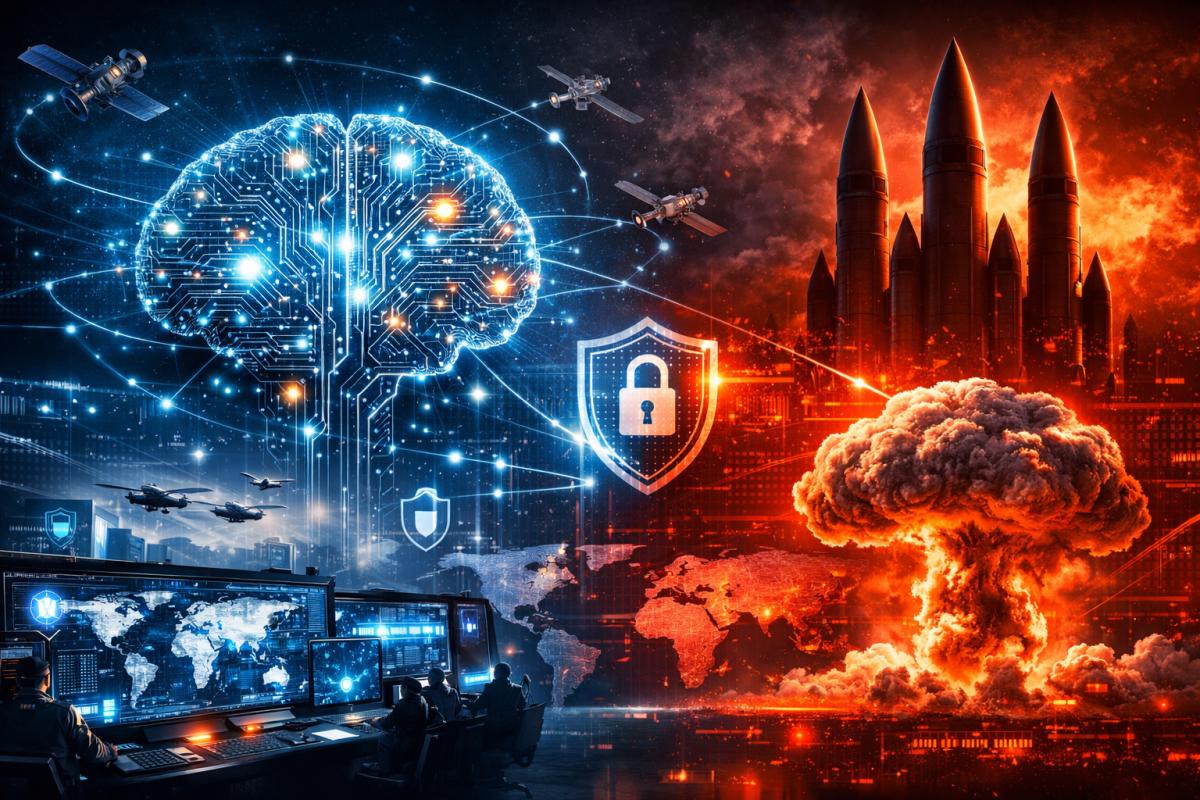

The rapid development of artificial intelligence has transformed nearly every sector of society, from healthcare and education to finance and national security. However, recent global discussions have raised a disturbing question: Can artificial intelligence become more dangerous than nuclear weapons?
This debate intensified after reports surfaced about a tragic incident in Iran where hundreds of schoolgirls were killed during a missile strike. Some online narratives suggested that artificial intelligence might have been responsible for identifying the target incorrectly. The story quickly spread across social media, generating fear and confusion about the power and potential dangers of AI-driven military systems.
This article explores the facts, investigates whether AI played a role in the tragedy, and analyzes the broader question of whether artificial intelligence could indeed become more dangerous than nuclear weapons.
The Iran Schoolgirls Incident: What Happened?
On February 28, 2026, a devastating missile strike hit the Shajareh Tayyebeh girls’ elementary school in Minab, Iran. The attack destroyed the school building and caused one of the deadliest civilian tragedies in the ongoing regional conflict.
According to reports, between 168 and 180 people were killed, most of them schoolgirls aged between seven and twelve. Many others were injured when the roof collapsed following the impact of multiple missile strikes. Investigations suggested that the school may have been mistakenly identified as a military target during a large-scale military operation.
The tragedy sparked global outrage and triggered debates about modern warfare, automated targeting systems, and the role of artificial intelligence in military decision-making.
Key Facts About the Incident
- The attack occurred during a major military escalation involving strikes across Iran.
- The targeted building was a girls’ elementary school.
- Most victims were children between 7 and 12 years old.
- International organizations condemned the attack as a violation of humanitarian law.
Was Artificial Intelligence Responsible?
Many online discussions claimed that artificial intelligence systems were responsible for identifying the school as a military target. However, the reality is far more complex.
Military analysts believe the tragedy may have occurred due to outdated intelligence data. The location might previously have been associated with a military facility or logistics site, causing it to remain on targeting lists. When automated targeting systems analyzed the data, the outdated information may have resulted in the wrong identification.
Artificial intelligence systems are sometimes used in military operations to analyze vast datasets, including satellite imagery, surveillance information, and intelligence reports. These systems help shorten the decision-making process in warfare.
However, experts emphasize that AI does not make the final decision to launch weapons. Human operators and military command structures still authorize attacks.
Possible Factors Behind the Strike
- Outdated intelligence data in military databases
- Misidentification of buildings near military infrastructure
- High-speed targeting decisions during active conflict
- Human oversight errors in reviewing AI-generated recommendations
The Role of AI in Modern Warfare
Artificial intelligence is increasingly integrated into modern military systems. These systems analyze massive volumes of information faster than humans and can assist with tasks such as:
- Satellite image analysis
- Target detection
- Missile guidance
- Cybersecurity defense
- Battlefield surveillance
The purpose of these technologies is to increase accuracy and reduce collateral damage. However, when AI systems rely on incomplete or incorrect data, the consequences can be catastrophic.
“AI can process information faster than humans, but it still depends on the accuracy of the data it receives.”
This limitation is known as the “garbage in, garbage out” problem. If the data used by the system is outdated or incorrect, the system may generate flawed conclusions.
Historical Context: Previous Incidents Involving Iranian Schoolgirls
The tragic missile strike was not the first time Iranian schoolgirls became victims of suspicious incidents.
Between 2022 and 2023, thousands of schoolgirls across Iran were affected by mysterious poisoning attacks. Reports indicated that students in dozens of schools experienced symptoms such as breathing difficulties, dizziness, and nausea. Investigations suggested that an inhaled chemical substance might have been involved. :contentReference[oaicite:1]{index=1}
Human rights groups raised concerns that the attacks might have been deliberate attempts to intimidate girls and discourage them from attending school. More than 1,200 students were hospitalized during the incidents. :contentReference[oaicite:2]{index=2}
The causes of these poisonings remain controversial and unresolved.
Theories Behind the Poisoning Incidents
- Deliberate attacks by extremist groups opposed to girls’ education
- Government-linked intimidation tactics
- Foreign sabotage operations
- Mass psychogenic illness triggered by fear and social pressure
Why AI Is Often Blamed
Artificial intelligence is frequently blamed for disasters because it represents a powerful and unfamiliar technology. When people hear about autonomous weapons or AI-driven decision systems, it is easy to assume that machines are acting independently.
However, most modern military AI systems operate under strict human supervision.
There are several reasons why AI is often blamed:
- Fear of automation replacing human judgment
- Limited public understanding of military technology
- Rapid spread of misinformation on social media
- Sensational headlines about “killer AI”
In reality, most military systems use AI as a decision-support tool, not as an autonomous weapon that independently chooses targets.
Could AI Become More Dangerous Than Nuclear Weapons?
Some experts warn that artificial intelligence could become one of the most powerful technologies ever created. Unlike nuclear weapons, which are controlled by a limited number of countries, AI technology can be developed by many governments and private organizations.
This widespread accessibility raises concerns about misuse.
Key Differences Between AI and Nuclear Weapons
| Factor | Artificial Intelligence | Nuclear Weapons |
|---|---|---|
| Accessibility | Can be developed by many countries and companies | Restricted to a few nuclear states |
| Speed of Deployment | Software can spread instantly | Physical weapons require infrastructure |
| Control | Difficult to regulate globally | Controlled through treaties |
| Potential Impact | Cyber warfare, automated weapons, misinformation | Mass destruction through explosions |
While AI does not have the immediate destructive power of nuclear bombs, its ability to influence warfare, economies, and information systems makes it a powerful strategic technology.
Major Risks Associated With AI
1. Autonomous Weapons
One of the biggest concerns is the development of fully autonomous weapons that could select and attack targets without human approval.
2. Cyber Warfare
AI could be used to launch advanced cyber attacks against infrastructure such as power grids, financial systems, and communication networks.
3. Misinformation Campaigns
AI-generated fake videos, deepfakes, and propaganda could destabilize societies and influence elections.
4. Data Manipulation
If AI systems rely on corrupted data, they could make incorrect decisions in critical situations.
Why Human Oversight Remains Essential
Despite rapid advances in artificial intelligence, human oversight remains crucial. Most military and technological experts agree that humans must remain responsible for final decisions involving life and death.
Human judgment provides ethical reasoning, context, and accountability that machines cannot replicate.
Several international organizations have already proposed guidelines to ensure responsible use of AI in warfare.
Principles for Responsible AI Use
- Human control over lethal decisions
- Transparent algorithms
- International regulations
- Accountability for misuse
The Problem of Misinformation
In today’s digital world, misinformation spreads faster than facts. Viral videos and sensational headlines can quickly create false narratives.
Many online claims about AI causing the Iran tragedy are based on speculation rather than confirmed evidence. Investigations are still ongoing, and definitive conclusions require careful analysis of intelligence data, military procedures, and technological systems.
It is important to separate verified facts from speculation.
Lessons From the Tragedy
The Minab school tragedy highlights several important lessons for the future of technology and warfare.
- Data accuracy is critical for AI systems.
- Human verification must remain part of targeting decisions.
- International rules for AI warfare are urgently needed.
- Transparency is necessary to maintain public trust.
Without these safeguards, advanced technology could increase the risk of accidental disasters.
The Future of AI and Global Security
Artificial intelligence will continue to transform global security in the coming decades. Governments around the world are investing billions of dollars into AI-driven military systems.
At the same time, researchers and policymakers are working to ensure that these technologies are developed responsibly.
International cooperation will be essential to prevent misuse and maintain stability.
Conclusion
The tragic deaths of Iranian schoolgirls in the Minab school strike represent one of the most heartbreaking civilian disasters in recent years. While artificial intelligence may have played a role in analyzing intelligence data, there is no definitive evidence that AI deliberately caused the attack. Instead, the tragedy likely resulted from outdated intelligence, human decision-making errors, and the chaos of modern warfare.
Artificial intelligence itself is not inherently evil. It is a powerful tool created by humans, and like any technology, its impact depends on how it is used. The real danger lies not in AI alone but in the systems, policies, and decisions surrounding it.
As AI continues to evolve, governments and societies must develop strong ethical frameworks, transparent regulations, and human oversight mechanisms. Only through responsible governance can the world harness the benefits of artificial intelligence while preventing tragedies like the one that occurred in Iran.


Community Insights