
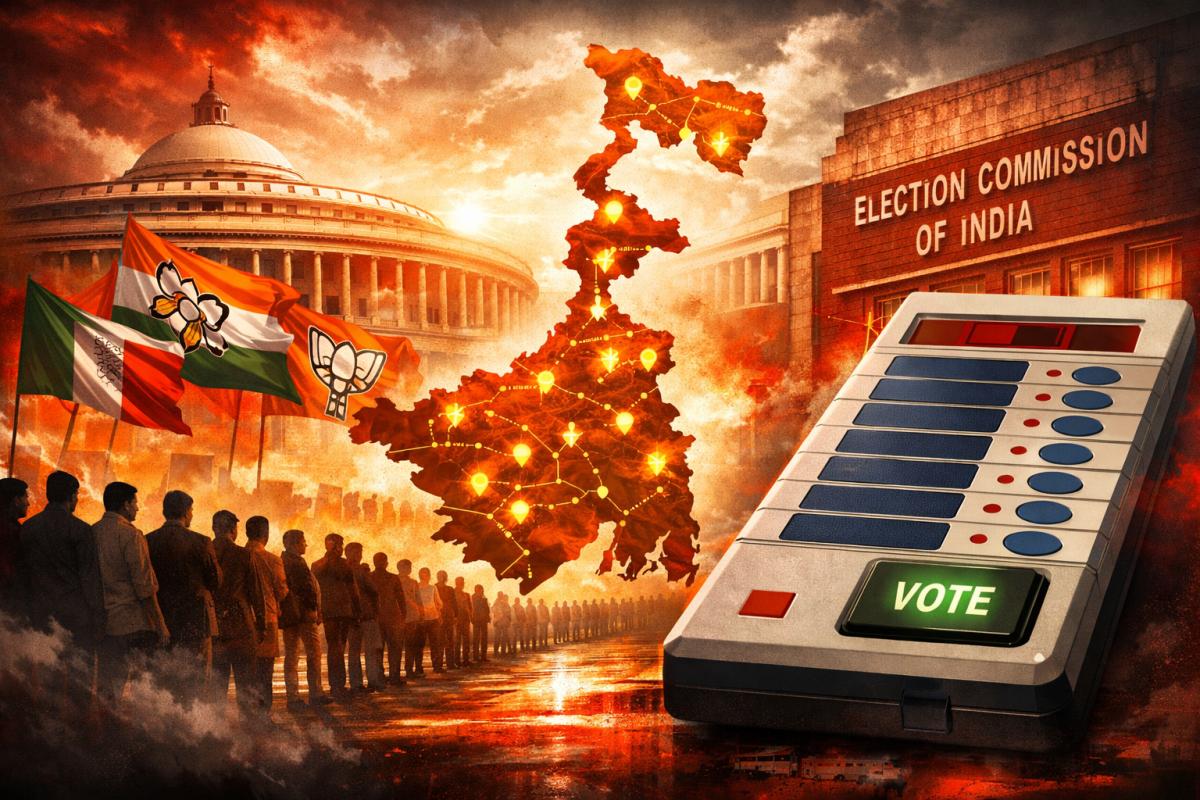

India is known as the world’s largest democracy, where millions of citizens participate in the electoral process to choose their representatives. The announcement of election dates is always a significant political moment because it officially starts the democratic battle between political parties, candidates, and ideologies. Recently, the Election Commission of India held a press conference announcing the schedule for the upcoming West Bengal Assembly Elections 2026. The announcement generated nationwide attention, political debate, and public excitement.
According to the Election Commission, the West Bengal Assembly election will be conducted in two phases, with voting scheduled for April 23 and April 29, 2026. The counting of votes will take place on May 4, 2026. These elections will determine the composition of the 294-seat West Bengal Legislative Assembly and ultimately decide the next government of the state.
The Importance of West Bengal Elections
West Bengal is one of India’s most politically significant states. With a population of more than 90 million people and a large electorate, elections in the state often attract national attention. Political developments in West Bengal frequently influence broader national political strategies and alliances.
The state assembly has a total of 294 seats, and a party or coalition must secure at least 148 seats to form a majority government. These elections therefore represent a decisive contest between major political parties such as the Trinamool Congress (TMC), Bharatiya Janata Party (BJP), the Left Front, and the Indian National Congress.
The 2026 election will determine whether the current government retains power or if the opposition can successfully challenge the ruling party.
Election Commission’s Announcement
The Election Commission of India announced the election schedule during a press conference held at Vigyan Bhavan in New Delhi. Chief Election Commissioner Gyanesh Kumar addressed the media and provided details about the voting phases, administrative arrangements, and security measures for the upcoming elections.
The commission explained that conducting elections in phases helps ensure better security management, administrative efficiency, and smooth voting procedures across the state. West Bengal’s geography, population density, and political competition require careful planning to maintain free and fair elections.
The announcement officially triggered the enforcement of the Model Code of Conduct, which regulates political behavior during the election period. From that moment onward, governments are restricted from announcing new policies or benefits that could influence voters.
Official Election Schedule
| Event | Date |
|---|---|
| Election Announcement | March 2026 |
| Phase 1 Voting | 23 April 2026 |
| Phase 2 Voting | 29 April 2026 |
| Vote Counting | 4 May 2026 |
The two-phase voting system aims to cover all 294 constituencies effectively while ensuring security forces and election staff can operate efficiently throughout the state.
Phase-Wise Election Details
First Phase of Voting
The first phase of the election will take place on April 23, 2026. In this phase, voters from 152 assembly constituencies will cast their votes. These constituencies include several regions across North Bengal and other districts.
This phase is expected to include many politically sensitive constituencies where competition between political parties is intense.
- 152 constituencies will vote in this phase
- Several districts in North Bengal and other regions
- Large deployment of security forces
Second Phase of Voting
The second phase will take place on April 29, 2026. This phase will cover the remaining 142 constituencies. These include major urban areas such as Kolkata and surrounding districts.
- 142 constituencies will vote in the second phase
- Kolkata and metropolitan districts included
- Urban voter participation expected to be high
The Election Commission believes that dividing the election into phases ensures better monitoring and reduces the possibility of electoral violence.
Security Arrangements for the Election
Security remains a crucial factor in elections in West Bengal. In past elections, concerns regarding violence and political clashes have often been raised. To address these concerns, the Election Commission has planned extensive security arrangements.
Reports indicate that hundreds of companies of central security forces have been deployed across the state ahead of the election announcement. These forces will conduct patrols and monitor sensitive polling areas to ensure peaceful voting.
- Deployment of central security forces
- Continuous monitoring of sensitive areas
- Coordination between state police and central forces
- Strict enforcement of election rules
The Election Commission emphasized its commitment to ensuring that elections in West Bengal are free, fair, and peaceful.
Political Parties and Key Contenders
Several major political parties are preparing for the 2026 West Bengal Assembly election. Each party aims to gain the support of voters across the state through campaigns, rallies, and policy promises.
Trinamool Congress (TMC)
The Trinamool Congress, led by Chief Minister Mamata Banerjee, currently governs West Bengal. The party has dominated state politics since 2011 and will attempt to retain power in the upcoming election.
In the previous election, the party secured a strong mandate and continued its governance in the state. The 2026 election will test whether the party can maintain its popularity among voters.
Bharatiya Janata Party (BJP)
The Bharatiya Janata Party is the main opposition force in West Bengal. Over the last decade, the BJP has significantly expanded its presence in the state and aims to challenge the ruling party.
The party will focus on strengthening its organizational network and mobilizing voters across rural and urban areas.
Left Front and Congress
The Left Front, once the dominant political force in West Bengal for more than three decades, continues to remain active in the political arena. Along with the Indian National Congress, it hopes to regain lost ground and attract voters seeking an alternative political platform.
Voter Demographics and Participation
West Bengal has a massive electorate, with millions of registered voters eligible to participate in the election. Voter turnout in the state has traditionally been high compared to many other regions in India.
Young voters, women voters, and rural communities play an important role in shaping election outcomes.
- Youth voters are increasing in number
- Women participation continues to grow
- Rural voters remain politically active
High voter turnout often indicates strong democratic participation and public interest in governance.
Election Technology and Voting Process
India’s elections are conducted using Electronic Voting Machines (EVMs). These machines are designed to ensure accuracy, transparency, and efficiency during the voting process.
Additionally, Voter Verified Paper Audit Trail (VVPAT) machines are used alongside EVMs to allow voters to verify their votes before the final submission.
The use of EVM and VVPAT technology has significantly improved the reliability and transparency of elections in India.
Administrative Preparation for the Election
Conducting an election in a state like West Bengal requires extensive administrative preparation. Thousands of polling stations must be set up across cities, towns, and rural villages.
Election officials, polling officers, and volunteers are trained to manage the voting process efficiently. Logistics such as transportation of voting machines, security arrangements, and voter awareness campaigns are also organized in advance.
The Election Commission coordinates closely with state authorities to ensure that all polling stations are fully prepared before election day.
Challenges Facing the Election Commission
Managing elections in a large and politically active state like West Bengal comes with several challenges.
- Maintaining law and order
- Preventing electoral violence
- Ensuring accurate voter lists
- Managing logistics across remote areas
- Handling political tensions
Despite these challenges, the Election Commission aims to conduct elections that uphold democratic values and ensure equal opportunities for all political parties.
Impact on National Politics
The outcome of the West Bengal Assembly election is likely to have a significant impact on national politics. Regional election results often influence political alliances, strategies, and narratives across the country.
Political analysts believe that the results could shape the political landscape ahead of future national elections.
Strong performances by regional parties may reinforce their influence, while national parties may use the election results to adjust their long-term strategies.
The Role of Media and Public Awareness
Media organizations play a crucial role during elections by providing information to voters about candidates, policies, and election procedures.
Television channels, digital platforms, and social media have become major sources of election news and analysis.
- Live election coverage
- Political debates
- Voter awareness campaigns
- Fact-checking of political claims
Accurate reporting helps voters make informed decisions and strengthens democratic participation.
Why These Elections Matter for Citizens
Elections are the foundation of democratic governance. They allow citizens to choose leaders who will make decisions about policies, development projects, and public welfare.
For the people of West Bengal, the 2026 election represents an opportunity to express their political preferences and shape the future of the state.
Issues such as economic development, employment opportunities, infrastructure, education, healthcare, and social welfare will likely influence voter decisions during the election.
Conclusion
The announcement of the West Bengal Assembly Election 2026 marks the beginning of an important democratic process in one of India’s most politically vibrant states. With voting scheduled in two phases on April 23 and April 29 and vote counting on May 4, the election will determine the political future of West Bengal and the composition of its 294-seat legislative assembly.
Political parties are preparing for intense campaigns, voters are getting ready to participate in the democratic process, and the Election Commission is working to ensure free, fair, and peaceful elections. As millions of citizens cast their votes, the results will reflect the collective will of the people and shape the direction of governance in the state for the next five years.

Community Insights