
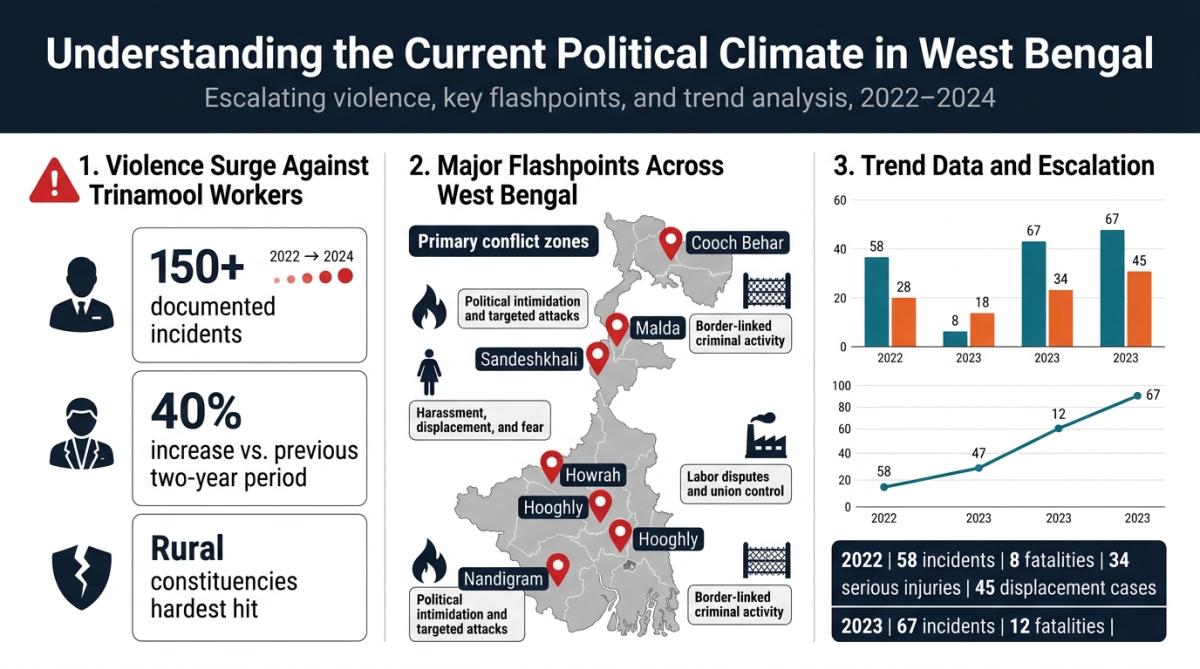

In the sweltering heat of a post-election Bengal, political temperatures have soared beyond control. What was once a stronghold of the Trinamool Congress (TMC) now seems to be simmering with deep public discontent. On May 31, 2026, the images emerging from Hooghly's Chanditala sent shockwaves across the state and the nation. Sreerampur MP Kalyan Banerjee, a veteran leader known for his fiery speeches, was caught on camera being hit on the head, collapsing to the ground amid chaotic scenes. This incident came just a day after his colleague, Abhishek Banerjee, faced a similar humiliating public assault in Sonarpur. The visuals are disturbing, the slogans louder than ever – "Chor Chor" echoing as black flags waved in defiance.
As someone who has followed West Bengal politics for years, these back-to-back attacks on high-profile TMC leaders signal something deeper than random violence. It's a reflection of accumulated anger, years of alleged misgovernance, and a shifting political wind. In this elaborate piece, we dive deep into the incidents, the context, the reactions, and what this means for the future of Bengal's turbulent democracy.
The Chanditala Incident: Kalyan Banerjee Under Attack
Kalyan Banerjee, the four-time MP from Sreerampur, had arrived in Chanditala this morning with his supporters. Their purpose was seemingly straightforward – to file a complaint at the local police station regarding post-poll violence. But what unfolded was anything but routine. Visuals show Banerjee walking past a truck when something strikes him from behind. He clutches his head, stumbles, and falls. Police personnel scramble to control the surging crowd as the MP struggles to regain balance.
Soon after, Banerjee is seen addressing supporters with a white cloth wrapped around his head, blood reportedly staining his kurta and pajama. In his statement to reporters, he narrated the sequence with visible emotion:
"Suddenly, 10-15 goons shouted slogans and created a rivalry atmosphere. They abused me, but I kept proceeding, and at that time, a stone was thrown at my head. There was blood in my kurta and pajama. I had fallen on the road, and that time, a CRPF person came and rescued me."
He specifically blamed the BJP for orchestrating what he called an "attempt to murder." Banerjee thanked central forces for their intervention while criticizing the state police as "silent, mute spectators." According to him, this reflects "total lawlessness" in West Bengal, with TMC leaders being systematically targeted.
Details That Paint a Worrying Picture
Eyewitness accounts and videos circulating on social media reveal black flags being waved and chants of "Chor Chor" filling the air – the same slogans that greeted Abhishek Banerjee a day earlier. Banerjee had left his car behind due to heavy traffic congestion, making him vulnerable as he proceeded on foot. Supporters claim the attack was premeditated, with goons lying in wait.
Medical updates suggest he suffered a head injury but was stable after initial treatment. However, the psychological impact on the party cadre cannot be understated. For a leader who has represented the constituency since 2009, being attacked in his own backyard is a massive blow to authority and image.
Abhishek Banerjee's Ordeal in Sonarpur: The Trigger
The violence against Kalyan Banerjee did not occur in isolation. Just 24 hours prior, Abhishek Banerjee – Mamata Banerjee's nephew and the de facto second-in-command of TMC – faced a harrowing experience in Sonarpur, South 24 Parganas. He had gone to meet party workers allegedly affected by post-poll violence when a crowd turned hostile.
Pushed, heckled, and manhandled, Abhishek was pelted with eggs and stones. The now-viral videos show security personnel hurriedly placing a cricket helmet on his head to protect him as they whisked him away to safety. He was later taken to a private hospital in Kolkata, where doctors confirmed minor injuries. Mamata Banerjee later claimed her nephew could have been killed without the helmet.
The public outrage was palpable. "Chor Chor" slogans dominated, reflecting accusations of corruption that have plagued the TMC for years. This was no ordinary protest – it felt like years of pent-up frustration exploding onto the streets.
Similarities and Patterns in Both Attacks
Both incidents share striking similarities:
- Public Participation: Ordinary citizens, not just political rivals, were involved in expressing anger.
- Slogans and Symbols: Black flags and "Chor Chor" chants indicating deep distrust.
- Post-Poll Context: Both leaders were addressing issues related to post-election violence.
- Security Lapses: Questions raised over the effectiveness of protection for TMC leaders.
These patterns suggest a broader wave of anti-incumbency sentiment sweeping through Bengal after 15 years of TMC rule.
Political Reactions: Blame Game Intensifies
Mamata Banerjee was quick to react, pointing fingers squarely at the BJP. In a strongly worded statement, she said:
"Yesterday, BJP supporters brutally attacked and lynched @AITCofficial Lok Sabha Floor Leader @abhishekaitc. The terrifying videos are in the public domain. Today, our Chief Whip in Lok Sabha, @KBanerjee AITC was also a victim of a planned BJP attack. BJP murdering democracy."
The TMC supremo has framed both attacks as assaults on democracy itself. Party leaders have echoed this narrative, calling for strict action against "BJP goons."
On the other side, the BJP has denied any involvement. Senior leaders like Bengal minister Agnimitra Paul dismissed TMC's claims, stating:
"This is the public's anger. For 15 years, you thought you were God. What kind of politics have you played? Today, eggs are being thrown at you, shoes are being thrown at you. People are spitting and abusing you in front of your house."
This rebuttal highlights the BJP's strategy: portraying the incidents as organic public backlash against TMC's long rule rather than organized political vendetta.
Voices from Across the Spectrum
Opposition parties and analysts have weighed in. Some see this as the beginning of the end for TMC's dominance. Others warn against normalizing violence in politics. Intellectuals and civil society groups have called for calm while demanding an impartial investigation.
Background: 15 Years of TMC Rule and Growing Discontent
To understand why these attacks have struck such a chord, we must look at the broader canvas of West Bengal politics. Trinamool Congress came to power in 2011 on the promise of change, ending decades of Left Front rule. Mamata Banerjee's fiery leadership captured the imagination of millions, especially the rural poor and minorities.
However, over the years, allegations of corruption, nepotism, and high-handedness have mounted. From the Saradha scam to more recent concerns over recruitment irregularities, public trust has eroded. Post-poll violence complaints – which both Abhishek and Kalyan were addressing – are not new. Reports of intimidation, threats, and attacks on opposition workers have been frequent, though often denied by the ruling party.
Economic and Social Challenges
Bengal's economy has struggled to keep pace with other states. Unemployment remains high among the youth, industries have been hesitant to invest, and migration continues. Farmers, once a strong TMC base, have expressed dissatisfaction over issues like land acquisition and crop prices. The state's debt burden has also drawn criticism.
In this backdrop, the "Chor Chor" chants represent not just political sloganeering but a deeper societal rejection of perceived loot and misrule.
Implications for Bengal Politics
These incidents could have far-reaching consequences. First, they expose the vulnerability of TMC leaders even in their strongholds. Second, they boost the morale of opposition parties, particularly the BJP, which has been steadily gaining ground in recent elections.
Security for political leaders will now be a major talking point. The role of central forces versus state police has already become contentious. Moreover, the incidents highlight the dangerous normalization of street violence in Indian politics.
Public Sentiment: A Shifting Tide?
Social media is abuzz with mixed reactions. While TMC supporters call it a conspiracy, a large section of netizens seems to view it as justified anger. Hashtags like #BengalBurning and #PublicAnger are trending. This public mood could influence upcoming civic polls and future assembly elections.
| Date | Incident | Location | Key Outcome |
|---|---|---|---|
| May 30, 2026 | Abhishek Banerjee Assaulted | Sonarpur, South 24 Parganas | Pelted with eggs and stones, minor injuries |
| May 31, 2026 | Kalyan Banerjee Attacked | Chanditala, Hooghly | Hit on head, collapsed, head injury reported |
This timeline shows how rapidly events are unfolding. The proximity of the two incidents raises questions about coordination and underlying triggers.
Media Coverage and Public Discourse
The role of media has been crucial. National channels have aired the visuals repeatedly, amplifying the narrative of TMC's declining popularity. Local Bengali media, often accused of being polarized, has provided contrasting views. Independent journalists on the ground have captured raw emotions that official statements often mask.
In an era of instant information, such visuals travel fast and shape opinions stronger than any press release. The use of cricket helmets and falling leaders have become symbols of a party losing its grip.
Legal and Administrative Angle
Both TMC and BJP have approached authorities. FIRs are likely to be filed, but given the political climate, impartial probes seem challenging. The Election Commission and courts may need to step in to restore faith in the system. The involvement of CRPF in one incident also brings central-state relations into focus.
Historical Parallels in Bengal Politics
Bengal has a long history of political volatility. From the violent Naxalite movement to the turbulent Left era, street protests and clashes are not uncommon. However, targeting sitting MPs in such a direct manner marks a new low. It reminds one of the turbulent 1970s when political assassinations were more frequent.
Today's Bengal, though, is different – more connected, more aware, and armed with smartphones. Public anger finds quicker expression and wider reach.
Role of Youth and Social Media
Young voters, especially, seem disillusioned. Promises of jobs and development have not materialized as expected. Social media has given them a platform to voice dissent without fear, contributing to the viral spread of these attack videos.
What Lies Ahead: Challenges for TMC and Opportunities for Opposition
For TMC, damage control is urgent. They need to address public grievances, improve governance, and project a united front. Mamata Banerjee's leadership will be tested like never before. Internal rifts, if any, could surface under pressure.
The BJP, on the other hand, will try to capitalize on this momentum. With national backing, they might push for more development projects and highlight governance failures. Other regional forces could also realign.
Ultimately, the people of Bengal will decide through ballots, but street protests are signaling the direction of that wind.
Broader Lessons for Indian Democracy
These events are not just about West Bengal. They reflect larger issues plaguing Indian politics – rising intolerance, erosion of trust in institutions, and the weaponization of public anger. Leaders across parties must introspect. Violence, regardless of the target, weakens democracy.
Strong institutions, free and fair elections, and accountable governance are the need of the hour. Without these, such incidents will only multiply.
Conclusion
The attacks on Abhishek Banerjee and Kalyan Banerjee mark a troubling chapter in West Bengal's political journey. What began as complaints about post-poll violence has exposed raw public discontent after 15 long years of TMC rule. The images of leaders being hit, falling, and seeking protection tell a story far bigger than individual incidents – a story of changing aspirations, broken promises, and accumulated rage.
As Bengal navigates this turbulent phase, the focus must shift from blame games to genuine dialogue and reform. For democracy to thrive, leaders must listen to the streets, not just rule from them. The coming months will be decisive. Will TMC reinvent itself or face further isolation? Can the opposition channel this anger constructively? Only time will tell, but one thing is clear: the people of Bengal are no longer silent spectators. They are demanding accountability, and they are doing so loudly. The road ahead for Bengal's politics remains uncertain, yet full of possibilities for meaningful change if wisdom prevails over vengeance.

Community Insights