
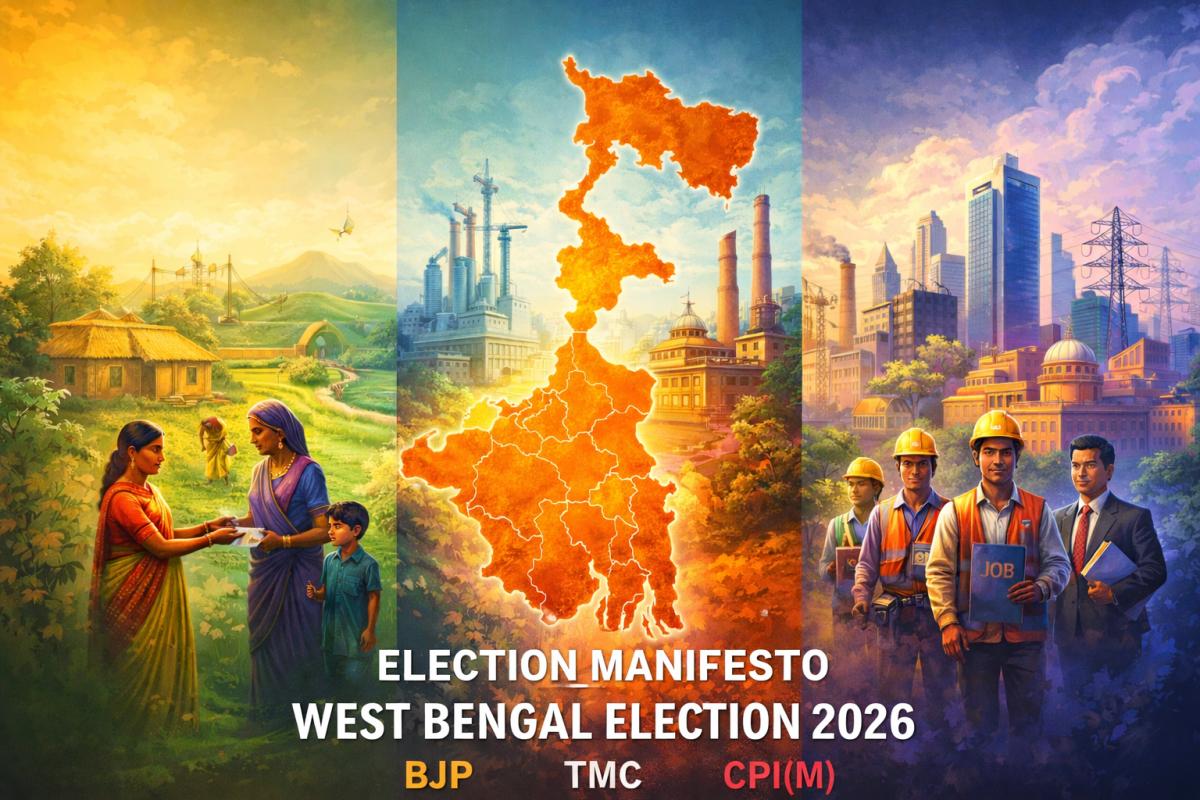

The West Bengal Assembly Election 2026 is shaping up to be one of the most ideologically diverse and politically significant contests in recent years. Three major political forces—the All India Trinamool Congress (TMC), the Bharatiya Janata Party (BJP), and the CPI(M)-led Left Front—have presented their manifestos outlining their vision for the future of Bengal.
Each manifesto reflects a distinct political philosophy, governance model, and socio-economic roadmap. While one emphasizes welfare and continuity, another focuses on structural reforms and governance overhaul, and the third highlights employment and economic justice. This blog presents a comprehensive and human-like analysis of these manifestos, breaking down their promises, priorities, and differences.
Overview of the Three Manifestos
- TMC Manifesto 2026: Focused on welfare expansion, economic growth, and continuity of governance.
- BJP Manifesto (Bhoroshar Shopoth): Emphasizes governance reforms, anti-corruption, and industrial growth.
- CPI(M) Manifesto: Focuses on employment guarantees, social welfare, and economic restructuring.
Economic Vision and Development Strategy
TMC Approach
The TMC manifesto projects Bengal as a rising economic powerhouse, aiming to become the 3rd largest economy in India and achieve a ₹40 lakh crore economy.
- Focus on infrastructure and trade corridors
- Development of Global Trade Centre
- Expansion of logistics and port networks
BJP Approach
The BJP emphasizes industrial expansion and business-friendly policies, including tax simplification and investment in industrial zones.
- Development of manufacturing hubs
- Boost to tea and jute industries
- Encouragement of private investment
CPI(M) Approach
The CPI(M) focuses on balanced industrial growth along with revival of small industries and public sector employment.
- Promotion of heavy industries
- Revival of cottage industries
- State-led economic intervention
Comparison Table: Economic Vision
| Aspect | TMC | BJP | CPI(M) |
|---|---|---|---|
| Growth Model | Welfare + Growth | Market-driven | State-driven |
| Industry Focus | Trade & Logistics | Manufacturing | Public + Small Industries |
| Employment Strategy | Indirect + schemes | Private sector jobs | Guaranteed employment |
Employment and Youth Policies
TMC Promises
- ₹1500/month under Yuba-Sathi scheme
- Focus on skill development
- Job creation through infrastructure projects
BJP Promises
- 1 crore jobs in 5 years
- ₹3000/month support for unemployed youth
- Competitive exam coaching support
CPI(M) Promises
- One job per family
- 200 days work for rural workers
- 100 days work for urban poor
The contrast here is stark—TMC offers financial assistance, BJP promises large-scale job creation, while CPI(M) guarantees employment through systemic reforms.
Social Welfare and Financial Assistance
TMC Welfare Model
- Lakshmir Bhandar increase (₹1500–₹1700/month)
- Healthcare through Swasthya Sathi
- Pensions and social security expansion
BJP Welfare Model
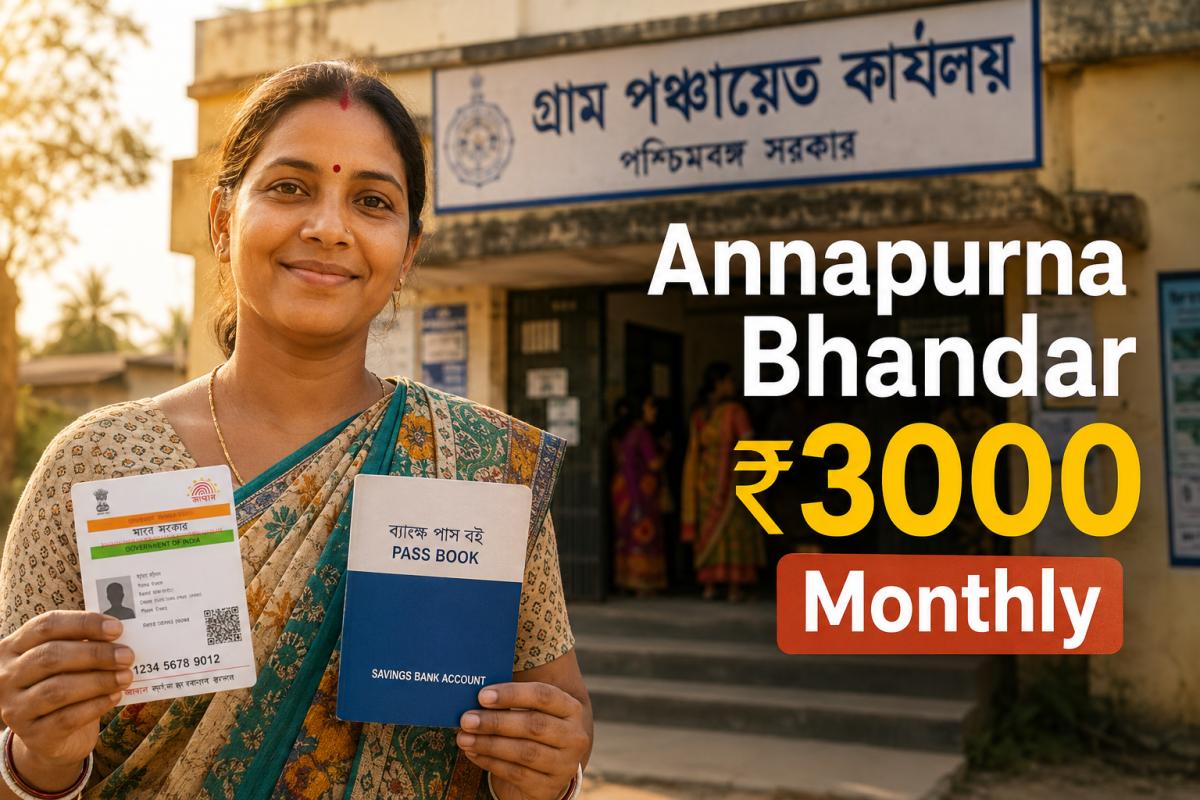
- ₹3000 monthly support for women
- Free healthcare under Ayushman Bharat
- Housing expansion
CPI(M) Welfare Model
- Free electricity (up to 100 units)
- Subsidies on essential services
- Strengthened public welfare systems
Governance and Administrative Reforms
TMC
Focuses on decentralized governance through initiatives like Duare Sarkar and creation of new districts
BJP
Highlights anti-corruption measures, implementation of Uniform Civil Code, and law enforcement reforms.
CPI(M)
Promises transparent governance with regular recruitment and institutional accountability.
Women Empowerment
- TMC: Financial inclusion, SHGs, safety reforms
- BJP: ₹3000 monthly support, legal reforms
- CPI(M): Safety force (Abhaya Bahini), empowerment policies
Agriculture and Rural Economy
TMC
- ₹30,000 crore agriculture budget
- Support for farmers and irrigation
BJP
- MSP implementation
- Cold storage and export hubs
CPI(M)
- Guaranteed work schemes
- Subsidies and farmer support
Key Differences Between Manifestos
- Ideology: Welfare-driven (TMC) vs Market-driven (BJP) vs Socialist (CPI(M))
- Employment: Assistance vs Job Creation vs Guarantee
- Governance: Continuity vs Reform vs Structural Change
- Economy: Trade-led vs Industry-led vs State-led
Strengths and Weaknesses
- TMC Strength: Proven track record and welfare reach
- TMC Weakness: Dependence on subsidies
- BJP Strength: Strong focus on governance and industry
- BJP Weakness: Implementation feasibility concerns
- CPI(M) Strength: Clear employment guarantees
- CPI(M) Weakness: Fiscal sustainability questions
Conclusion
The West Bengal Election 2026 is not merely a political contest but a clash of three fundamentally different visions for the state’s future. The TMC seeks continuity with expanded welfare and gradual economic growth. The BJP presents a model rooted in governance reform, industrial expansion, and systemic change. Meanwhile, the CPI(M) offers a return to state-led development with strong guarantees on employment and social security.
For voters, the choice ultimately comes down to priorities—whether they value stability and welfare, structural reform and governance, or economic guarantees and systemic equality. Each manifesto presents a compelling narrative, but also raises critical questions about feasibility, sustainability, and long-term impact.
As Bengal stands at this political crossroads, the decision will shape not just the next five years, but potentially the long-term trajectory of the state’s economy, society, and governance.
Community Insights