
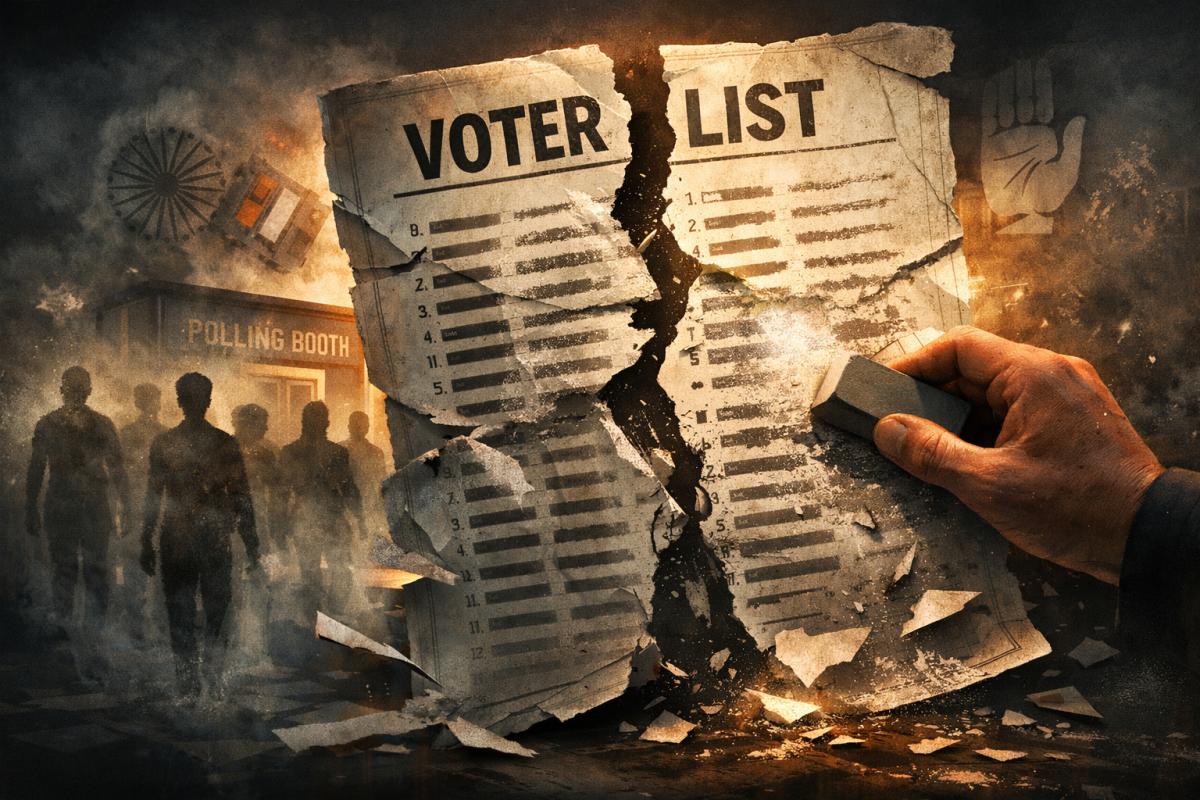

In recent weeks, one of the most debated and emotionally charged political developments in India has been the deletion of nearly 91 lakh voters from the electoral rolls of West Bengal. This issue, highlighted in multiple discussions and amplified by viral videos such as the one referenced, has sparked nationwide concern about the integrity of electoral processes, the role of institutions, and the very foundation of democracy.
But what exactly happened? Were these deletions justified as part of a routine cleanup exercise, or do they point toward deeper systemic and political concerns? This blog dives deep into the facts, context, narratives, and implications of this massive electoral revision.
Understanding the Scale: What Does 91 Lakh Mean?
To truly grasp the magnitude of this development, one must understand the numbers. Nearly 91 lakh (9.1 million) voters were removed from the voter list during the Special Intensive Revision (SIR) process. This accounts for roughly 11.8% to 12% of the total electorate in West Bengal.
In a state where elections are often decided by narrow margins, such a large-scale removal is not just administrative—it is politically and socially transformative.
| Parameter | Data |
|---|---|
| Total voters before revision | ~7.6 crore |
| Voters removed | ~91 lakh |
| Percentage removed | ~11.8% |
| New voters added | Very limited (~1.9 lakh approx) |
What is the Special Intensive Revision (SIR)?
The Special Intensive Revision (SIR) is a process conducted by the Election Commission of India (ECI) to update electoral rolls. The primary objective is to:
- Remove duplicate entries
- Delete names of deceased individuals
- Exclude ineligible voters (including migrants)
- Add newly eligible voters
On paper, this is a necessary exercise to ensure fair elections. However, in practice, the 2025–2026 SIR in West Bengal has become one of the most controversial electoral exercises in recent history.
Why Were So Many Voters Deleted?
According to official explanations, the deletions occurred due to:
- Duplicate entries
- Deaths not previously recorded
- Migration (inter-state or international)
- Failure to verify identity during the revision process
Officials claim that over 27 lakh voters were found “not eligible” after verification by judicial officers.
Additionally, earlier rounds of deletions had already removed around 63 lakh names, bringing the total close to 91 lakh.
The “Cleanup” Argument
Supporters of the exercise argue that:
- Electoral rolls often contain inaccuracies
- Fake or duplicate voters distort democracy
- Cleaning the list strengthens election credibility
From this perspective, the deletions are not alarming but necessary.
The Controversy: Why Are People Concerned?
Despite official justification, the scale and timing of the deletions have raised serious concerns across political and civil society groups.
1. Massive Scale of Deletions
Deleting nearly 1 in 8 voters is unprecedented. Even courts have acknowledged the magnitude as significant.
2. Timing Before Elections
The revision occurred just before crucial assembly elections, raising questions about intent and fairness.
3. Claims of Disproportionate Impact
Reports suggest that certain districts like Murshidabad, Malda, and North 24 Parganas saw higher deletions.
Some analyses also claim that specific communities may have been disproportionately affected, though this remains a politically contested claim.
4. Errors and Anomalies
There have been cases where:
- Genuine voters found their names missing
- Voters appeared in other states’ rolls
- People who voted recently were suddenly removed
For example, one report highlighted a voter whose name was deleted in West Bengal but appeared in Bihar’s voter list.
Political Reactions: A War of Narratives
Opposition View
Opposition parties have called the exercise:
- “Unconstitutional”
- “Targeted disenfranchisement”
- “A threat to democracy”
Some leaders have even alleged the use of algorithm-based or AI-driven filtering that unfairly excluded voters.
Ruling Party & Supporters
On the other hand, some political voices argue that:
- The deletions removed “fake voters”
- Electoral fraud was being corrected
- Opposition is politicizing a technical process
In fact, controversial statements have emerged labeling deleted voters as “anti-nationals,” reflecting the intensity of the political divide.
Election Commission’s Position
The Election Commission maintains that:
- The process followed legal procedures
- Judicial officers supervised verification
- Appeal mechanisms exist for affected voters
However, critics argue that the appeal process is often inaccessible or too slow.
Legal and Constitutional Questions
The issue has reached the courts, raising fundamental questions:
Is the right to vote being protected, or is it being restricted through administrative processes?
Legal experts have pointed out that:
- The right to vote is a constitutional right in India
- Mass deletion without transparent reasoning undermines this right
- Due process must be strictly followed
Some petitions argue that the process lacks transparency and violates principles of natural justice.
Human Impact: Beyond Numbers
While statistics dominate the discussion, the real impact is human.
Imagine:
- A daily wage worker losing voting rights
- An elderly citizen unable to navigate verification processes
- A first-time voter being excluded without explanation
For many, voting is not just a right—it is identity, dignity, and participation in democracy.
The “Vote Chori” Narrative
This controversy is part of a larger national debate often referred to as “vote chori” or electoral manipulation. Allegations include:
- Deletion of genuine voters
- Addition of duplicate or fake entries
- Use of technology without transparency
While these claims are strongly denied by authorities, they continue to shape public perception and political discourse.
Data vs Perception: Where Does the Truth Lie?
There are two competing realities:
| Official Narrative | Opposition Narrative |
|---|---|
| Cleaning voter list | Mass disenfranchisement |
| Removing duplicates & ineligible voters | Targeting specific groups |
| Legal and supervised process | Lack of transparency |
The truth likely lies somewhere in between, but the lack of transparency makes it difficult to establish a universally accepted conclusion.
Impact on the 2026 Elections
The deletion of 91 lakh voters is expected to:
- Significantly alter voter demographics
- Impact electoral outcomes in key constituencies
- Increase political polarization
- Lead to legal challenges and protests
In closely contested regions, even a small shift can determine the winner. Here, the shift is massive.
What Should Ideally Happen?
For a healthy democracy, the following steps are crucial:
- Transparency in deletion criteria
- Easy appeal mechanisms for voters
- Public disclosure of reasons for removal
- Independent audits of the process
- Time for correction before elections
Without these safeguards, trust in the electoral system can erode.
Conclusion
The deletion of 91 lakh voters in West Bengal is not just a statistic—it is a moment that forces India to confront deeper questions about democracy, governance, and trust. While electoral roll revision is necessary, the scale, timing, and controversy surrounding this exercise have made it one of the most debated political developments in recent years.
At its core, democracy depends on participation. Every deleted name is not just an entry removed—it is a voice potentially silenced. Whether this exercise strengthens democracy or weakens it will ultimately depend on transparency, accountability, and the willingness of institutions to address concerns with honesty and fairness.
Community Insights