
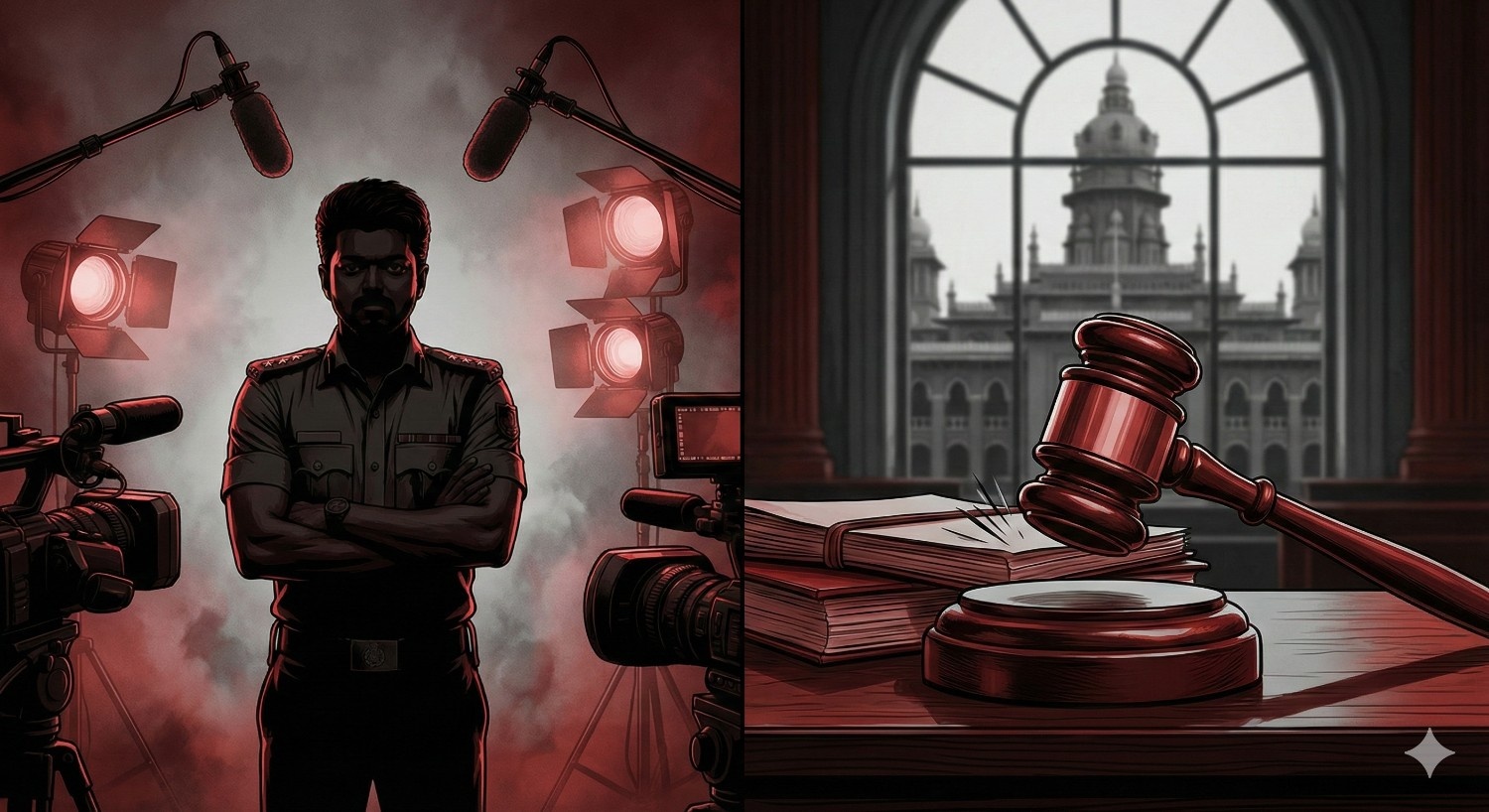
In the vibrant tapestry of Indian cinema, few events garner as much fervour and frenzy as the release of a film starring Joseph Vijay Chandrasekhar, affectionately known to millions simply as ‘Thalapathy’ (The Commander). However, the anticipation surrounding his sixty-ninth film, Jana Nayagan (People’s Hero), has transcended mere cinematic excitement to become a flashpoint of legal wrangling, political controversy, and industry anxiety. Scheduled originally for a grand release during the Pongal festival on 9 January 2026, the film finds itself in a precarious limbo, indefinitely delayed as the Madras High Court deliberates on its fate. This marks a pivotal moment not just for the Tamil film industry, but for the political landscape of Tamil Nadu, as this project serves as Vijay’s swan song before his full-fledged entry into politics with his party, the Tamilaga Vettri Kazhagam (TVK).
The Swansong: A Cinematic Behemoth
Jana Nayagan is not merely a film; it is being positioned as a historic event. Directed by H. Vinoth and produced by Venkat K. Narayana under the banner of KVN Productions, the film is a political action thriller reportedly made on a budget ranging between ₹300 and ₹500 crore. The stakes could not be higher. It features an ensemble cast including Pooja Hegde, Bobby Deol, Gautham Vasudev Menon, Prakash Raj, and Mamitha Baiju, with a musical score by the sensation Anirudh Ravichander. As a remake of the 2023 Telugu film Bhagavanth Kesari, the narrative promises a potent mix of action and social messaging—specifically regarding child abuse—which reportedly resonated deeply with Vijay.
However, the film’s significance lies heavily in its meta-narrative. On 2 February 2024, Vijay announced his retirement from cinema after this project to dedicate himself entirely to public service. Consequently, the film is viewed by his supporters not just as entertainment, but as a political manifesto and a farewell gathering. Spokespersons for the TVK have described the release as a "festival" and a "historic event," asserting that no force can stop it for long. Yet, the machinery of film certification has brought this juggernaut to a grinding halt.
The Censor Board Controversy
The core of the current crisis lies in a dispute with the Central Board of Film Certification (CBFC). KVN Productions submitted the film for certification on 18 December 2025. The initial Examining Committee viewed the film and, according to the producers, recommended a U/A 16+ certificate subject to certain modifications and cuts, which the filmmakers accepted. Under normal circumstances, the certificate should have been issued shortly thereafter, paving the way for the scheduled theatrical release.
However, the situation took a complex turn in early January 2026. Just days before the release, the CBFC Chairperson, Prasoon Joshi, referred the film to a Revising Committee. This decision was ostensibly based on a complaint received regarding the film’s portrayal of religious sentiments and the depiction of the armed forces. The producers were blindsided, arguing that reopening a settled matter based on a complaint when the film had not even been publicly screened was procedurally irregular. They questioned how a minority view or an external complaint could override the decision of the Examining Committee.
The delay caused by this referral was catastrophic for the production house. With a global release planned, including premiere shows in the United States and the United Kingdom where pre-bookings had already broken records, the lack of a censor certificate effectively grounded the film. The financial implications were immediate and severe, with reports suggesting the producers faced losses amounting to ₹50 crore due to the last-minute postponement and the refunding of tickets by platforms like BookMyShow.
The Legal Battleground: Madras High Court
Faced with an indefinite delay, KVN Productions sought legal recourse, leading to a dramatic series of hearings at the Madras High Court. The legal timeline reveals the intensity of the struggle between the creative liberty of the filmmakers and the regulatory oversight of the state.
The Single Judge’s Order
Initially, the producers approached the court seeking a direction for the CBFC to issue the certificate. They argued that the delay was causing massive financial strain and that the film had already been cleared in 25 other countries, including receiving a '15' rating from the British Board of Film Classification (BBFC). On 9 January 2026—the day the film was meant to hit screens—Justice P.T. Asha of the Madras High Court delivered a significant ruling. The court directed the CBFC to grant the U/A 16+ certificate immediately, warning that entertaining complaints at such a late stage would lead to a "dangerous trend." This seemed, for a moment, to be a victory for Vijay’s team.
The Appeal and The Stay
The relief, however, was ephemeral. The CBFC immediately appealed against the single judge's order. A division bench comprising Chief Justice Manindra Mohan Shrivastava and Justice G. Arul Murugan heard the urgent appeal. The Additional Solicitor General (ASG), representing the CBFC, argued that the single judge had erred by issuing a mandatory direction without giving the Board adequate opportunity to file a counter-affidavit. The ASG contended that the initial communication from the Examining Committee was merely interim and not a final statutory decision.
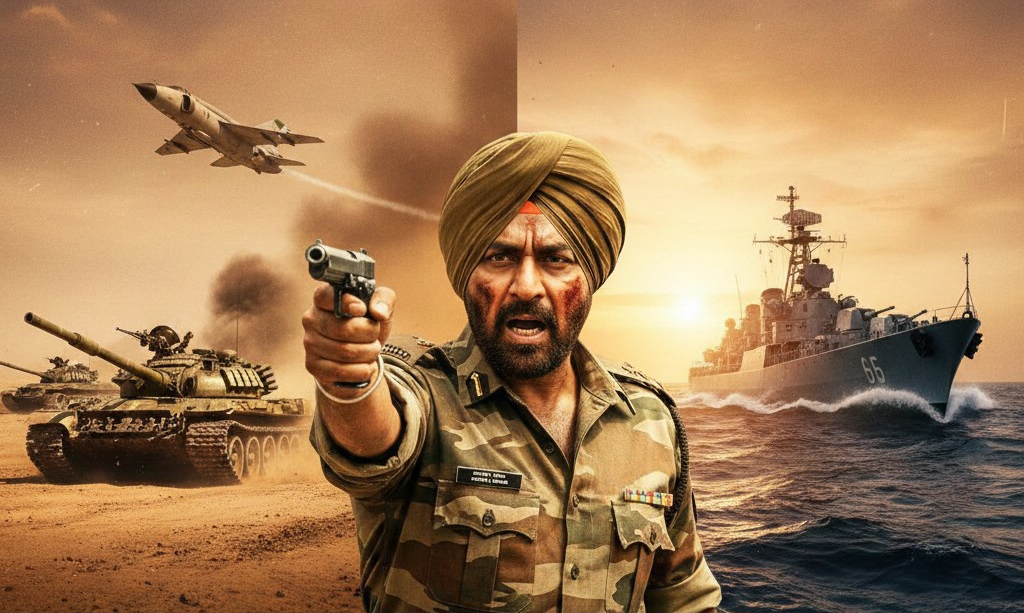
Furthermore, the CBFC raised specific concerns regarding the portrayal of the armed forces in the film. The ASG argued that strict protocols must be followed when depicting military personnel and insignia, suggesting that expert opinion might be required—a task the Examining Committee alone might not suffice for. Consequently, the division bench stayed the single judge's order, effectively halting the certification process again and pushing the matter to hearings later in January.
The Supreme Court Intervention
In a bid to save the release, KVN Productions approached the Supreme Court of India. However, on 15 January 2026, the apex court declined to entertain the plea, directing the parties back to the Madras High Court division bench. Interestingly, the Supreme Court questioned the "blistering pace" at which the single judge had disposed of the matter initially, suggesting that procedural due process must be observed regardless of the financial stakes.
Arguments in the Division Bench
As the hearings resumed in the Madras High Court on 20 January 2026, the arguments delved deep into administrative law and the rights of filmmakers. Senior Advocate Satish Parasaran, appearing for the producers, argued that the Chairperson could not have sent the film to a Revising Committee after the Examining Committee had already decided to certify it. He termed the move an "empty exercise," asserting that the producers had already removed the scenes objected to by the complainant.
A significant point of contention arose regarding the announcement of the release date. The Court questioned the propriety of announcing a release date (9 January) and soliciting bookings before securing the censor certificate. In defence, the producers argued that this is a common industry practice, citing the example of the Bollywood film Dhurandhar 2, which had announced a March release without certification. They highlighted that marketing and distribution logistics require months of lead time.
The financial pressure on the producers was also brought to the forefront. It was revealed in court that Amazon Prime Video, which had acquired the digital streaming rights for a record sum (reportedly ₹121 crore), had threatened legal action if clarity on the release date was not provided. The streaming giant had warned the producers as early as 31 December 2025 regarding the uncertainty. Despite these pleas regarding financial ruin and contractual obligations, the High Court reserved its orders on 20 January 2026, leaving the film’s fate hanging in the balance.
Political Fallout and Conspiracy Theories
It is impossible to view the delay of Jana Nayagan in isolation from Vijay’s political ambitions. In Tamil Nadu, cinema and politics are inextricably linked, with a lineage of stars-turned-leaders from M.G. Ramachandran to J. Jayalalithaa. Vijay’s entry into the political arena with the TVK has ruffled feathers across the spectrum.
The censorship struggle has sparked widespread condemnation from political leaders and the film fraternity. Tamil Nadu Chief Minister M.K. Stalin criticised the Union government, accusing it of using the CBFC as a political tool, akin to central investigative agencies. This sentiment was echoed by opposition leader Rahul Gandhi, who termed the delay an "attack on Tamil culture" and an attempt to suppress the voice of the Tamil people.
Actor and politician Kamal Haasan issued a strong statement demanding a "principled relook" at the certification process, arguing that freedom of expression should not be diminished by opacity. Directors like Pa. Ranjith and Karthik Subbaraj have called for industry unity, describing the board’s actions as driven by "political vendetta."
The narrative being constructed by Vijay’s supporters is one of victimhood and resistance. By delaying the film, critics argue, the establishment hopes to dampen the momentum of Vijay’s political launch. However, history suggests that such controversies often have the opposite effect, galanising the fan base and creating a wave of sympathy. As TVK spokespersons have stated, they view the delay not just as a hurdle for a movie, but as a political challenge to be overcome.
Economic Implications for the Industry
The delay of a film of this magnitude sends shockwaves through the economy of the film industry. Jana Nayagan had generated unprecedented pre-release business. The theatrical rights for Tamil Nadu alone were sold for ₹106.5 crore, a record figure. Overseas rights fetched roughly ₹78 crore. The film was expected to rejuvenate the box office after a relatively lukewarm year.
Theatre owners, distributors, and ancillary businesses were banking on the Pongal windfall. The cancellation of shows resulted in chaos, with exhibitors having to refund vast sums. The void left by Jana Nayagan during the festive season meant a significant loss of revenue that cannot be easily recouped. Furthermore, the uncertainty complicates the release calendar for other major films. Trade analysts worry that if the film is pushed to mid-February or March, it might clash with other big-budget releases or, worse, run into the election code of conduct restrictions if the Tamil Nadu state elections are announced.
The producers have also highlighted the international ramifications. With the film cleared in territories like the UK and USA, the disjointed release strategy forced by the domestic delay encourages piracy, further eroding the film’s potential revenue. The precedent this sets is alarming for investors; if a project with ₹500 crore riding on it can be stalled indefinitely due to a procedural loop at the eleventh hour, the risk profile of investing in Indian cinema increases significantly.
The Content of Contention
While the legal arguments focus on procedure, the underlying issue remains the content. Reports suggest the film touches upon themes of democracy, corruption, and the military. The tagline "torch bearer of democracy" and posters referencing iconic political figures like M.G.R. leave little doubt about the film’s intentions. It is designed to be a launchpad for Vijay’s political persona.
The specific objections regarding religious sentiments and the armed forces are common tropes in Indian censorship battles. However, the timing suggests a higher level of scrutiny than usual. The producers have claimed that the rights to the remake were purchased specifically for a scene regarding child abuse, attempting to frame the narrative around social justice. Yet, the aggressive political posturing inherent in a "Thalapathy" film, especially his final one, invites close inspection from those in power.
Waiting for the Verdict
As of late January 2026, the industry and fans wait with bated breath. The Madras High Court’s reserved order will determine not just when the film releases, but whether the CBFC’s power to recall a film to a revising committee based on complaints stands valid against the financial and logistical realities of film production.
For Vijay, this legal battle serves as a baptism by fire for his political career. It allows him to position himself as a crusader fighting against a system that seeks to silence him. Whether the film releases in February or later, the controversy has ensured that Jana Nayagan will be discussed far beyond the entertainment pages. It has become a case study in the friction between art, commerce, and politics in India.
The outcome remains uncertain. Will the court uphold the creative rights of the producers and allow the certificate to be issued based on the initial committee's findings? Or will it validate the CBFC’s cautious approach, potentially mandating further cuts or reviews? Until the judgment is pronounced, the screens remain dark, but the drama off-screen continues to play out with all the intensity of a blockbuster thriller.
The saga of Jana Nayagan underscores a critical vulnerability in the Indian film industry: the lack of a streamlined, time-bound, and transparent certification process that respects the immense financial risks undertaken by producers. As the delay stretches on, the question remains—will Vijay’s final bow be a celebration of cinema, or a casualty of politics?


Community Insights