
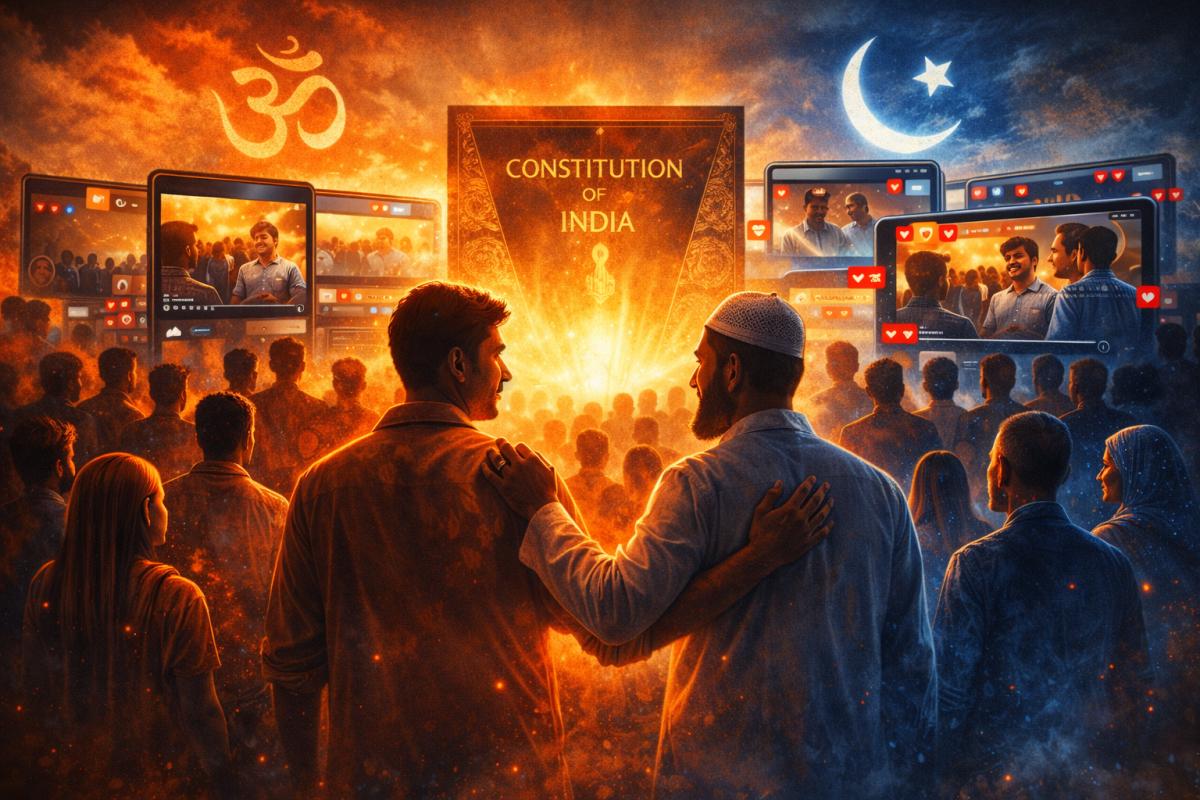
In recent years, debates about religion, identity, and politics have become increasingly intense in India. Social media, political campaigns, and ideological movements have amplified discussions about nationalism, religious identity, and communal relations. Against this backdrop, an incident involving a young man named Deepak Kumar triggered a nationwide conversation about humanity, courage, and the politics of hate.
The phrase “Mohammad Deepak Effect” emerged after a viral video showed Deepak standing up to a group of people harassing a Muslim shopkeeper in Kotdwar, Uttarakhand. When confronted about his identity, he boldly declared, “My name is Mohammad Deepak.” That statement became symbolic of resistance against communal hostility and sparked a broader debate across India.
This moment raised a fundamental question: Are ordinary citizens beginning to challenge the politics of hate and fear? The answer is complex and involves political narratives, social movements, media influence, and the evolving mindset of citizens.
The Kotdwar Incident: Where It All Began
The controversy began on January 26, 2026, in Kotdwar, a town in Uttarakhand. A group associated with the Bajrang Dal confronted an elderly Muslim shopkeeper and demanded that he change the name of his shop because it contained the word “Baba.” They argued that the term should only be used in a Hindu religious context.
During the confrontation, a local gym trainer named Deepak Kumar intervened and defended the shopkeeper’s right to keep his business name. The confrontation was recorded on video and quickly spread across social media platforms.
In the viral clip, Deepak responded to questions about his identity by saying he was “Mohammad Deepak,” symbolically rejecting attempts to divide people along religious lines. The video captured public attention and ignited a national conversation about communal harmony.
Key Elements of the Incident
- A dispute over the name of a Muslim-owned shop
- Harassment by a group of activists
- Deepak Kumar stepping in to defend the shopkeeper
- The viral declaration “My name is Mohammad Deepak”
- Nationwide social media discussion
What might have remained a small local incident quickly became a national story because it symbolized a larger social issue: the growing tension between communal politics and constitutional values.
Understanding the “Mohammad Deepak Effect”
The term “Mohammad Deepak Effect” describes the reaction that followed the viral incident. Many people across India praised Deepak’s courage and began discussing whether ordinary citizens should stand up against religious polarization.
The idea behind the effect is simple yet powerful: one act of courage can inspire others to resist intimidation and defend principles of coexistence.
Sometimes a single moment of moral clarity can reshape public conversation about justice and humanity.
Supporters viewed Deepak’s action as proof that many Hindus reject hate-driven narratives and prefer a more inclusive vision of society. Critics, however, argued that such incidents are often politicized and exaggerated in media debates.
Religion, Identity, and Indian Democracy
India’s constitutional framework emphasizes secularism and equality. The country is home to multiple religions, languages, and cultures. This diversity has historically been one of India’s defining strengths.
However, identity politics has increasingly become part of political discourse. Religious symbolism and narratives are often used by political actors to mobilize voters and shape public opinion.
This trend has created a complex environment where religion and politics sometimes intersect in controversial ways.
Factors Influencing Religious Polarization
- Political campaigning based on identity
- Social media misinformation
- Historical grievances and narratives
- Economic and social frustrations
In such an environment, symbolic acts like Deepak’s can resonate strongly because they challenge the dominant narrative of division.
The Role of Social Media in Amplifying the Incident
Social media played a crucial role in transforming the Kotdwar incident into a national discussion. The viral video reached millions of viewers within days.
Platforms such as Twitter, YouTube, and Instagram enabled rapid dissemination of the clip, turning a local event into a nationwide debate.
Digital platforms often amplify emotionally charged stories, especially those involving identity and morality.
Why the Video Went Viral
- Clear moral conflict between harassment and resistance
- A powerful symbolic statement
- Emotional storytelling
- Political relevance in current debates
The combination of these factors helped transform the incident into a broader political and social narrative.
Public Reaction Across India
Public reactions to the Mohammad Deepak incident varied widely. Many citizens praised his courage and described him as an example of true religious values.
Others saw the incident as part of a broader political debate about communal tensions and ideological movements.
Political leaders, journalists, and activists also weighed in on the discussion, each interpreting the event through their own ideological perspectives.
| Group | Reaction |
|---|---|
| Social Media Users | Praise for courage and unity |
| Political Commentators | Debate over communal politics |
| Activists | Calls for defending constitutional values |
| Critics | Concerns about politicization |
The diversity of reactions reflects the complexity of India’s political and social landscape.
Hate Politics and Electoral Strategies
Political analysts often discuss the concept of “hate politics,” referring to strategies that mobilize voters through fear or hostility toward certain groups.
Such strategies are not unique to India. Around the world, political movements have sometimes used identity-based narratives to consolidate support.
Critics argue that fear-based politics can distract voters from discussions about governance, economic development, and policy performance.
Common Features of Identity-Based Political Campaigns
- Emotional messaging
- Historical narratives
- Religious symbolism
- Social media mobilization
Supporters of identity politics often argue that it protects cultural traditions and national identity, while critics say it risks deepening social divisions.
Why Deepak’s Identity Matters
One reason the incident attracted such attention is that Deepak himself is a practicing Hindu. Reports indicate that he is a devotee of Lord Hanuman and openly expresses his religious identity.
Because of this, his act was interpreted by many as evidence that opposition to communal hatred can come from within the majority community itself.
This aspect of the story made the incident particularly powerful in the public imagination.
The Broader Debate: Love vs Hate Narratives
In modern political communication, narratives often revolve around two contrasting ideas: unity and division.
Some political campaigns emphasize harmony, coexistence, and national unity. Others highlight threats, grievances, and identity conflicts.
The Mohammad Deepak incident became a symbol in this larger debate.
The story resonated because it suggested that ordinary citizens can reject division and defend shared humanity.
Two Competing Narratives
- Politics based on unity and coexistence
- Politics based on identity and polarization
Both narratives continue to influence public discourse in India.
Media Narratives and Political Interpretation
Media coverage of the incident varied widely depending on editorial perspectives. Some outlets framed the story as a heroic act of resistance against hate, while others questioned whether the incident was being politically exploited.
In the age of digital media, competing narratives often emerge simultaneously, making it difficult for audiences to determine which interpretation is most accurate.
This fragmentation of information has become a defining feature of modern political communication.
Lessons from the Mohammad Deepak Moment
Regardless of political interpretations, the incident offers several important lessons about civic courage and social responsibility.
- Individual actions can influence national conversations
- Civil courage can challenge intimidation
- Social media can amplify local events into national debates
- Public discourse often reflects deeper societal tensions
These lessons highlight the importance of active citizenship in democratic societies.
The Future of Communal Harmony in India
India’s diversity remains one of its greatest strengths. Maintaining harmony among different communities requires constant effort from political leaders, civil society, and ordinary citizens.
Events like the Kotdwar incident demonstrate both the challenges and the possibilities within Indian society.
While polarization remains a concern, acts of solidarity and courage continue to inspire hope for a more inclusive future.
Steps Toward Stronger Social Harmony
- Encouraging interfaith dialogue
- Promoting constitutional values
- Responsible media reporting
- Civic education and awareness
These efforts can help strengthen democratic institutions and protect social cohesion.
Conclusion
The “Mohammad Deepak Effect” represents more than just a viral moment on social media. It reflects a deeper conversation within Indian society about identity, politics, and the meaning of true religious values. The Kotdwar incident demonstrated how one individual’s courage can challenge intimidation and spark nationwide debate.
Whether viewed as a symbol of resistance against hate politics or as a politically interpreted event, the story highlights the power of civic courage and moral conviction. In a country as diverse as India, the future of social harmony will depend not only on political leadership but also on the everyday choices of ordinary citizens who decide whether to stand for division or unity.
Community Insights