
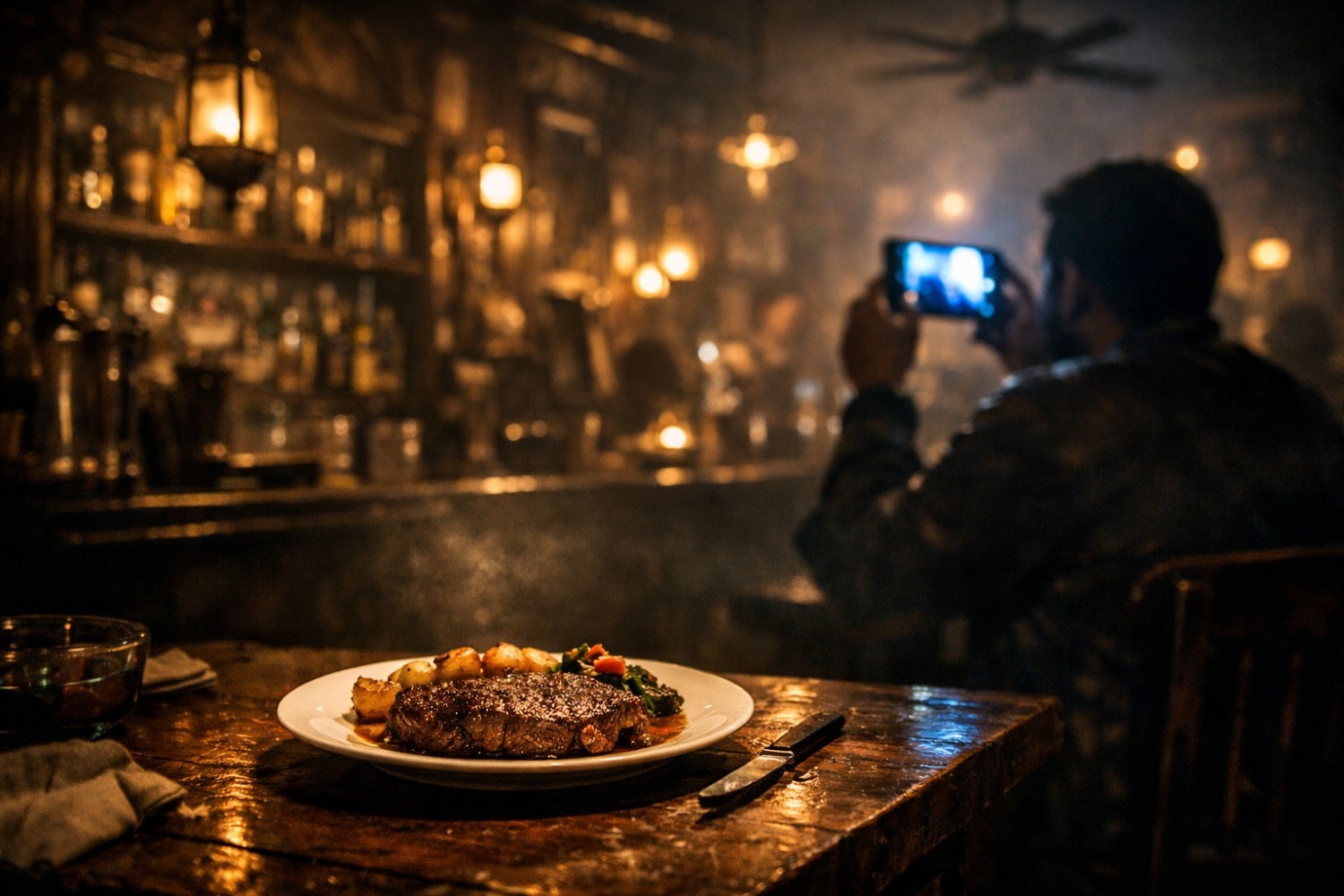
In the heart of Kolkata, Park Street has always stood as a sentinel of the city’s cosmopolitan soul—a place where food, history, and diverse cultures intersect without friction. However, in late January 2026, this delicate fabric was tested by a controversy that began on a dinner plate and spiraled into a national debate on religious sentiment, the "outrage economy," and the responsibilities of digital influencers. The incident at the iconic Olypub, involving Bengali actor and YouTuber Sayak Chakraborty, serves as a grim case study of what happens when culinary heritage meets the volatile mechanics of viral social media.
This deep dive explores the anatomy of the scandal: from the alleged mix-up of beef and mutton to the arrest of a waiter, the backlash from the Tollywood fraternity, and the eventual legal pivot that turned the accuser into the accused.
The Incident: A Friday Night on Park Street
The timeline of events began on the evening of Friday, January 30, 2026, when Sayak Chakraborty, accompanied by fellow content creators Ananya Guha and Sukanta Kundu, visited Olypub. Established in the late 1940s, Olypub is a legendary institution known for its affordable steaks and gritty, no-frills charm.
According to the complaint, the group ordered a mutton steak. The situation descended into chaos when a second plate arrived, leading the group to realize—or be told—that the first dish they consumed was beef. In the age of the smartphone, the immediate reaction was not private resolution but public broadcast. Chakraborty went live, recording a confrontation with the staff.
"Do you know that I am a Brahmin?" Chakraborty was heard demanding of the waiter, aggressively questioning the staff's religious faith despite repeated apologies.
Chakraborty alleged that the serving of beef was not a service lapse but a “deliberate attempt” to hurt his religious sentiments.
The Immediate Aftermath: Arrest and Closure
The ramifications were swift. Following the formal complaint at the Park Street police station, the Kolkata Police acted with notable speed:
- The Arrest: Waiter Sheikh Nasiruddin was arrested and charged under Section 299 of the Bharatiya Nyaya Sanhita (BNS).
- The Charge: Deliberate and malicious acts intended to outrage religious feelings.
- The Closure: Olypub was forced to shut its doors for two days to manage escalating tensions.
The management issued a statement seeking to de-escalate, reiterating that the incident was a “genuine mistake with no harm intended.”
The "Genuineness" Debate: Steak vs. Patty
As news spread, a counter-narrative emerged regarding the physical properties of the food served at Olypub:
| Dish Type | Meat Composition | Texture/Appearance |
|---|---|---|
| Beef Steak | Solid slab of buffalo meat | Chewy, fibrous, distinct "solid" mouthfeel |
| Mutton Steak | Minced meat patty | Soft, hamburger-style consistency |
National Award-winning actor Ritwick Chakraborty sarcastically questioned how a food vlogger could consume an entire plate of a solid meat slab without realizing it was not a minced mutton patty until the check arrived. Skepticism grew as netizens surfaced past videos of Sayak Chakraborty wearing a skull cap and championing communal harmony, contrasting sharply with his sudden invocation of "Brahminical status."
The Political Appropriation of a Dinner Plate
The incident was quickly swept up into political polarization:
- BJP: Framed the error as a “preplanned” assault on Hindu sentiments. Leaders like Rahul Sinha asked, “Why are Hindus made a soft target?”
- TMC & CPI(M): Viewed the incident as a manufactured crisis. TMC spokesperson Arup Chakraborty questioned why a person with strict dietary restrictions would visit a restaurant famous for serving beef for nearly a century.
The Legal Pivot: From Accuser to Accused
Within 72 hours, public opinion turned. The aggressive bullying of a low-wage worker triggered a massive backlash, leading to four separate complaints against the influencer. The Kolkata Police eventually registered an FIR against Sayak Chakraborty for “inciting riots” and promoting communal enmity.
Chakraborty attempted a "climbdown," deleting the videos and issuing an apology. However, legal experts noted that Section 299 of the BNS is non-compoundable; the case against the waiter cannot be simply dismissed by the complainant.
The Cultural Defense: Tollywood and the "City of Joy"
Kolkata’s civil society and film industry were vocal in their condemnation of the communalizing of a food error:
- Birsa Dasgupta: Highlighted Olypub’s heritage as a pluralistic space since the late 1940s.
- Rahul Arunoday Banerjee: Urged followers to block creators who incite hatred for engagement.
- Manasi Sinha: Criticized the behavior as entitlement masked by religious outrage.
This collective response highlighted a distinct "Kolkata ethos" that resists the segregation of public spaces based on food habits.
The "Influencer on the Loose"
Media commentators used this event to describe the "Algorithm of Communalism," where creators prioritize viral shocks over ethics. Behavioral red flags identified by critics included:
- The "delayed reaction" (eating the whole meal before complaining).
- The power imbalance (an influencer with 1.4 million followers vs. a daily-wage waiter).
- The "wallet support" movement, where citizens visited Olypub specifically to support the staff.
Conclusion
The Olypub beef incident of 2026 will likely be remembered not for the culinary error, but for the societal antibodies it activated. It serves as a complex case study where a factual service mistake was leveraged to manufacture a communal crisis, only to be neutralized by the city's cultural resilience. For the digital age, it offers a stark warning: the power to broadcast comes with the potential for real-world harm. Ultimately, the Olypub incident reinforces a simple truth: in a diverse society, the plate should remain a place of pleasure, not a battlefield for purity.


Community Insights