

As West Bengal gears up for the upcoming Assembly polls, the political landscape is witnessing a significant and potentially volatile shift. For over a decade, the Trinamool Congress (TMC) has enjoyed hegemony over the minority vote bank—a demographic that constitutes a significant portion of the state's electorate. However, fresh reports from the ground suggest that this fortress is under siege. New political formations, symbolic protests, and simmering discontent are fueling talks of a "minority-led front" that could complicate matters for Chief Minister Mamata Banerjee.
1. The Symbols of Defiance: A New "Babri" in Beldanga
To understand the current political temperature in West Bengal, one must look away from the bustle of Kolkata and toward the districts. Specifically, along National Highway 12 in Beldanga, located in the Murshidabad district, the political messaging has taken on a visceral, historic symbolism.
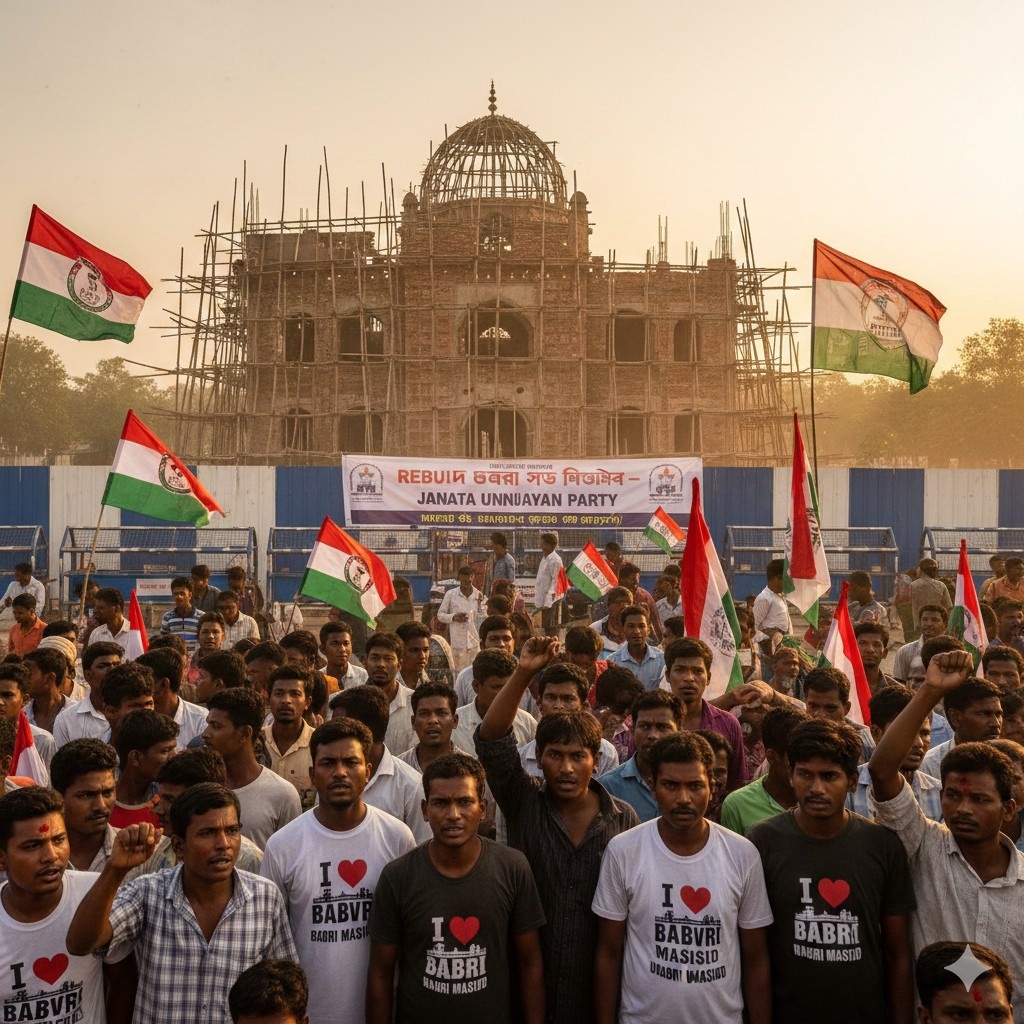
Reports indicate that a plot of land has been barricaded by police guardrails, marking the construction site of a replica of the Babri Masjid. This project is a political statement spearheaded by Humayun Kabir, a suspended Trinamool Congress MLA who has since floated his own political outfit, the Janata Unnayan Party (JUP). By invoking the memory of the demolished mosque, Kabir is attempting to galvanise a base that feels marginalised, using emotional resonance to challenge the ruling party's narrative.
2. The Architects of the Third Front
The political churn is solidifying into a strategic alliance. The primary objective is to break the binary contest between the TMC and the BJP by offering a third, minority-focused alternative.
- Humayun Kabir and the JUP: Kabir has accused his former party of being anti-minority, calling for Muslims in Bengal to unite outside the "ruling party's tent".
- Naushad Siddiqui and the ISF: The Indian Secular Front (ISF), led by MLA Naushad Siddiqui, is linked to the revered Furfura Sharif shrine, giving it significant religious and social clout.
- The Emerging Alliance: Efforts are underway to formalise a tie-up between the JUP and ISF. Discussions are also reportedly expanding to include the Kerala-based SDPI and proposals have been sent to the Left Front and the Congress.
3. The Roots of Discontent: Why Now?
For a state where Muslims make up approximately 27% of the population, the TMC has relied heavily on their support. However, specific policy grievances are driving a wedge in this relationship:
- The OBC Classification Controversy: Significant anger followed the removal of 37 groups from the OBC list and the reclassification of 34 additional minority groups.
- The Waqf Law Pivot: Sections of the community were reportedly unhappy when the state government implemented the amended Waqf law after previously vowing to stall it.
- Electoral Roll Anxiety: The Special Intensive Revision (SIR) of electoral rolls has become a dominant issue, with the opposition suggesting the ruling party hasn't done enough to protect voters from potential disenfranchisement.
4. The Numbers Game: TMC’s Fortress vs. The New Challengers
While the rhetoric is heated, dislodging the TMC is a massive statistical challenge. The ruling party’s grip on minority-majority districts has tightened significantly over the last decade, as shown in the table below:
| District | TMC Vote Share (2011) | TMC Vote Share (2016) | TMC Vote Share (2021) |
|---|---|---|---|
| Malda | 8% | 33.5% | 53% |
| Murshidabad | 6% | 31.8% | 54% |
Currently, the TMC holds 28 of the 34 seats in these two districts. The "Spoiler Effect" of the ISF-JUP formation could cause trouble in certain pockets by dividing the minority vote, particularly in Bhangar, Malda, and Murshidabad.
5. The Congress Factor and Shifting Loyalties
The potential fragmentation of the vote is further complicated by the return of TMC’s Rajya Sabha MP Mausam Benazir Noor to the Congress. As the niece of the late Congress stalwart A.B.A. Ghani Khan Choudhury, her move adds to the perception that the TMC may face a stiffer challenge in Malda than in previous years.
6. The BJP’s Angle and the "Best Bet" Argument
The BJP stands as a silent observer, hoping a split in the minority vote will aid their consolidation of Hindu votes. However, the TMC retains a potent counter-argument: electability. Mamata Banerjee remains the "best bet" for many to keep the BJP out of power, and the party remains vocal against the detention of Bengali-speaking migrants in other states to maintain this loyalty.
Conclusion: A Test of Dominance
The upcoming elections will determine if local grievances can override the strategic voting that has sustained the TMC. While the TMC holds a commanding lead, the emergence of a coordinated front signifies a new chapter in Bengal's politics. The ruling party can no longer expect a "free run" in its traditional strongholds.
Key Takeaways: Monitor the potential alliance with the Left and Congress, watch the emotional response to symbols like the Beldanga mosque replica, and track how even small shifts in vote share could impact seat calculations.
Community Insights