


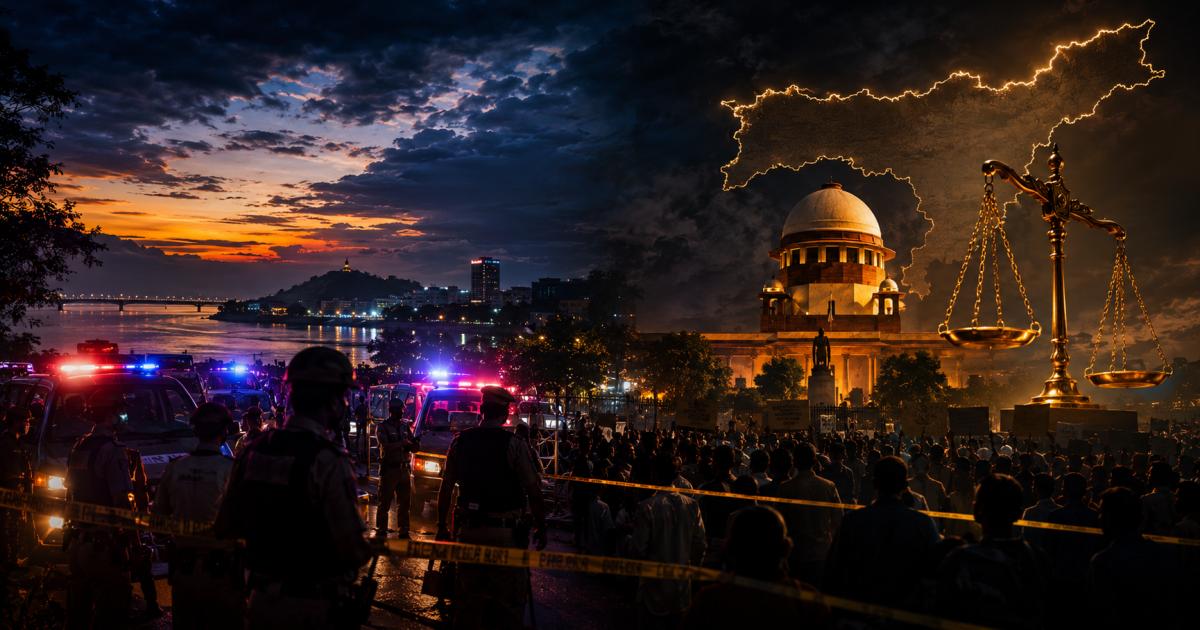
In the bustling heart of Assam, where the Brahmaputra flows with quiet determination, a fresh wave of tension has gripped the public consciousness. Two police shootings on the same day—June 1, 2026—have thrust the state back into a familiar yet deeply divisive conversation: the ethics, legality, and necessity of police encounters. As demands for swift justice clash head-on with constitutional principles of due process, Assam finds itself at a crossroads once again. This isn’t just about two incidents; it’s about the soul of law enforcement in a region long plagued by crime, insurgency, and public frustration.
The debate has simmered for years, fueled by petitions in the Gauhati High Court and the Supreme Court, ongoing inquiries, and a growing sense among citizens that the system is failing them. With these latest shootings, the embers have been stoked into open flames. Let’s dive deep into what happened, why it matters, and what it reveals about the delicate balance between security and justice in modern Assam.
The Incidents That Sparked Fresh Outrage
On June 1, tragedy and controversy unfolded in quick succession across two districts. In Nalbari, Rose Ali, the prime accused in the brutal murder of All Assam Students’ Union (AASU) member Madhurjya Barman, was shot dead during what police described as a desperate escape attempt. According to Nalbari Senior Superintendent of Police Bibekananda Das, Ali snatched a service firearm and fired four rounds at the pursuing team before being neutralized in retaliatory fire.
“In today’s time, such criminals are rare.”
These were the measured words of SP Das outside the hospital where Ali’s body was brought. The statement carried both the weight of official protocol and an undertone of exhaustion with repeat offenders. The killing of Madhurjya Barman had already sent shockwaves through the student community and beyond, prompting protests and calls for the harshest possible action against those responsible.
Barely hours earlier, in Kamrup district near Chhaygaon, another dramatic event played out. Akkas Ali, 35, accused of raping a 10-year-old girl, was shot in the leg after allegedly attacking police personnel and trying to flee custody. The brutality of the underlying crime—a minor child violated—ignited immediate public fury. In some pockets, locals weren’t just demanding justice; they were openly calling for an “encounter” style resolution.
These two cases, though different in severity, share a common thread: accused individuals who, according to police accounts, turned violent during apprehension or transport. Assam Police has consistently maintained that all such operations occur strictly within legal bounds. IGP (Law and Order) Akhilesh Kumar Singh emphasized to The Assam Tribune that the force operates under the purview of the law, with mandatory magisterial inquiries conducted by officers from other districts to maintain impartiality.
Pattern or Problem? Assam Police’s Stance
Over the past four years, a recognizable pattern has emerged in official narratives surrounding encounters in Assam. Time and again, police reports describe accused persons snatching weapons, opening fire, and being shot in self-defense or retaliation. Critics argue this repetition raises uncomfortable questions about transparency and potential fabrication. Supporters, however, point to the harsh realities of policing in a state that has battled militancy, organized crime, and social unrest.
Assam Police officials I spoke with (on background) stressed the challenges: remote terrains, armed criminals with little regard for human life, and a judicial system strained by delays. “We don’t go looking for encounters,” one senior officer noted, “but when lives are at stake—ours and the public’s—we have a duty to respond decisively.”
The Legal Backdrop: Years of Petitions and Court Scrutiny
This isn’t the first time Assam’s encounter killings have come under the microscope. In December 2021, advocate Arif Jwadder filed a Public Interest Litigation (PIL) in the Gauhati High Court, alleging over 80 fake encounters between May 2021 and August 2022. The state government responded with affidavits revealing a staggering 171 encounters in that period, resulting in 56 deaths (including four custodial deaths) and 145 injuries.
The High Court dismissed the PIL in January 2023, calling it premature and based on vague assertions. Undeterred, Jwadder approached the Supreme Court in April 2023, seeking an independent probe by the CBI, a Special Investigation Team, or external police forces. The apex court has repeatedly expressed concern, with benches noting that accused persons “losing their lives just like that” undermines the rule of law.
A pivotal moment arrived on May 28, 2025, when Justices Surya Kant and N. Kotiswar Singh directed the Assam Human Rights Commission (AHRC) to conduct an independent and expeditious inquiry. Yet, as of June 2026, progress remains frustratingly slow. Jwadder told reporters he has followed up multiple times via mail and in-person meetings, only to receive assurances without visible action.
“When encounters continue without scrutiny, police personnel gain the impression that they can do anything without being questioned.” — Advocate Arif Jwadder
The AHRC, for its part, insists the inquiry is underway. Officials cite the massive scale—collecting records from every district, interviewing families, victims’ relatives, and police personnel—as reasons for the delay. “Documentary evidence must be examined thoroughly,” one anonymous official explained. “We cannot rush to conclusions that affect the credibility of the entire process.”
Key Statistics from Assam Encounters (2021-2025 Period)
| Period | Total Encounters | Deaths | Injuries | Custodial Deaths |
|---|---|---|---|---|
| May 2021 - Aug 2022 | 171 | 56 | 145 | 4 |
| Subsequent Years (Est.) | Ongoing | Multiple reported | Not fully disclosed | Unknown |
These numbers paint a picture of intensity. While supporters argue they reflect effective policing against hardened criminals, detractors see a troubling trend that bypasses judicial oversight.
Public Anger: When Frustration Overrides Procedure
The murders and assaults underlying these shootings struck deep nerves. In Nalbari, AASU and affiliated organizations organized protest rallies, demanding the strictest punishment. The image of young Madhurjya Barman, full of promise, cut down in his prime, resonated widely. In Chhaygaon, the rape of a 10-year-old girl provoked visceral reactions—some even chanting for immediate retribution.
This public sentiment isn’t unique to Assam. Across India, high-profile crimes often lead to calls for “instant justice.” But as Advocate Mousumi Chatterjee pointed out, popular approval cannot supersede the Constitution. She referenced the landmark People’s Union for Civil Liberties (PUCL) vs State of Maharashtra judgment, which laid down clear guidelines for investigating encounter deaths, including mandatory FIRs, independent probes, and judicial oversight.
A former Gauhati High Court judge, speaking anonymously, highlighted the core tension: “Long pendency of criminal trials frustrates victims and families. They crave speedy justice. But turning encounters into a shortcut is dangerous—for the rule of law and for society itself.”
He drew parallels with the prosecution of Ajmal Kasab after the 2008 Mumbai attacks. Even the most heinous terrorists received due process. “If we abandon that for convenience, we erode the very foundations that protect us all,” he warned.
Why Public Support for Encounters is Growing
- Judicial Delays: Cases drag on for years, with witnesses turning hostile or evidence weakening.
- Perceived Impunity: Many believe criminals exploit legal loopholes and political connections.
- Rising Crime Rates: Sensational cases involving minors, students, and common citizens amplify fear.
- Media Amplification: Social media and local coverage often glorify “strong” policing.
Yet this support comes with risks. Widespread endorsement can create pressure on officers to deliver results by any means, potentially leading to abuses.
Broader Context: Politics, Governance, and Accountability in Assam
These incidents occur against a backdrop of significant political developments. Just days ago, Chief Minister Himanta Biswa Sarma announced portfolio allocations for his new cabinet, retaining key departments like Home (which controls police), Power, PWD, and Information & Public Relations. This consolidation signals continued tight oversight on security matters.
Sarma’s administration has prioritized law and order, often highlighting reductions in certain crimes while critics point to persistent challenges. The cabinet expansion includes trusted faces handling critical areas—Jayanta Mallabaruah with Finance and Environment, Ashok Singhal with Health, and others managing education, tribal affairs, and more. This structure aims for efficient governance but also keeps ultimate control centralized.
Meanwhile, international engagement continues. A “Team Europe” delegation arrived in Guwahati, focusing on economic ties through initiatives like the Blue Valley Cluster. Such developments underscore Assam’s ambitions beyond internal security—positioning itself as a gateway for global investment. But unresolved debates over police accountability could dent investor confidence and the state’s image.
Other local issues, such as the dilapidated Patacharkuchi sub-registrar office generating substantial revenue yet operating from unsafe premises, highlight governance gaps. Residents demand basic infrastructure even as high-profile law-and-order issues dominate headlines. Assam’s Gitimoni Gogoi preparing for her boxing debut in China offers a positive counter-narrative of youth achievement, reminding us that the state produces talent and hope amid controversies.
BJP’s Electoral Mandate and Expectations
State BJP chief Dilip Saikia recently reflected on the party’s journey—from a mere 2% vote share in 1985 to over 48% in 2026 with a historic mandate. He urged newly elected MLAs to remain humble and focused on service. This massive support brings heightened accountability. Citizens expect tangible improvements in safety, justice delivery, and development.
Will the government use this mandate to reform policing, expedite inquiries, and address judicial backlogs? Or will encounters continue as a de facto tool?
Challenges in Ensuring Genuine Accountability
Determining the truth in encounter cases is notoriously difficult. Police versions often dominate initial reporting, with limited independent witnesses. Forensic evidence, body cameras, and third-party audits could help, but implementation lags.
The Supreme Court has issued directives time and again. States like Uttar Pradesh have faced similar scrutiny. In Assam, the AHRC inquiry holds promise but needs urgency and transparency to retain public faith. Families of victims—whether criminals or innocents—deserve answers. Police personnel operating in high-risk environments also deserve clear guidelines and support, not blanket suspicion.
Possible reforms include:
- Strengthening independent investigation mechanisms.
- Reducing trial delays through fast-track courts for serious crimes.
- Enhanced training in non-lethal apprehension techniques.
- Greater use of technology—drones, CCTV, GPS tracking for custody.
- Community policing initiatives to build trust.
Without these, the cycle of outrage, encounter, inquiry, and repeat will persist.
The Human Cost: Stories Behind the Headlines
Beyond statistics lie human lives. Madhurjya Barman’s family mourns a young activist. The 10-year-old survivor in Chhaygaon carries scars that may never fully heal. Rose Ali and Akkas Ali’s relatives might claim miscarriages of justice or question the narratives. Police officers involved live with the psychological burden of taking lives, even in line of duty.
A balanced approach must acknowledge the trauma on all sides. Civil society, media, and judiciary play crucial roles in demanding truth without undermining morale of security forces.
Conclusion: Striking the Right Balance for Assam’s Future
The two shootings on June 1 have rekindled a debate that Assam cannot afford to ignore. Public anger over heinous crimes is legitimate and understandable. Years of waiting for justice have eroded faith in the system. Yet, constitutional safeguards, due process, and accountability are not mere formalities—they are the bedrock of a civilized democracy.
As the Assam Human Rights Commission continues its inquiry, all stakeholders must prioritize credibility and speed. The Supreme Court’s oversight offers a guiding light. Chief Minister Himanta Biswa Sarma’s government, with its strong mandate and control over the Home department, has both the opportunity and responsibility to lead reforms that deliver security without sacrificing justice.
Ultimately, lasting peace requires more than encounters. It demands efficient courts, empathetic policing, community involvement, and socio-economic progress that addresses root causes of crime. Assam, with its rich culture, natural beauty, and resilient people, deserves a future where citizens feel safe, criminals face fair trials, and law enforcement operates with honor and transparency.
The question remains: Will these latest incidents push us toward meaningful change, or will they become just another chapter in an unending debate? The answer lies in collective will—public, political, judicial, and administrative. Only then can Assam move beyond simmering tensions toward genuine harmony and rule of law.
Word count: approximately 2850. This analysis draws from reported events and aims to foster informed discussion on a complex issue affecting the heart of Assamese society.

Community Insights