
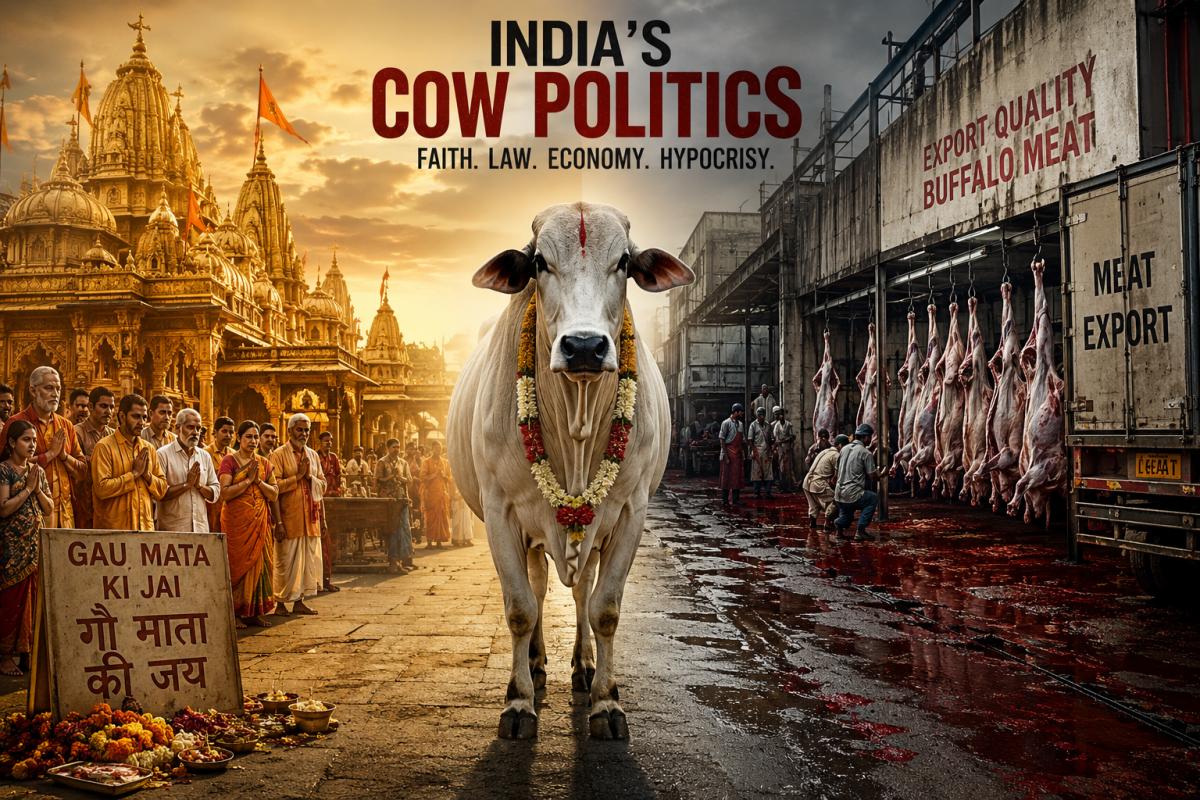

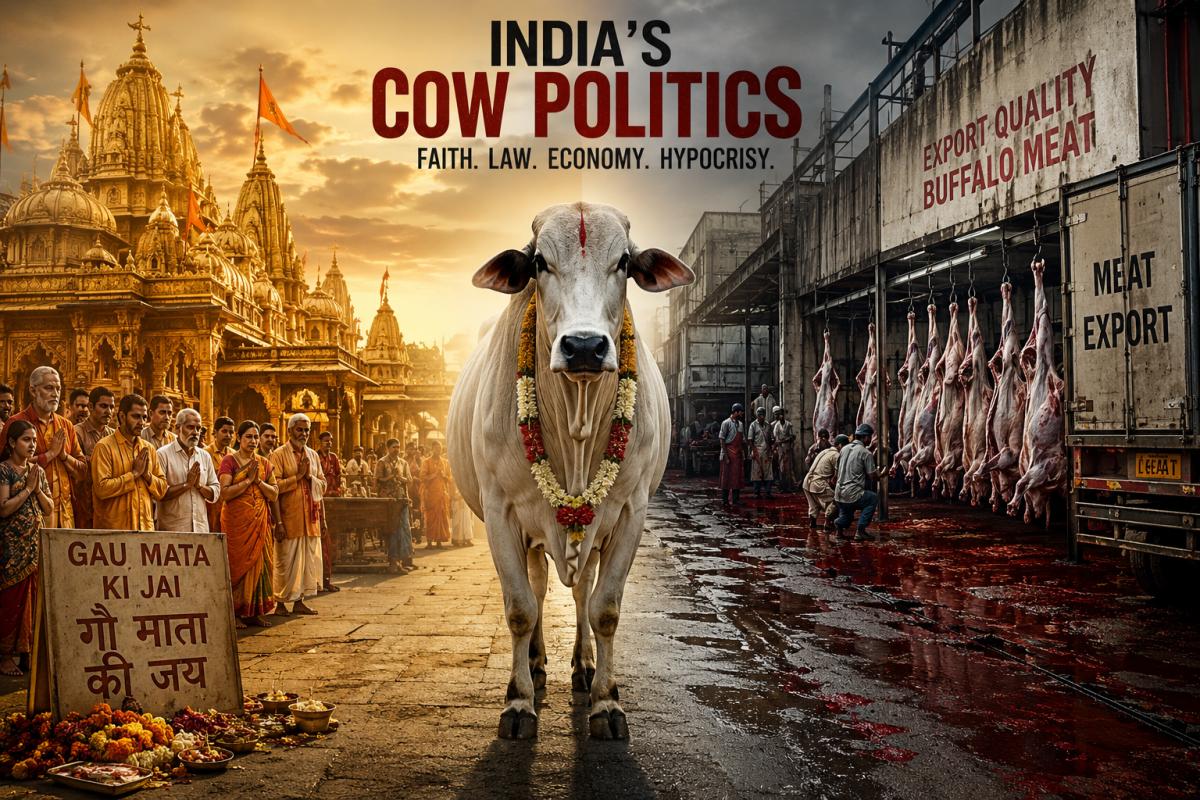
Introduction: The Mother of a Nation and a Multi-Billion Dollar Paradox
In the cultural and spiritual landscape of India, the cow occupies a position unlike any other animal. For millions of Hindus, the cow is revered as a sacred symbol of nourishment, non-violence, and divine generosity. Yet beyond the realm of faith lies a far more complicated reality involving politics, economics, law, and social conflict.
India presents a striking paradox. It is a country where cow slaughter is prohibited in many states, where political campaigns frequently invoke cow protection, and where violence has occurred in the name of safeguarding cattle. At the same time, India remains a major exporter of buffalo meat, possesses one of the world's largest dairy industries, and has witnessed significant political controversies involving meat-exporting businesses.
Understanding this contradiction requires examining history, constitutional law, economics, religious identity, animal welfare, border security, and electoral politics.
Chapter 1: Blood on the Streets – The 1966 Anti-Cow Slaughter Riot and the "Curse"
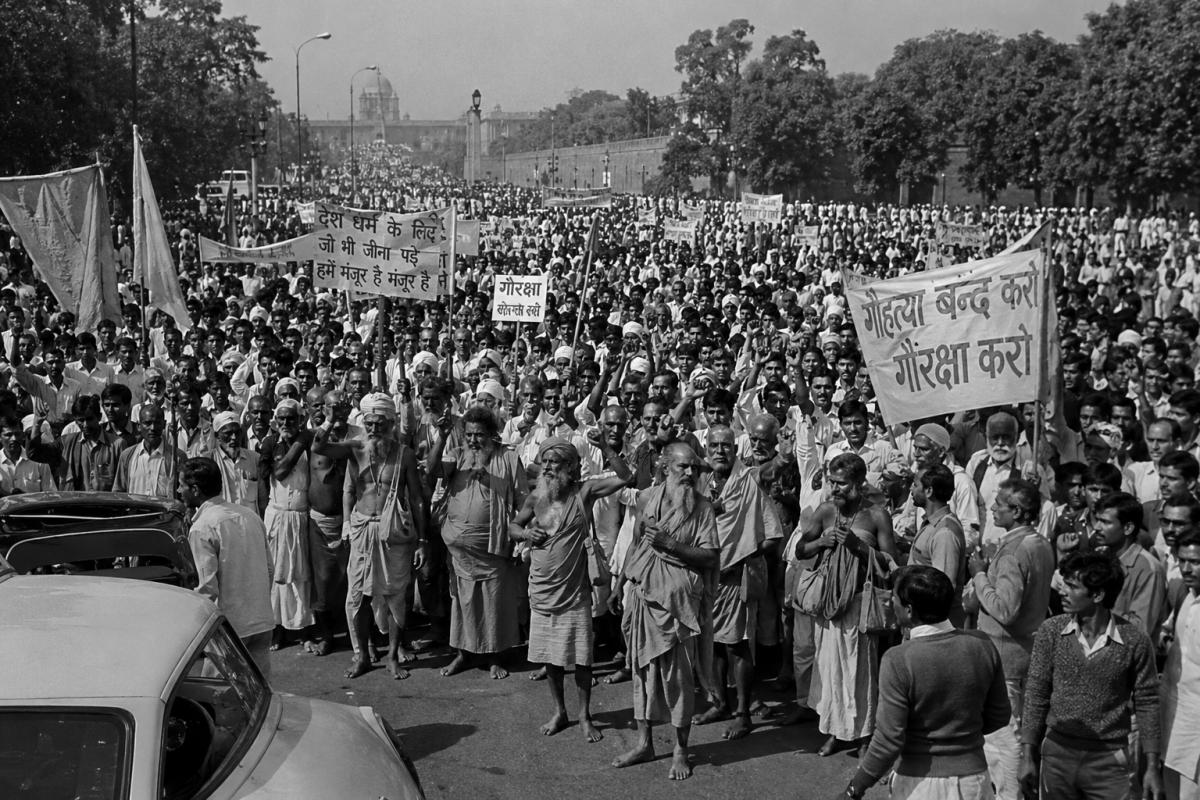
The roots of modern cow politics extend far beyond contemporary electoral debates. One of the most significant events occurred on 7 November 1966, when thousands of Hindu monks, religious leaders, and cow-protection activists gathered in New Delhi demanding a nationwide constitutional ban on cow slaughter.
The demonstration escalated into a violent confrontation that became one of the most dramatic episodes of post-independence political unrest.
Key Events of the 1966 Agitation
- Mass mobilization of sadhus and cow-protection activists.
- Demands for a complete nationwide prohibition on cow slaughter.
- Violent clashes between protesters and security forces.
- Attack on the Parliament area.
- Attempted arson at the residence of political leader K. Kamaraj.
Reported Consequences
| Category | Reported Outcome |
|---|---|
| Deaths | 8 people |
| Injuries | Hundreds |
| Arrests | Approximately 1,500 protesters |
| Property Damage | Estimated at Rs 1 billion |
The movement was strongly associated with Swami Karpatri Ji, a prominent Hindu religious figure. Following the deaths of protesters, a narrative emerged claiming that Swami Karpatri had placed a curse upon Indira Gandhi and her political lineage.
"The curse" narrative has remained part of certain political and ideological discussions for decades, frequently resurfacing in public commentary and speeches.
Chapter 2: The Constitutional Tightrope – The 1958 Supreme Court Ruling
The legal foundation of India's cow slaughter laws was shaped by the landmark Supreme Court judgment Mohd. Hanif Quareshi v. State of Bihar (1958).
The case involved a challenge by members of the Muslim butcher community, who argued that restrictions on cattle slaughter infringed upon constitutional rights.
Constitutional Provisions Discussed
- Article 19 – Rights related to trade, profession, and occupation.
- Article 25 – Freedom of conscience and religion.
Major Findings of the Court
- The state could prohibit slaughter of cows and useful cattle.
- A complete ban on all cattle regardless of utility was viewed differently under the circumstances then considered.
- Cow sacrifice was not recognized as an essential religious practice mandatory for Muslims.
- States were therefore permitted to regulate or prohibit cow slaughter without automatically violating Article 25.
This judgment became one of the most influential legal precedents governing cattle protection policies across India.
Long-Term Impact
Supporters viewed the ruling as a reasonable compromise between agricultural interests and religious sentiment. Critics argued that it gradually narrowed the practical religious and economic freedoms available to minority communities.
Chapter 3: The Myth of the Happy Cow – Cruelty in the Dairy and Leather Industries
Public discussions about cow protection frequently focus on slaughter. However, animal welfare advocates argue that the greatest suffering often occurs long before slaughter enters the picture.
Investigations into sections of India's dairy industry have documented practices aimed at maximizing milk production.
Reported Practices
- Use of Oxytocin to stimulate milk release.
- Intensive breeding cycles.
- Separation of calves from mothers.
- Neglect of economically unproductive animals.
Oxytocin and Dairy Production
Oxytocin is a hormone that stimulates uterine contractions and milk let-down. Its misuse in dairy operations has long been controversial.
| Issue | Reported Concern |
|---|---|
| Animal Health | Physical stress and reproductive damage |
| Longevity | Reduced productive lifespan |
| Regulation | Restricted or banned for certain uses |
The "Khaal Bachha" Practice
Animal welfare organizations have documented cases where the skin of a deceased calf is stuffed and positioned near the mother animal to stimulate continued lactation. The practice has become one of the most frequently cited examples of ethical concerns within parts of the dairy industry.
Once animals cease to be economically productive, many face abandonment, starvation, illegal transportation, or entry into related industries connected to leather and gelatin production.
Chapter 4: The Economic Hypocrisy – Pink Revolution and Electoral Bonds
One of the most debated aspects of India's cattle politics concerns the difference between domestic political rhetoric and international trade realities.
Although cows occupy a sacred position in Hindu society, India has become a major exporter of buffalo meat, commonly referred to internationally as carabeef.
Key Characteristics of the Export Industry
- Buffalo meat rather than cow meat dominates exports.
- Exports contribute significantly to agricultural trade earnings.
- Government agencies monitor and promote export activity.
- Global demand has supported industry growth.
Political Funding Controversies
The Electoral Bonds disclosures generated significant public debate regarding relationships between political parties and corporate donors.
Particular attention was directed toward revelations involving companies associated with meat exports.
| Area of Debate | Public Concern |
|---|---|
| Political Donations | Contributions from meat-export-linked entities |
| Cow Protection Rhetoric | Conflict with export-related economic interests |
| Transparency | Questions regarding funding sources |
Critics argued that these disclosures exposed contradictions between ideological messaging and economic realities.
Chapter 5: Smuggling Corridors – The Bangladesh Border Conundrum
Restrictions on cattle slaughter in many regions have contributed to the emergence of extensive smuggling networks.
The Indo-Bangladesh border has frequently been identified as a major corridor for illegal cattle trafficking.
Factors Driving Smuggling
- Differences in legal frameworks.
- Strong cross-border demand.
- Economic incentives.
- Porous border regions.
Consequences
- Growth of organized criminal networks.
- Corruption risks.
- Political controversies.
- Increased security challenges.
Several high-profile investigations have highlighted alleged links between cattle-smuggling operations and influential political actors.
Chapter 6: The Rise of the Gau Rakshak – Vigilantism and Mob Lynching
The combination of religious sentiment, political mobilization, legal restrictions, and smuggling concerns contributed to the rise of self-styled cow-protection groups.
These groups often describe themselves as defenders of faith and law. Critics argue that some have acted outside legal frameworks and contributed to mob violence.
The Dadri Lynching
The 2015 Dadri incident became one of the most widely discussed examples of cow-related mob violence.
A Muslim resident was killed following allegations related to cow slaughter and beef consumption. The incident attracted national and international attention and became a defining symbol of the dangers of vigilantism.
Broader Concerns
- Mob violence.
- Extortion on highways.
- Targeting of transporters and traders.
- Erosion of due process.
- Communal polarization.
Legislative Responses
Some state governments proposed legal measures specifically aimed at punishing mob violence conducted in the name of cow protection.
| Measure | Objective |
|---|---|
| Prison Sentences | Deterrence against mob attacks |
| Financial Penalties | Punishment for vigilante activity |
| Special Provisions | Protection of public order and rule of law |
Conclusion: A Nation Divided by Devotion and Economics
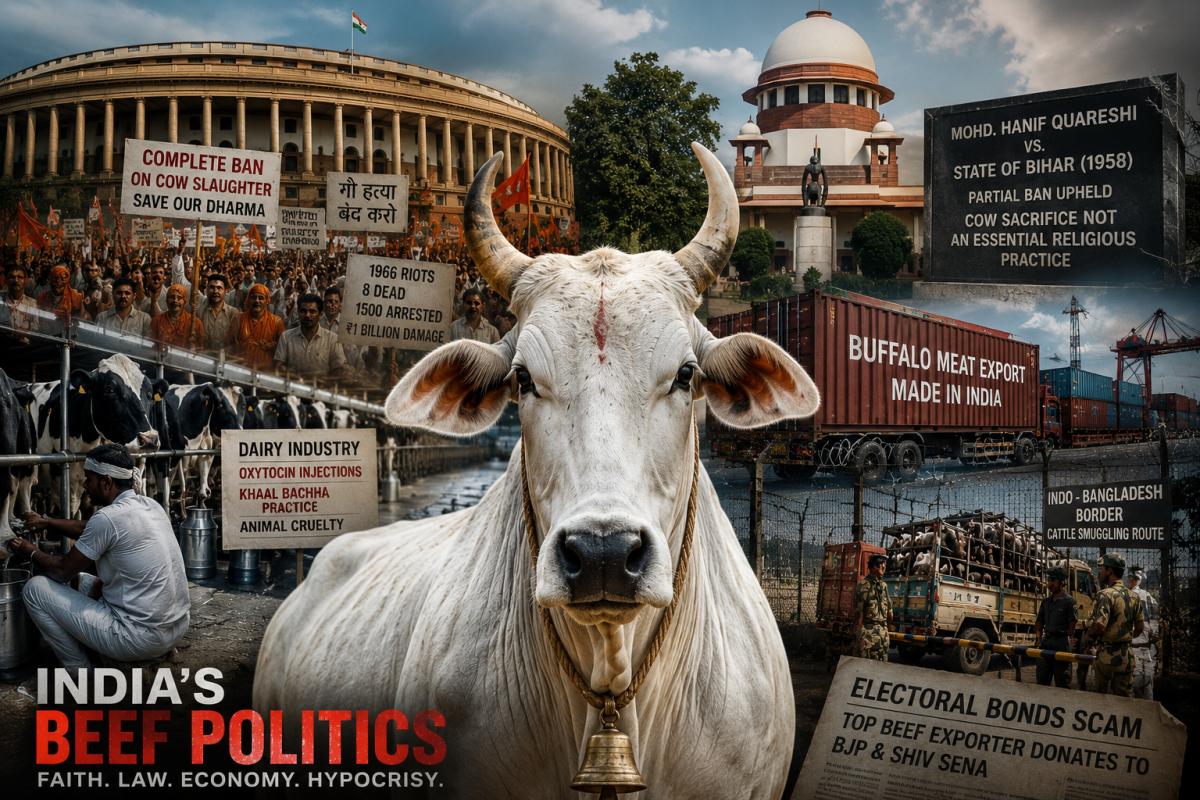
India's beef politics cannot be reduced to a simple debate between tradition and modernity. It is a complex intersection of faith, law, economics, identity, electoral strategy, animal welfare, and social conflict.
The 1966 anti-cow slaughter agitation demonstrated the emotional power of the issue. The 1958 Supreme Court ruling established a constitutional framework that continues to influence policy. The realities of the dairy industry raised uncomfortable questions about the treatment of animals revered as sacred. The growth of buffalo meat exports exposed tensions between ideology and economic interests. Electoral bond disclosures intensified debates over political consistency, while cattle smuggling and vigilantism highlighted the challenges of enforcement and governance.
At the center of all these competing forces stands the cow—a religious symbol, an economic asset, a political instrument, and a subject of intense public emotion. The continuing struggle to reconcile spiritual reverence with commercial realities remains one of the most revealing and contentious aspects of contemporary India. Until the contradictions between devotion, industry, law, and politics are addressed with honesty and consistency, the debate over cattle, beef, and identity will continue to shape public discourse for generations.
Community Insights