
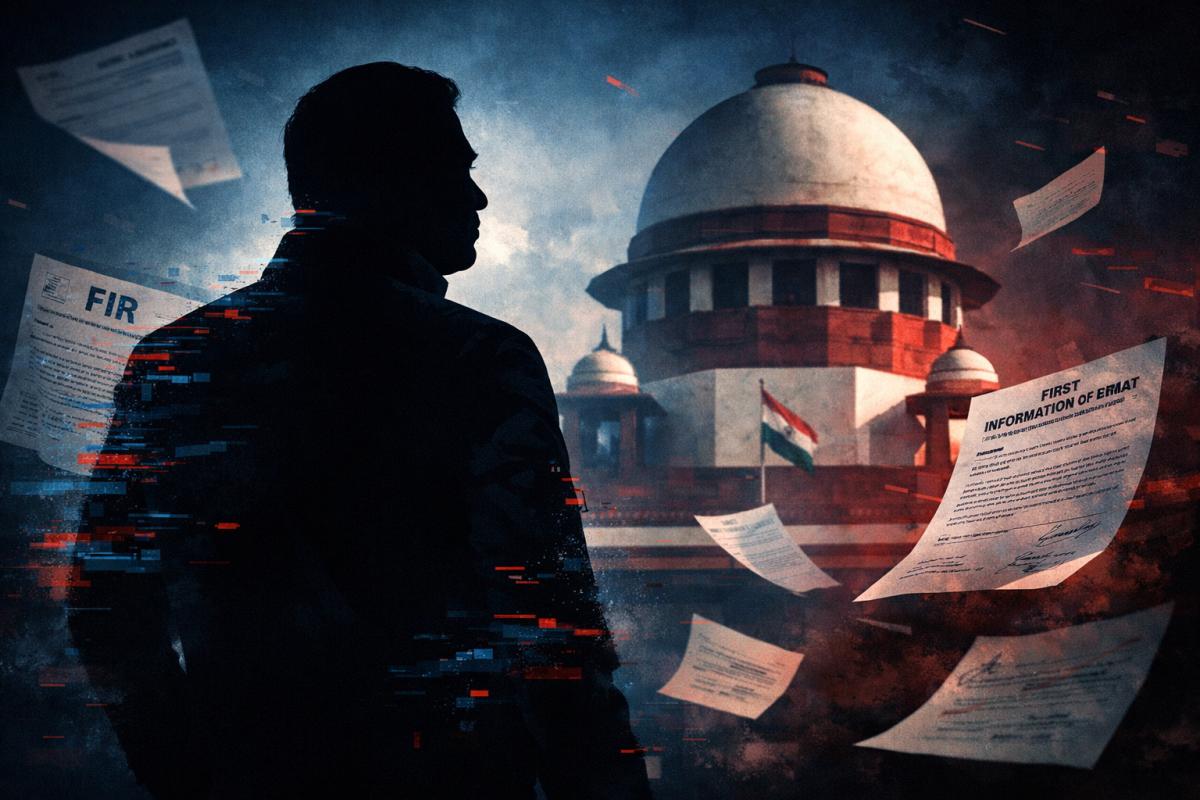

In recent days, Indian politics has witnessed a storm of controversy centred around a digital video clip involving the Chief Minister of Assam, Himanta Biswa Sarma. What started as a social media post quickly escalated into police complaints, legal petitions in the Supreme Court of India, fiery political rhetoric, and national headlines dissecting freedom of expression, election conduct, and the power of artificial intelligence in reshaping narratives.
The Controversial Video: What Was Shared and Why It Sparked Outrage
At the heart of the uproar was a video that circulated online showing Assam Chief Minister Himanta Biswa Sarma in what appeared to be a “point-blank shot” scenario, where he is depicted firing at two individuals — one wearing a skullcap and another with a beard. While the clip was swiftly deleted from official channels, its spread ignited a firestorm of reaction across political, legal, and civil society domains.
What made the clip particularly contentious was its imagery: critics argued that it appeared to depict targeted violence against identifiable minorities, and that this kind of visual rhetoric had no place in public political communication. Opponents argued that such imagery — regardless of context — could deepen social divisions and inflame communal tensions in a state already sensitive to issues of identity and citizenship.
The video’s defenders denied any wrongdoing, calling instead for context and stressing that it had been misunderstood or misrepresented. Some allies even suggested that the controversy itself was politically motivated, aimed at undermining the Chief Minister at a time when election season pressures are building.
Legal Action Begins: FIRs and Complaints
FIR Registered by Assam Congress
Amid the mounting criticism, the Assam Pradesh Congress Committee filed a First Information Report (FIR) over what it alleges to be a manipulated or misleading video. The FIR specifically accused unknown individuals of distributing and circulating a video that could mislead the public and potentially incite violence.
This move was significant for two reasons:
-
Political Pressure – By filing an FIR, the Congress aimed to place law enforcement and judicial scrutiny squarely on the messaging around the Chief Minister.
-
AI Video Concerns – The FIR also highlighted concerns about artificial intelligence (AI) being used to create or modify political material. Critics of AI-generated content warn that such tools can be misused to fabricate situations involving public figures — a dangerous precedent in highly charged political environments.
Police Complaint by AIMIM Chief
Adding to the legal tumult, Asaduddin Owaisi, president of the All India Majlis-e-Ittehadul Muslimeen (AIMIM) and Member of Parliament from Hyderabad, lodged a formal police complaint demanding action against the Assam CM over the same video. Owaisi described the imagery as “genocidal hate speech” and called for Sarma’s accountability. In response, Himanta Biswa Sarma publicly stated that he was “ready to go to jail” in the event that the controversy resulted in legal consequences — a comment that underlined both his defiance and the seriousness with which the issue had escalated.
Supreme Court Petition: Putting National Focus on the Controversy
Beyond FIRs and police complaints, a more consequential legal move came when leaders from left-leaning political parties — including the Communist Party of India (Marxist) and Communist Party of India — filed a petition in the Supreme Court of India seeking judicial intervention regarding the contentious video and requesting that legal action be taken against the Chief Minister.
Chief Justice’s Observation: “Elections Are Now Fought in the Supreme Court”
During preliminary proceedings, Chief Justice of India Surya Kant observed that “part of elections is fought in the Supreme Court,” underscoring how political disputes increasingly enter the judiciary as stakeholders try to resolve matters of representation, speech, and electoral conduct at the highest level of legal authority.
This remark reflects a broader trend: as elections approach, legal battles — from candidate eligibility to campaign material — frequently land in courtrooms, reshaping how politics is contested and adjudicated in India.
What the Petition Seeks
Although the Supreme Court has yet to fully hear the substantive merits of the petition, the prayer before the court centres on:
-
Determining whether the video violated norms of free speech and public safety.
-
Exploring whether any law was breached through the dissemination, production, or endorsement of the video.
-
Contemplating any legal or constitutional consequences for those involved.
The direction the Supreme Court takes could set precedents regarding AI-generated content, political speech, and accountability for public office holders — turning this from a regional controversy into a national conversation.
Political Repercussions: Demands, Counter-Accusations, and Election Dynamics
This controversy has not remained confined to courts and police stations. Instead, it has roiled political discourse across the country, with leaders staking out firm positions.
Greater Opposition Demands
Beyond FIRs and judicial petitions, some political leaders have made more aggressive demands. For instance, Badruddin Ajmal, president of the All India United Democratic Front (AIUDF), called not just for action against Himanta Biswa Sarma but urged the courts to arrest him and bar him from contesting elections.
Ajmal’s demands resonate with opposition parties that view the controversy not just as a media incident but one exposing deeper issues about political rhetoric, communal harmony, and the standards to which public officials should be held.
Government and Supporters Push Back
Supporters of the Chief Minister and his political camp have denounced the controversy as exaggerated or engineered for electoral gain. They argue that:
-
The video, now deleted, was taken out of context.
-
Political adversaries are leveraging legal mechanisms to score points.
-
The entire affair demonstrates the weaponisation of law enforcement and courts in the run-up to elections.
These conflicting narratives have only intensified polarisation.
The Bigger Picture: AI, Media Manipulation, and Democratic Discourse
One of the most important dimensions of this controversy is the role of artificial intelligence and digitally edited content in political communication.
AI-Generated Media and Its Risks
The FIR lodged by the Assam Congress specifically cited concerns that the video was AI-generated or manipulated. This marks a moment where political parties are acknowledging — and legally confronting — the rapidly evolving capacity of AI to produce convincing but potentially misleading media.
Nationally and globally, the rise of deep-fakes and AI-generated imagery has raised concerns about misinformation and the manipulation of public opinion. In democratic contexts, where elections depend on informed citizens and fair debate, the use of AI to distort reality poses fundamental challenges.
Legal Standards: What Laws Might Apply?
While this blog cannot provide legal advice, it’s useful to understand the categories of Indian law that could be implicated in controversies like this:
-
Information Technology Act, 2000: Sections dealing with digital misconduct, manipulation of electronic records, and content that may cause public disorder.
-
Indian Penal Code (IPC): Provisions related to promoting enmity, hate speech, or incitement.
-
Election Laws: Regulations governing the conduct of political parties and officials, particularly during elections.
-
Constitutional Law: Balancing free speech (Article 19) with public order (Article 19(2) exceptions) and equality before law (Article 14).
The Supreme Court’s eventual interpretation will likely touch on these areas and could refine how they apply to digital political content.
Social Media and Public Reaction
Across platforms such as X (formerly Twitter), Facebook, and YouTube, users are engaged in intense debate. Many have criticised the video’s imagery as irresponsible, while others defend free expression and question the motives of those who filed complaints.
What’s clear from social reactions is that digital media no longer just reflects political discourse — it shapes it. Viral content that is shared, debated, and deconstructed online can rapidly influence public perceptions and political narratives. This reality is forcing politicians, courts, and regulators alike to grapple with a fundamental question:
How do we preserve democratic values in an era where digital content is powerful, mutable, and ubiquitous?
Analysis: Why This Matters Beyond Assam
Although this controversy erupted in Assam, its implications are national and systemic:
-
Judicial Oversight of Political Speech: The Supreme Court’s involvement underscores how courts are increasingly arenas for political adjudication.
-
Digital Integrity in Elections: As elections near, the boundaries between legitimate political messaging and misinformation are coming under scrutiny.
-
AI Accountability: Debates over AI-generated content are likely to intensify as technology becomes more accessible.
-
Polarised Public Sphere: The rapid spread of provocative visuals amplifies divisions, making thoughtful regulation and media literacy urgent priorities.
Conclusion: A Turning Point in Political Communication?
The saga around the Assam video, FIRs, and the Supreme Court petition is more than a passing political spat. It reflects deeper, structural shifts in how politics is contested in India:
-
From traditional speeches and rallies to viral digital narratives.
-
From party platforms to legal petitions in top courts.
-
From unmediated public discourse to AI-enabled content that challenges verification.
Whether the courts rule for or against the petition, the controversy has already reshaped political conversation. It has drawn attention to the vulnerabilities of democratic communication in the digital age and highlighted the urgent need for frameworks — legal, technological, and ethical — that can keep pace with innovation.
For observers and participants alike, what’s happening in Assam is not just a regional political drama; it is part of a broader story about democracy, media, law, and the future of political communication in India.
Community Insights