
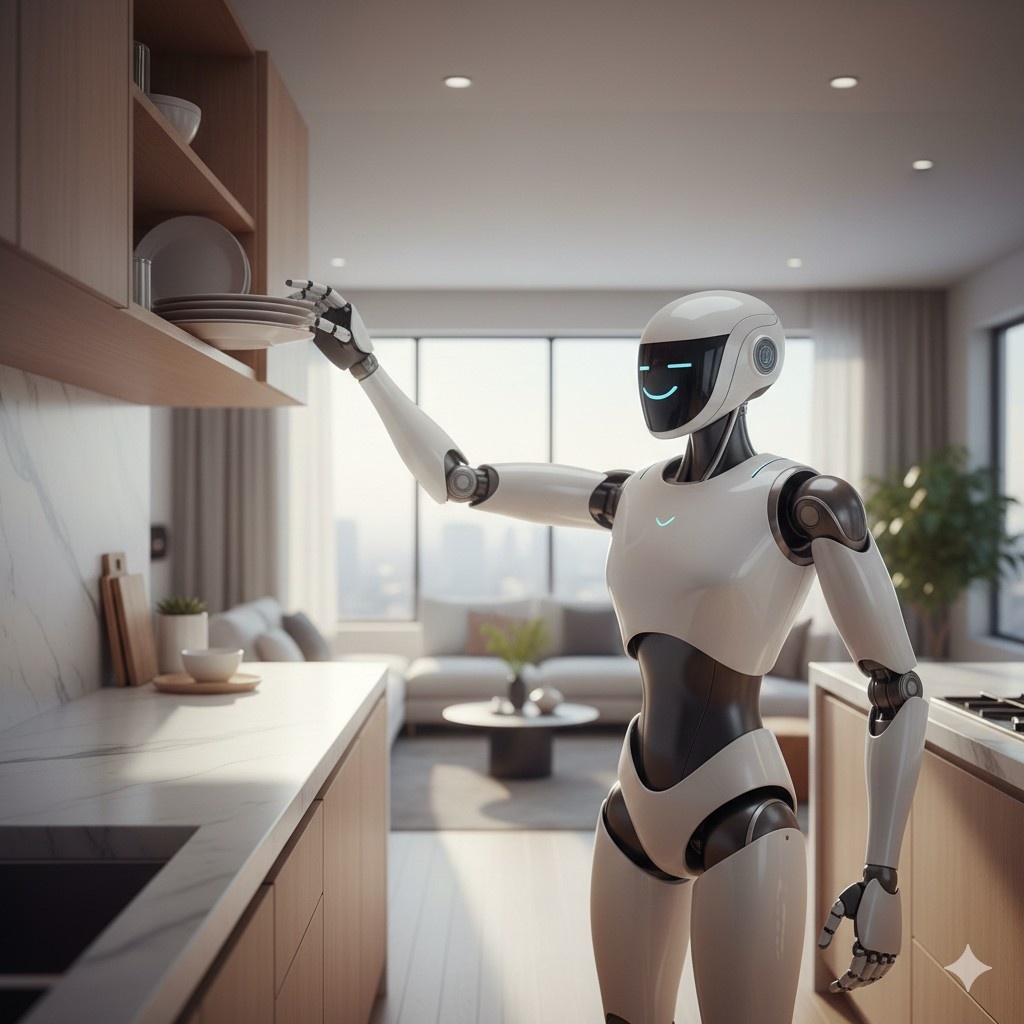

But what if that distant future is, in fact, here? What if the first true generation of affordable, functional humanoid robots is not only on the horizon but already making its tentative steps into our living rooms? In 2026, the convergence of advanced AI, sophisticated sensor technology, improved motor efficiency, and streamlined manufacturing processes has finally brought us to the precipice of this long-awaited domestic revolution. We are witnessing the birth of a new era, where humanoid robots, once prohibitively expensive and largely confined to research labs, are becoming a tangible, accessible presence in the home.
This isn't about the robot vacuum cleaner that tidies your floors or the smart speaker that plays music. This is about a machine with a human-like form factor, capable of navigating complex environments, understanding nuanced commands, and performing a range of physical tasks that traditionally required human dexterity.
Defining "Affordable Humanoid": Beyond the Hype
Before we dive into the specifics, it's crucial to establish what "affordable humanoid robot" truly means in 2026. We are not talking about robots costing hundreds of thousands of pounds. Instead, this first generation targets a price point comparable to a high-end appliance or a small car. We're looking at a range of roughly £15,000 to £40,000 – a figure that, for many, moves these machines from fantasy to a realistic purchase.
The Human Form Factor
The most obvious differentiator is the bipedal design. While a robot vacuum is efficient, it lacks the ability to climb stairs, open doors, or reach objects on a high shelf. A humanoid form allows these robots to operate in environments designed for humans, utilising existing infrastructure like door handles and light switches without needing a complete home overhaul.
General-Purpose Utility (GPU)
Unlike single-purpose robots, these humanoids are designed for a broader range of tasks. Their modular design and AI-driven adaptability mean they can learn new tasks and apply their physical capabilities to various domestic chores, moving from "a robot that vacuums" to "a robot that can load the dishwasher and fetch your spectacles."
Leading the Charge: The Key Players in 2026
The landscape of domestic humanoids has shifted from experimental laboratories to competitive retail markets. Three distinct approaches are defining this first generation of affordable home assistants.
- The Generalists: Companies like Figure AI and Apptronik have pivoted their industrial learnings into the home. These robots use "Vision-Language-Action" (VLA) models to watch a human perform a task and replicate it.
- The Companions: Focussing on the emotional aspect, these robots prioritise communication and elderly care, monitoring health vitals and providing social stimulation.
- The Disruptor (Tesla Optimus): By leveraging the automotive supply chain, Tesla aims to bring the cost of a humanoid down to the price of a small hatchback, focussing on mass-manufacturability.
Practicality in the Home: What Can They Actually Do?
In 2026, we must manage expectations. We are not yet at the stage of a robot that can cook a five-course Michelin-star meal, but the "Dirty, Dull, and Dangerous" tasks are being handled with increasing ease.
Tidying and Organisation
The primary use case is "resetting" the home. A humanoid can move through a living room, identify stray shoes or toys, and return them to their designated spots. Their ability to handle objects of different shapes—from a delicate wine glass to a heavy textbook—is a hallmark of modern dexterity.
Laundry and Kitchen Support
While folding fitted sheets remains a challenge, basic folding of towels and t-shirts is now standard. In the kitchen, robots are used for unloading dishwashers and clearing tables. Because they have a human-like reach, they can place plates in high cupboards that traditional automation could never reach.
Domestic Assistant Comparison
| Feature | Humanoid Robot | Smart Home System | Single-Task Robot |
|---|---|---|---|
| Price Range | £15,000 – £40,000 | £500 – £5,000 | £300 – £1,500 |
| Mobility | Bipedal (Stairs) | Stationary | Wheeled (Flat only) |
| Task Range | General Purpose | Digital Only | Single Purpose |
| Interaction | Physical & Verbal | Verbal/App | App Only |
Challenges: The Friction of the First Generation
As with any first-generation technology, there are significant growing pains that early adopters must navigate.
The Uncanny Valley
Building a robot that looks almost human can trigger a visceral sense of unease. In 2026, most domestic models have opted for a "friendly-tech" aesthetic—sleek white plastic and LEDs—to avoid distressing children and pets.
Privacy and Data Security
A humanoid robot is essentially a mobile, 360-degree surveillance suite. Ethical manufacturers are now using "Privacy-by-Design" principles where the majority of data is processed locally on the "edge" rather than being sent to the cloud.
Conclusion
The first generation of affordable domestic humanoid robots is a testament to human ingenuity. We have successfully moved the needle from "impossible" to "available." While the robots of 2026 may still stumble occasionally, they represent the dawn of a new partnership. We are no longer just using tools; we are sharing our homes with intelligent agents that can extend our physical capabilities. As prices continue to fall, the humanoid will eventually become as ubiquitous as the washing machine—a silent, helpful companion that gives us back our most precious resource: time.



Community Insights