
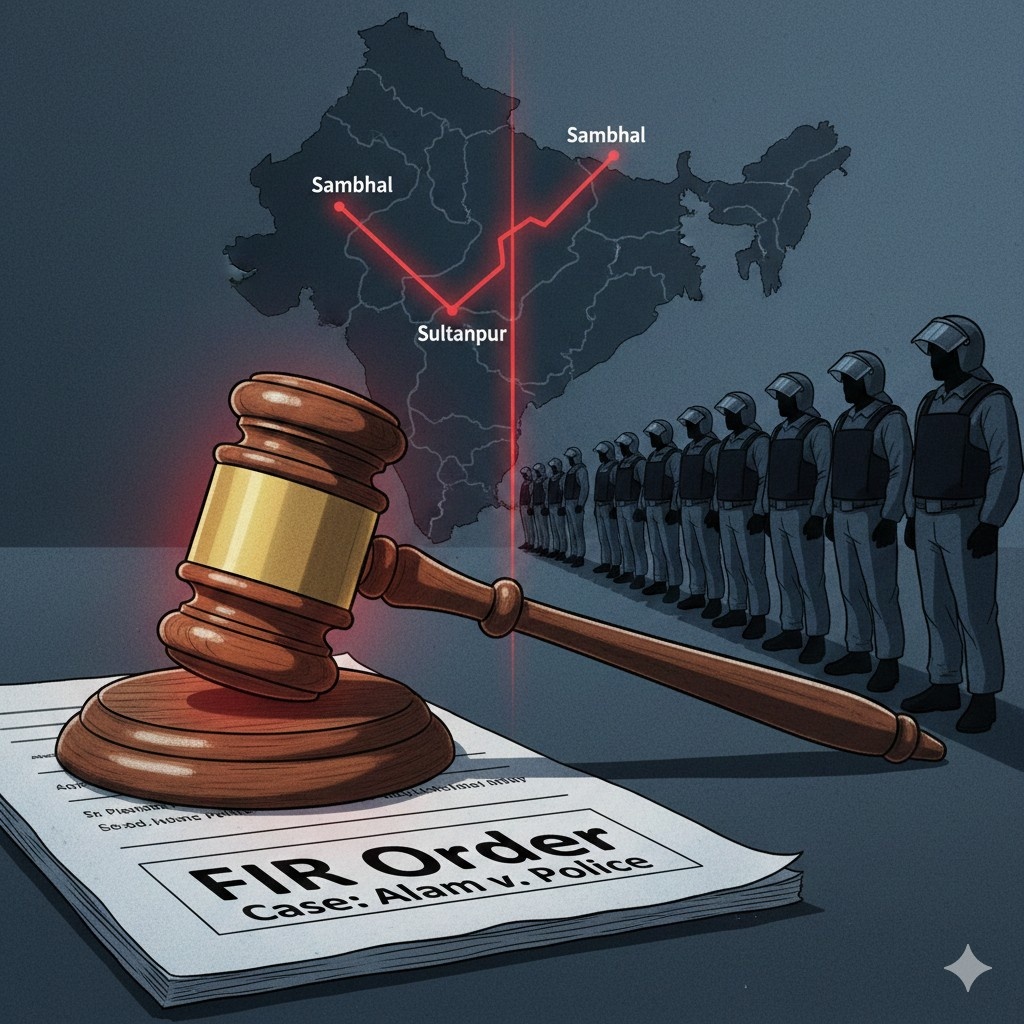

In the sprawling, complex judicial corridors of Uttar Pradesh, a specific name has recently been echoing with increasing intensity: Divhanshu Sudhir. Until recently, he served as the Chief Judicial Magistrate (CJM) of Sambhal, a district that has found itself at the heart of a fierce national debate involving communal tension, legal disputes, and police accountability. Sudhir’s tenure in Sambhal was brief, yet the circumstances surrounding his sudden exit have transformed what should have been a mundane administrative file movement into a profound political, legal, and moral debate.
The questions raised by this episode extend far beyond the career trajectory of a single judicial officer. They strike at the very heart of judicial independence, the accountability of law enforcement agencies, and the fragile hope for justice following communal violence. In early January, events unfolded in the Sambhal court that escalated a local legal matter into a state-level controversy. In a state governed by Chief Minister Yogi Adityanath, the sequence of events—a bold court order against the police followed swiftly by a transfer order—has shocked legal observers and opposition parties alike. Was this a routine reshuffle, or was it a message sent to the judiciary?
The Spark: A Magistrate Challenges the Police
The catalyst for this unfolding drama was a decisive order passed by CJM Divhanshu Sudhir regarding a tragic incident from the 2024 Sambhal violence. The court was hearing a complaint filed by a grieving father, who alleged that his son, Alam, had been shot and killed by police personnel outside the Jama Masjid during the unrest.
Upon reviewing the complaint, the Court observed that the allegations were serious and disclosed the commission of a cognisable offence. The Magistrate noted that the truth of the matter could not be unearthed without a proper criminal investigation. Consequently, he issued a clear and direct direction: register a First Information Report (FIR) against the police personnel involved and investigate the death of Alam.
On paper, this appears to be a routine judicial direction—a magistrate ensuring that the law takes its course. However, on the ground, the weight of this order was seismic.
The reaction was immediate. The Uttar Pradesh Police signaled their intent to challenge the order, setting the stage for a friction between the court and the uniformed forces. However, before this legal battle could play out in the appellate courts, the administrative machinery intervened.
The Transfer Order: Punishment or Protocol?
Mere days after passing the order that discomforted the police establishment, the Allahabad High Court issued a transfer list on January 20th. The notification affected 14 judicial officers, but one name stood out: Divhanshu Sudhir. The order relieved him of his duties in Sambhal and posted him to Sultanpur as a Civil Judge (Senior Division).
While the official stance maintained this was a routine reshuffle, the timing sparked intense criticism:
- Political Backlash: Opposition parties branded it a "punishment posting."
- Legal Protests: Lawyers across several districts donned black bands, viewing the move as an attack on judicial independence.
- Public Perception: On social media, the transfer was widely framed as retribution for holding the police accountable.
A Pattern of Instability
As the controversy deepened, details regarding Judge Sudhir’s service history emerged. It appeared that Sudhir had been subjected to a "revolving door" of transfers:
- Lalitpur: Served as CJM from November 2023.
- Agra: Transferred shortly after.
- Sambhal: His most recent, brief posting.
- Sultanpur: His current destination following the controversy.
Such frequent transfers—moving a judge within months rather than years—are unusual and can disrupt the flow of justice in pending cases, bolstering claims that the officer was being intentionally unsettled.
The Replacement Controversy: A Twist in the Narrative
The narrative was further complicated by the initial choice of replacement. The transfer order originally named Aditya Singh as the new CJM of Sambhal. This choice was highly contentious because Aditya Singh was the judicial officer who, in 2024, had ordered the survey of the Shahi Jama Masjid—the very event that allegedly precipitated the violence in the first place.
Critics pointed out a stark irony: the judge who ordered the investigation into police firing was being removed, and the judge whose survey order was linked to the unrest was being brought in. Perhaps reacting to this backlash, the High Court modified the order on January 22nd, appointing Deepak Kumar Jaiswal as the new CJM of Sambhal instead.
The Context: The Shadow of Sambhal Violence
The district remains a flashpoint for communal and legal conflict. The dispute centered on the Shahi Jama Masjid and Harihar Temple reached a breaking point in November 2024. During a second round of surveying, heavy stone-pelting and firing resulted in:
- Five civilian deaths.
- Dozens of injuries.
- At least 29 police personnel injured.
- Over 2,750 unidentified persons named in FIRs.
Within this context, the case of Alam represents the critical question of whether ordinary citizens can seek redress when the state apparatus is accused of lethal violence.
The "Chilling Effect" on the Judiciary
The transfer has sparked a debate about the vulnerability of the lower judiciary. While High Courts have more insulation, District judges are more exposed to local administrative pressures. The Supreme Court is historically reluctant to interfere in administrative transfers unless "bad faith" is explicitly proven, which is a high legal bar.
However, the perception of justice is damaged. This sequence of events creates a "chilling effect," where other magistrates might hesitate to pass bold orders against the state, fearing professional instability.
Conclusion
The saga of the Sambhal judge transfer is a case study in the friction between the rule of law and political power. For the family of Alam, the transfer adds a layer of uncertainty to their quest for justice. The narrative remains split: one side views it as a routine administrative coincidence, while the other sees a calculated blow to judicial independence. As Judge Deepak Kumar Jaiswal takes charge in Sambhal, the name Divhanshu Sudhir remains a symbol of the ongoing struggle between the gavel and the baton. Whether the inquiry into the Sambhal violence proceeds impartially will ultimately determine which narrative stands the test of time.


Community Insights