

Introduction
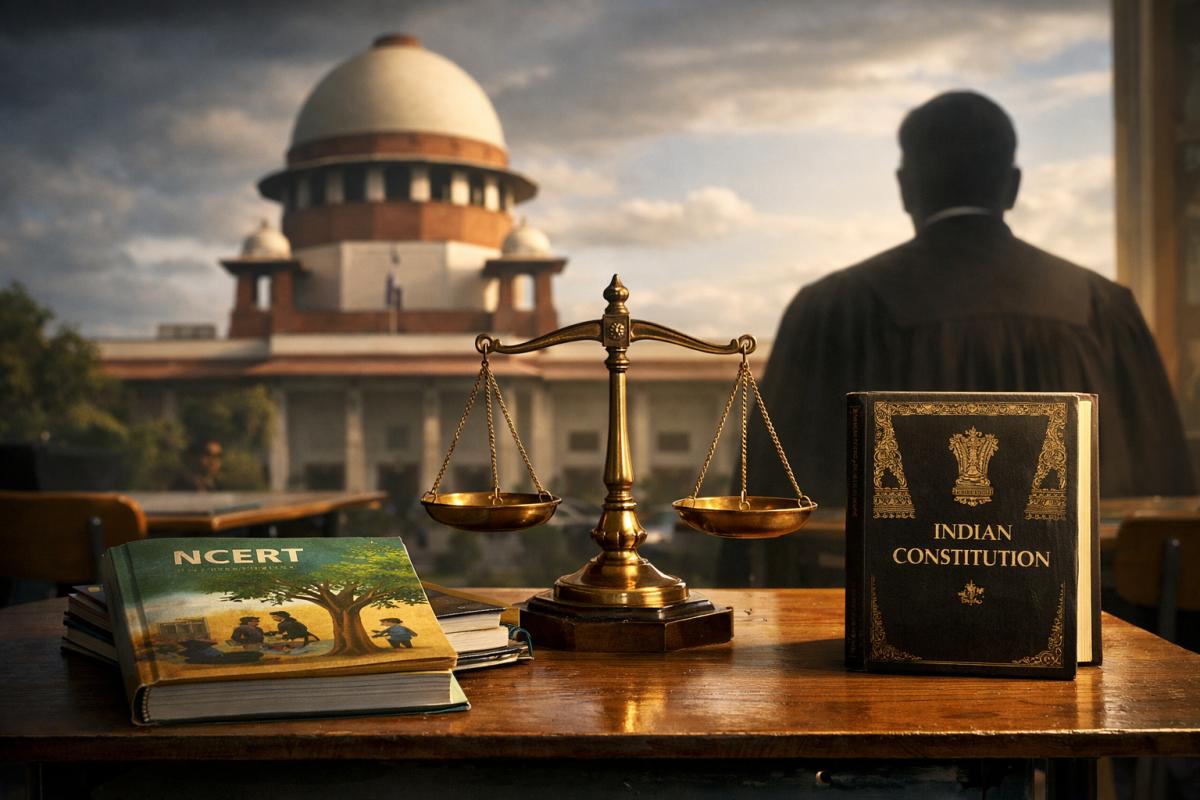
India’s democratic framework is built upon the delicate balance between educational autonomy and constitutional oversight. Educational institutions such as the National Council of Educational Research and Training (NCERT) play a crucial role in shaping the intellectual foundation of millions of students. At the same time, the judiciary—led by the Chief Justice of India (CJI)—acts as the ultimate interpreter and guardian of the Constitution. When disputes arise concerning curriculum, academic freedom, or alleged constitutional violations, the judiciary becomes the final arbiter. The so-called “NCERT and CJI case” broadly refers to legal and constitutional debates involving NCERT’s curricular decisions and the judiciary’s role in ensuring those decisions align with constitutional values such as secularism, equality, and freedom of expression.
This issue gained prominence when curriculum revisions, textbook rationalization, and removal or modification of certain historical and political topics sparked public controversy. Critics argued that educational changes could influence historical interpretation and civic understanding, while supporters maintained that academic bodies possess the authority to update and streamline educational content. Petitions filed in courts raised questions about whether such changes violated constitutional principles. The involvement of the Supreme Court and the Chief Justice highlighted the intersection between education policy and constitutional law.
About NCERT: Structure and Role
Establishment and Purpose
The National Council of Educational Research and Training (NCERT) was established in 1961 by the Government of India as an autonomous organization. Its primary mission is to assist and advise central and state governments on policies and programs for qualitative improvement in school education. NCERT develops textbooks, teacher training programs, curriculum frameworks, and educational research that guide schools across India, particularly those affiliated with the Central Board of Secondary Education (CBSE).
Key Functions of NCERT
- Curriculum Development: Creating and revising the National Curriculum Framework (NCF).
- Textbook Publication: Producing textbooks for Classes I to XII used nationwide.
- Educational Research: Conducting studies on pedagogy, learning outcomes, and policy effectiveness.
- Teacher Training: Organizing training programs and workshops for educators.
- Advisory Role: Assisting state governments in implementing educational reforms.
Because NCERT textbooks are widely used, any changes made by the organization can have a profound impact on how students understand history, politics, science, and society. Therefore, its decisions often attract national attention and scrutiny.
Role and Authority of the Chief Justice of India
Constitutional Position
The Chief Justice of India (CJI) is the head of the Indian judiciary and the Supreme Court. The position carries immense constitutional responsibility, including presiding over constitutional benches, assigning cases, and ensuring judicial independence. The CJI plays a vital role in interpreting constitutional provisions and safeguarding fundamental rights.
Powers and Responsibilities
- Heading the Supreme Court and overseeing judicial administration.
- Constituting benches to hear important constitutional cases.
- Interpreting the Constitution and ensuring rule of law.
- Protecting citizens’ fundamental rights.
- Maintaining judicial independence from executive and legislative interference.
When disputes concerning educational policy reach the Supreme Court, the CJI and the bench evaluate whether government or institutional decisions violate constitutional guarantees.
Background of Curriculum Changes and Controversy
Textbook Rationalization
NCERT periodically revises textbooks to reflect updated knowledge, remove outdated content, and reduce student burden. During one such revision cycle, certain topics were removed or condensed, including references to political events, historical conflicts, and social controversies. NCERT described these changes as part of a rationalization process aimed at reducing academic stress and adjusting content following disruptions such as the COVID-19 pandemic.
Public and Academic Reactions
The revisions triggered strong reactions from educators, historians, and civil society organizations. Some argued that removing content related to historical conflicts, constitutional debates, or political events could limit students’ exposure to important aspects of India’s democratic evolution. Others argued that curriculum design is the prerogative of academic experts and government-appointed bodies.
“Education is not merely about transmitting information; it shapes how future citizens understand their nation, constitution, and democratic responsibilities.”
This debate led to legal challenges questioning whether NCERT’s decisions violated constitutional values such as secularism, equality, and academic freedom.
Legal Challenges and Petitions
Grounds for Filing Petitions
Petitioners approached courts alleging that certain textbook removals undermined constitutional principles. The main arguments included:
- Violation of the Right to Education under Article 21A.
- Undermining the constitutional value of secularism.
- Distorting historical facts and limiting academic freedom.
- Failure to consult academic experts transparently.
Petitioners sought judicial review of NCERT’s decisions and requested the Supreme Court to intervene.
Arguments Presented by NCERT and Government
NCERT and government representatives defended the revisions, arguing that:
- NCERT is an autonomous academic body with authority to revise curriculum.
- Curriculum changes are routine and necessary.
- No constitutional rights were violated.
- Courts should avoid interfering in academic policy unless fundamental rights are clearly infringed.
Judicial Review and Constitutional Principles
Doctrine of Judicial Review
Judicial review allows courts to examine the legality of actions taken by government bodies and public institutions. This doctrine ensures that executive and administrative decisions comply with constitutional provisions.
However, courts generally exercise restraint when dealing with academic decisions, recognizing the expertise of educational institutions.
Relevant Constitutional Articles
| Article | Provision | Relevance |
|---|---|---|
| Article 14 | Right to Equality | Ensures equal access to unbiased education. |
| Article 19(1)(a) | Freedom of Expression | Protects academic and intellectual freedom. |
| Article 21A | Right to Education | Guarantees access to quality education. |
| Article 32 | Right to Constitutional Remedies | Allows citizens to approach the Supreme Court. |
| Article 141 | Binding Nature of Supreme Court Judgments | Ensures uniform interpretation of law. |
Role of the Chief Justice in the Case
The Chief Justice plays a central role in determining how such cases are heard. When petitions challenge educational policy, the CJI decides whether to assign the case to a constitutional bench or a regular bench. The court examines whether the matter involves constitutional interpretation, fundamental rights, or administrative discretion.
In cases involving educational autonomy, the judiciary typically evaluates:
- Whether the institution followed lawful procedures.
- Whether decisions were arbitrary or discriminatory.
- Whether constitutional rights were violated.
- Whether judicial intervention is necessary.
Academic Freedom vs Judicial Oversight
Importance of Academic Freedom
Academic freedom allows educational institutions to design curriculum based on scholarly expertise. Without such freedom, political or external pressures could undermine educational quality.
Academic freedom ensures:
- Independent research and scholarship.
- Accurate historical representation.
- Development of critical thinking.
- Intellectual diversity.
Need for Judicial Oversight
At the same time, judicial oversight ensures that academic decisions do not violate constitutional principles. Courts act as a safeguard against discrimination, censorship, or misuse of authority.
The judiciary does not design curriculum but ensures that curriculum decisions respect constitutional values and legal procedures.
Key Legal Questions Raised
- Can courts interfere in academic curriculum decisions?
- Does removing historical content violate constitutional principles?
- What is the scope of NCERT’s autonomy?
- How should courts balance academic expertise and constitutional protection?
Judicial Precedents Related to Education
Several past Supreme Court judgments have clarified the relationship between education policy and judicial review.
- State of Tamil Nadu vs Shyam Sunder (2011): Court emphasized educational standards and fairness.
- Aruna Roy vs Union of India (2002): Court upheld NCERT curriculum framework while emphasizing secular values.
- T.M.A. Pai Foundation vs State of Karnataka (2002): Affirmed autonomy of educational institutions.
These cases established that courts should intervene only when constitutional violations are clear.
Impact on Students and Society
Educational Impact
Curriculum changes directly affect students’ understanding of history, politics, and society. Balanced and accurate education promotes informed citizenship and democratic participation.
Social and Political Impact
Educational content shapes national identity and public discourse. Disputes over curriculum often reflect broader political and ideological debates.
Arguments Supporting NCERT’s Authority
- Educational bodies possess subject expertise.
- Curriculum updates are necessary for modernization.
- Judicial interference could hinder academic independence.
- Government-appointed institutions are accountable to public policy.
Arguments Supporting Judicial Intervention
- Courts must protect constitutional values.
- Education influences democratic awareness.
- Transparency and accountability are essential.
- Judicial review prevents arbitrary decisions.
Comparative Perspective: Education and Judiciary in Democracies
In many democratic countries, courts occasionally review educational policies. However, judicial restraint is common to preserve academic autonomy.
| Country | Educational Authority | Judicial Role |
|---|---|---|
| India | NCERT, CBSE, State Boards | Ensures constitutional compliance |
| United States | State Education Boards | Protects constitutional rights |
| United Kingdom | Department for Education | Limited judicial intervention |
| Canada | Provincial Education Ministries | Protects equality and rights |
Importance of Constitutional Balance
The NCERT and CJI case highlights the importance of balancing institutional autonomy with constitutional oversight. Neither unchecked academic authority nor excessive judicial intervention serves democracy effectively. Instead, cooperation between institutions ensures both academic excellence and constitutional integrity.
Conclusion
The NCERT and Chief Justice of India case represents a critical intersection between educational autonomy and constitutional governance. NCERT plays a vital role in shaping the intellectual foundation of India’s youth, while the judiciary ensures that educational policies align with constitutional principles such as equality, secularism, and freedom of expression. Legal challenges surrounding curriculum revisions underscore the importance of transparency, accountability, and constitutional compliance. The Supreme Court, under the leadership of the Chief Justice, acts not as a curriculum designer but as a guardian of constitutional values. By maintaining a balance between academic independence and judicial oversight, India strengthens both its educational system and democratic framework. Ultimately, the case demonstrates that education and constitutional law are deeply interconnected, and safeguarding both is essential for the nation’s future.


Community Insights