
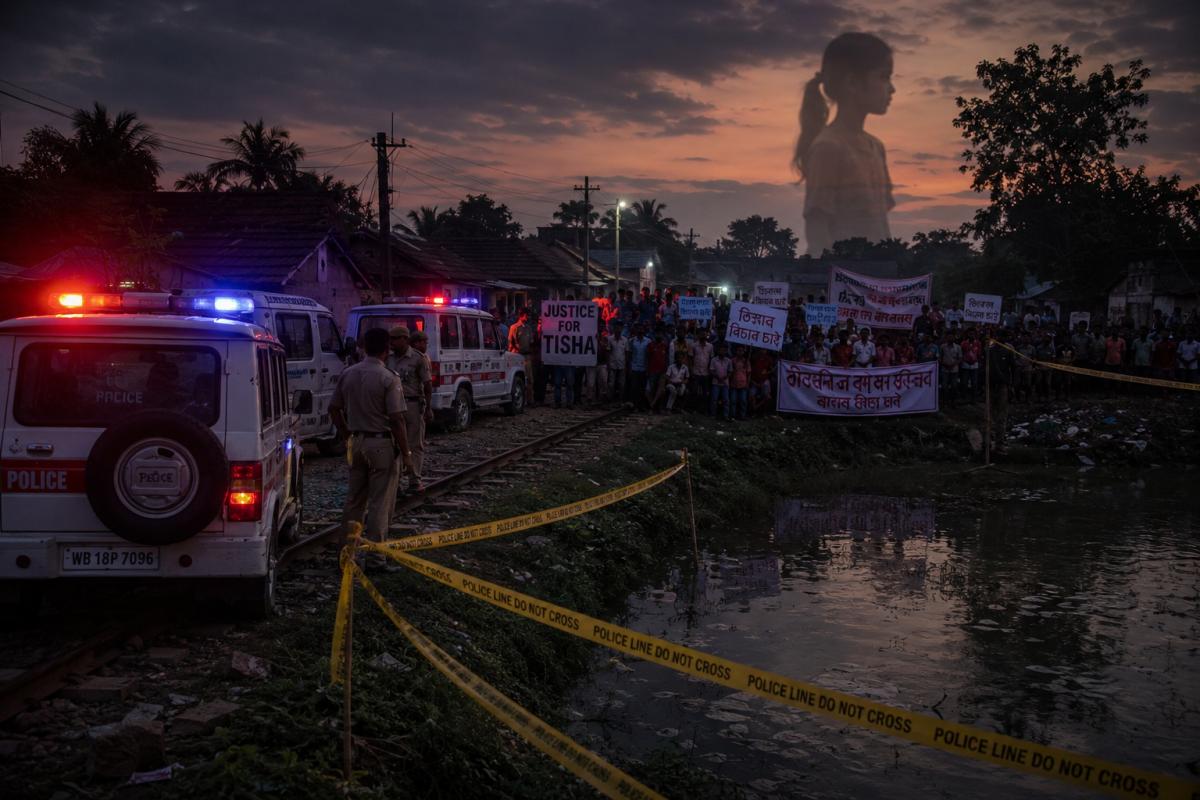

The district of South 24 Parganas in West Bengal has recently become the epicenter of a multi-layered tragedy that has shocked the conscience of the state and the nation. Located approximately 30 kilometers from the bustling metropolis of Kolkata, the usually vibrant area of Baruipur is currently simmering with palpable tension, grief, and an intense political standoff. What began as every parent's worst nightmare—the sudden disappearance of a young schoolgirl—rapidly devolved into a gruesome discovery, a violent explosion of retaliatory mob justice, and a fierce political battle between the ruling administration and the opposition.
This comprehensive blog post meticulously reconstructs the timeline of the Baruipur tragedy, examines the subsequent breakdown of law and order, and analyzes the deep political fractures that have emerged in the wake of this devastating event.
Part 1: The Disappearance and a Community's Desperate Search
The harrowing sequence of events began to unfold on a seemingly ordinary weekend. On a Saturday afternoon, at approximately 4:30 PM, an 11-year-old schoolgirl stepped out of her home located in the Dhopdhopi II Gram Panchayat area of Surjyapur. Her errand was innocent and simple: she was heading out to purchase a birthday gift for a friend.
Tragically, she never returned.
As the sun began to set and the hours ticked by without any sign of the young girl, her parents and neighbors were plunged into a state of panic. The local community quickly mobilized, launching a desperate, night-long search operation across the surrounding areas in a frantic bid to locate the missing child. However, this frantic search was marred by what the victim's family and local residents described as severe police negligence. The family strongly alleged that there was a massive and unacceptable delay in the initial law enforcement response to their missing person report, a failure that forced the frantic community to take the investigation into their own hands.
The critical breakthrough in the search did not come from the authorities, but from the locals themselves. At around 8:00 PM on Saturday evening, residents and relatives managed to uncover crucial CCTV footage from the area. The video recording showed two individuals moving around the vicinity. Most importantly, the footage captured a distinct visual clue: a man wearing a blue cap was seen taking the young girl away. This vital piece of visual evidence would soon lead the enraged community directly to a suspect, setting the stage for the chaos that was to follow.
Part 2: The Gruesome Discovery at Surjapur Haat
Armed with the digital evidence from the CCTV footage, the vigilante investigation accelerated rapidly in the early hours of the morning. By 4:00 AM on Sunday, determined residents successfully identified one of the youths seen in the video and tracked him down to his residence. Confronted by an angry and desperate crowd, the youth was placed under immense pressure. During this confrontation, he allegedly confessed to his involvement and disclosed the location where the young girl had been hidden. He also reportedly claimed to the crowd that three to four other people had been involved in taking the girl away.
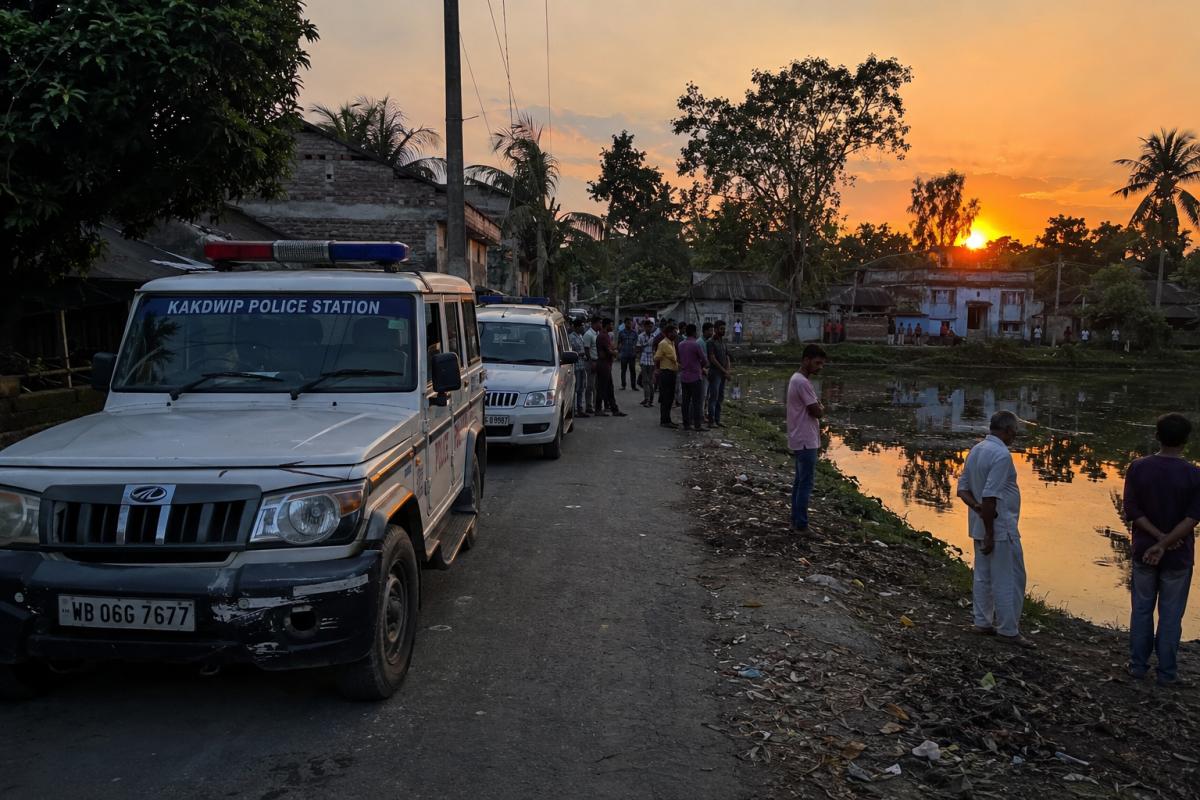
Acting on this horrifying disclosure, the locals rushed to the specified location. At approximately 9:00 AM on Sunday morning, the community's absolute worst fears were realized. The lifeless body of the 12-year-old schoolgirl was recovered from a pond near Surjapur Haat. Adding to the horror of the scene, the child's body had been callously stuffed inside a sack.
The family immediately levied devastating allegations against the perpetrators. In their First Information Report (FIR), they named four local residents, alleging that the young girl had been abducted, subjected to a brutal gang-rape, and subsequently strangled to death before her body was dumped in the pond. The police officially registered a case of murder and invoked the stringent Protection of Children from Sexual Offences (POCSO) Act. Authorities noted that they were awaiting the final post-mortem results from Kolkata's Katapukur Morgue before formally adding rape charges to the docket.
Part 3: The Boiling Point - Mob Vengeance and the Breakdown of Order
The discovery of the mutilated body, compounded by the community's deep-seated anger over the alleged police inaction the night before, acted as a spark in a powder keg. The situation in Baruipur rapidly deteriorated from localized grief to widespread, violent public unrest.
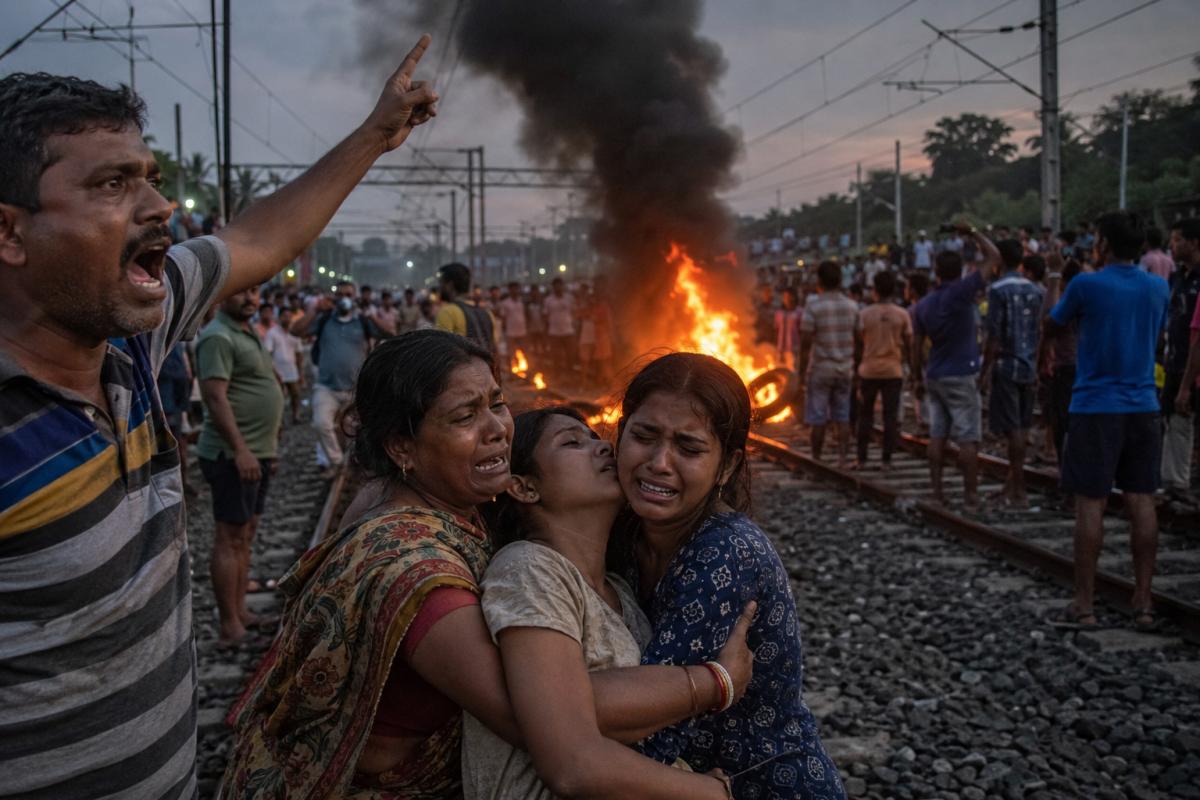
Initially, the furious locals completely refused to hand over the child's body to the arriving police officers. Seeking to make their outrage heard, the crowds took to the streets and initiated massive blockades. A large section of the protesters completely paralyzed the Baruipur–Joynagar Road by setting wooden logs and vehicle tyres on fire. Simultaneously, another massive group of demonstrators marched to the Suryapur railway station, staging a sit-in directly on the railway tracks. This blockade effectively halted all train services on the critical Sealdah–Namkhana section for several agonizing hours.
It was amidst this chaotic and volatile atmosphere that the situation took a deadly turn toward vigilante justice. During the intense protests, the angry mob spotted a 26-year-old man named Indrajit Tanti, whom they suspected of being involved in the heinous crime. Despite Tanti's desperate pleas asserting his innocence, the crowd descended upon him, subjecting the young man to a brutal and merciless physical assault.
When the local police and deployed central forces personnel attempted to intervene to save the suspect's life, they were met with fierce resistance. The enraged mob turned their fury toward the authorities, driving the officers back with a heavy barrage of brickbats. During these violent clashes, several police officers and two central force personnel sustained injuries. The mob also engaged in widespread vandalism, damaging and torching several police vehicles that had arrived at the scene.
While a brave police officer, Sub-Inspector Arghya Mandal, successfully managed to fight through the chaos to rescue another accused individual—Prabash Mondal—from the clutches of the mob, the intervention for Tanti came too late. Heavy reinforcements eventually managed to pull Tanti from the crowd, but the 26-year-old suspect was subsequently declared dead after being transported to a local hospital. In their quest for justice for one horrific death, the mob had exacted another.
Part 4: The Law Enforcement Crackdown
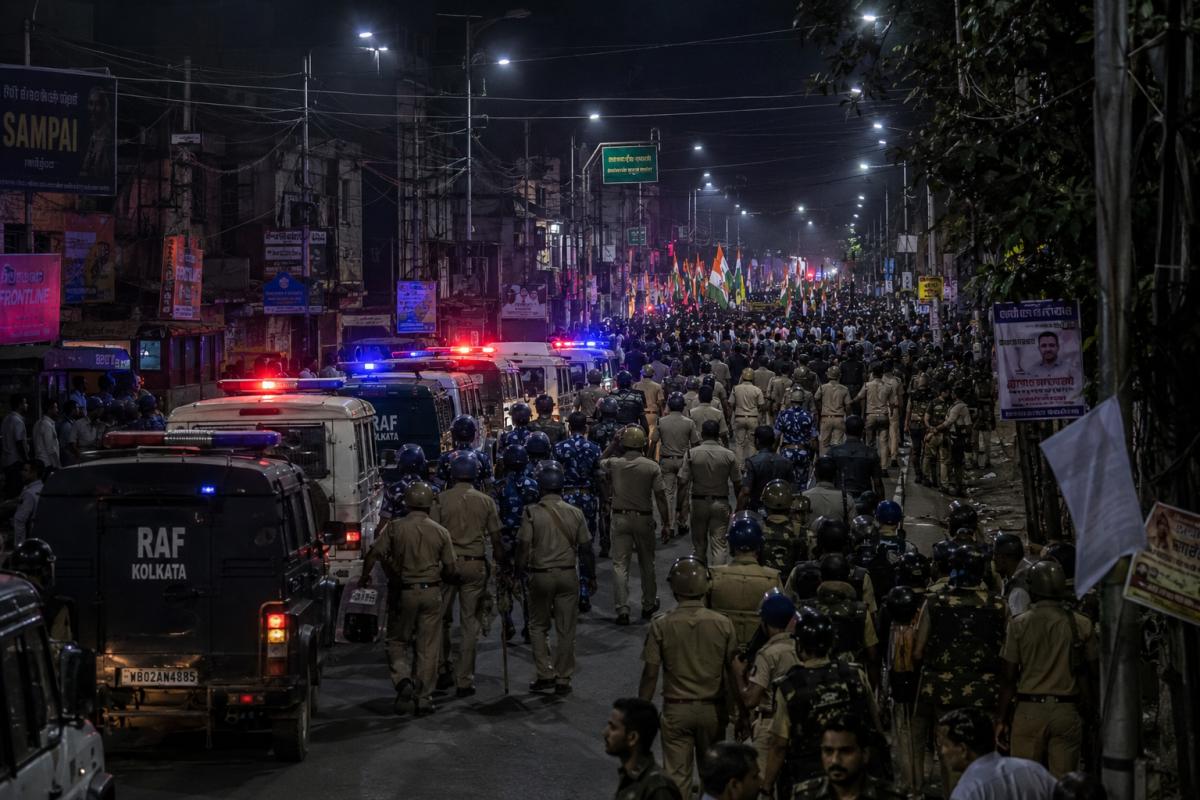
Recognizing that control of Baruipur had severely slipped away, the state police apparatus initiated a massive response. Senior law enforcement officials, prominently including the Inspector General of Police (Presidency Range) Kankar Prasad Barui, descended upon the area backed by heavy police reinforcements and the Rapid Action Force (RAF). Using megaphones to broadcast their message over the chaos, IGP Barui and other officers desperately pleaded with the crowds to maintain peace, publicly assuring them that the Chief Minister had promised that the culprits would face severe consequences and would not go unpunished.
To physically quell the unrest, the local administration took immediate and strict legal measures. Prohibitory orders under Section 163 of the Bharatiya Nyaya Sanhita (BNS)—also referred to as the Bharatiya Nagarik Suraksha Sanhita (BNSS)—were firmly imposed across Baruipur, as well as in the neighboring regions of Sonarpur and Narendrapur, to strictly prevent any further unauthorized gatherings or untoward incidents. Late into the night, the RAF and central forces continued to conduct flag marches through the affected areas to restore a semblance of order.
The investigative response was equally swift following the deployment of forces:
- Formation of the SIT: The state government officially constituted a six-member Special Investigation Team (SIT) to take over the probe. This specialized unit is being headed by Additional Superintendent of Police Pinaki Dutta.
- Multiple Arrests: Following intense overnight search operations and raids, the police successfully apprehended three primary suspects connected to the child's death. They were identified as Sardar Ananda Sardar (who police noted as the prime accused), Pravash Mondol (who was rescued from the mob by SI Mandal), and Dibakar Sardar. Furthermore, several other individuals were detained for extensive questioning, including a local BJP worker named Shantanu Mandal.
- Filing of FIRs: To address the sheer scope of the weekend's crimes, authorities registered four distinct First Information Reports (FIRs). The first FIR addressed the core tragedy: the murder and abuse of the minor under the POCSO Act. The second and third FIRs were filed to address the subsequent breakdown of order, specifically detailing the mob lynching of Indrajit Tanti, the violent physical assault on law enforcement personnel, and the deliberate vandalism of government police property.
Part 5: A State Divided - The Political Storm Erupts
In West Bengal, tragedies of this magnitude rarely remain localized issues; they almost immediately ignite fierce political firestorms. The horrific events in Baruipur quickly became the center of a massive confrontation between Chief Minister Suvendu Adhikari’s ruling government and the Trinamool Congress (TMC), spearheaded by former Chief Minister Mamata Banerjee.
The Chief Minister's Stance: Chief Minister Suvendu Adhikari took immediate, high-profile steps to manage the fallout. He personally telephoned the grieving father of the 11-year-old victim, assuring the family that the state would push for the ultimate penalty—capital punishment—for the perpetrators. Adhikari also invited the victim's family to meet with him at Bhawani Bhawan in Kolkata on Tuesday. Following this high-level reassurance, the victim's father publicly pleaded with the protestors to lift their road and railway blockades, allowing the police to proceed with the investigation and the post-mortem.
However, CM Adhikari's response was not just one of condolence; it was highly political. While promising justice for the family, he launched a scathing attack on the perpetrators of the mob violence. Adhikari alleged that there was a distinct "communal angle" to the mob lynching and the subsequent destruction. He drew direct, inflammatory parallels between the Baruipur unrest and previous large-scale disturbances in the state, specifically referencing the 2019 anti-CAA protests and recent demonstrations against the Waqf Act.
"We will surely provide justice to the family," the Chief Minister stated, adding a stark warning to the opposition: "But we will also make those frustrated souls, who locked themselves up in their rooms after getting defeated in the elections and who orchestrated the violence, suffer beyond their imagination".
Mamata Banerjee's Explosive Allegations: On the opposing side, Trinamool Congress chairperson and former Chief Minister Mamata Banerjee launched a severe counter-attack against the Adhikari administration. In a strongly worded statement released on social media on Sunday night, Banerjee claimed that she had planned to travel to Baruipur alone to stand in solidarity with the victim's family. However, she alleged that she was subjected to a de facto house arrest by the state.
Banerjee claimed that massive deployments of police and central forces had completely barricaded all the roads leading to her residence in Kalighat, Kolkata, actively preventing her from leaving. "I don't know why they are not letting me go out. I don't know why I am such a threat?" Banerjee questioned publicly. She further accused the government of hypocrisy, stating, "We are the original Trinamool Congress, but those with the BJP (meaning the rebel Trinamool faction) are being allowed to do political programmes".
The ruling BJP administration firmly and vehemently dismissed Banerjee's claims. They described her allegations of house arrest as a deliberate attempt to "manufacture a controversy" out of what they insisted were entirely routine security protocols and arrangements.
The Defiance of the Opposition: Despite the heavy prohibitory orders and Section 163 restrictions in place across Baruipur, the political maneuvering continued on the ground. A high-profile delegation of TMC leaders gathered at Mamata Banerjee's residence before defying the local orders to travel to Baruipur and meet with the grieving family. This delegation included heavyweights such as former assembly speaker and local MLA Biman Banerjee, Rajya Sabha MP Dola Sen, and Joynagar MP Pratima Mondal. A separate delegation from the CPI(M), led by Sujan Chakraborty, also headed to the region.
Speaking from the ground, TMC's Biman Banerjee heavily criticized the state police's delayed response to the initial disappearance. He argued that the violent protests were not orchestrated, but rather a completely spontaneous reaction from a desperate community. "Police should have been proactive in tracing the criminals. The locals had no choice but to resort to protests and it was spontaneous," he stated.
Fractures and Rebel Voices
The political landscape surrounding the incident was further complicated by voices from within the rebel factions of the TMC. Jadavpur MP Sayooni Ghosh offered a strikingly different perspective. Taking to the social media platform X, Ghosh expressed her deep condolences for the minor girl and pledged to formally write to the Chief Minister to demand support for the victim's family. However, in a stark departure from the main TMC party line, Ghosh surprisingly praised Chief Minister Adhikari for his handling of the crisis and strongly condemned the retaliatory violence carried out by the locals.
Conclusion: A Community Scarred, A Justice System Tested
The events that unfolded in Baruipur over the course of a single, bloody weekend represent a profound failure on multiple levels of society. At its dark core lies the unspeakable and horrific murder of an innocent 11-year-old child, whose simple trip to buy a birthday present ended in unimaginable cruelty. This initial tragedy exposed the fatal consequences of alleged bureaucratic delays and police negligence, which pushed a grieving community over the edge.
However, the community's response—the descent into mob violence, the paralysis of public infrastructure, and the brutal lynching of a 26-year-old suspect—has created a secondary tragedy that further complicates the pursuit of true justice. The horrific cycle of violence witnessed in South 24 Parganas serves as a stark reminder of the dangerous fragility of law and order when public trust in institutions completely evaporates.
As the six-member Special Investigation Team continues to piece together the forensic evidence, and as political heavyweights continue to trade bitter accusations over barricades and alleged conspiracies, the ultimate focus must remain on the victims. The state authorities are now burdened with a dual, monumental task: they must secure an airtight conviction and capital punishment for the individuals who snuffed out the life of a young schoolgirl, while simultaneously ensuring that those who participated in the deadly mob lynching are held strictly accountable under the law.
Only through a completely transparent, swift, and entirely impartial legal process can Baruipur hope to begin healing from these deep, multifaceted wounds. The nation watches closely as West Bengal navigates this dark chapter, hoping that out of the political grandstanding and community heartbreak, a true and lasting justice will ultimately prevail.
Community Insights