


In the digital age of India, the 12-digit Aadhaar number has become ubiquitous. It links our bank accounts, mobile numbers, and tax filings, serving as the primary instrument for identity verification across the public and private sectors. With over a billion enrollments, it is easy to assume that holding this card equates to being a recognized citizen of India. However, this assumption is legally and factually incorrect.
Recent developments in the Supreme Court, clarifying statements from the Unique Identification Authority of India (UIDAI), and the contentious electoral roll revisions in Bihar have brought this distinction into sharp focus. The legal reality is clear: Aadhaar is a proof of residence and identity, not a proof of citizenship.
This comprehensive guide explores the legal frameworks, judicial rulings, and administrative realities that decouple Aadhaar from nationality, helping you understand what actually constitutes proof of being an Indian citizen.
1. The Legal Barrier: What the Aadhaar Act Says
To understand why Aadhaar cannot prove citizenship, one must look at the legislation that created it: The Aadhaar (Targeted Delivery of Financial and Other Subsidies, Benefits and Services) Act, 2016.
Section 9: The Explicit Exclusion
The most critical provision regarding this issue is Section 9 of the Aadhaar Act, 2016. The Act explicitly states that:
"The Aadhaar number or the authentication thereof shall not, by itself, confer any right of, or be proof of, citizenship or domicile in respect of an Aadhaar number holder."
This statutory clause serves as a non-derogable barrier, preventing the UIDAI from assuming the role of a citizenship-granting authority.
The Puttaswamy Judgment (2018)
The constitutional validity of Aadhaar was upheld in the landmark case of Justice K.S. Puttaswamy (Retd.) and Anr. vs Union Of India. However, the five-judge bench clarified the limitations of the document. The Court held that Aadhaar is merely a tool for identity authentication and targeted delivery of welfare schemes. It recognized Aadhaar as an "identity infrastructure" rather than a "nationality registry."
2. Residency vs. Citizenship: The 182-Day Rule
A fundamental reason for the confusion lies in the difference between a "resident" and a "citizen." The eligibility criteria for Aadhaar are based entirely on residency.
- Who is a "Resident"? Under the Aadhaar Act, a resident is an individual who has resided in India for 182 days or more in the twelve months immediately preceding the application.
- Foreign Nationals: Because the criterion is residency, foreign nationals are legally eligible to obtain an Aadhaar card.
- Deactivation: Regulation 28A allows for the deactivation of Aadhaar numbers of foreign nationals once their visa expires.
3. The Bihar Electoral Roll Controversy (SIR 2.0)
The distinction between identity and citizenship faced a practical test during the "Special Intensive Revision" (SIR) of electoral rolls in Bihar in 2025.
The Election Commission’s Stance
The Election Commission of India (ECI) mandated that voters provide one of 11 specified documents to prove citizenship, explicitly excluding Aadhaar from this list. The ECI argued that while Aadhaar is useful for "de-duplication," it cannot be the basis for inclusion in the voter list, as only citizens are entitled to vote under Article 326.
4. Why Aadhaar Fails as Citizenship Proof: The Verification Gap
The answer lies in the rigorousness—or lack thereof—of the enrollment process regarding nationality compared to other documents.
| Feature | Aadhaar Enrollment | Passport Verification |
|---|---|---|
| Primary Focus | Identity & Residence | Nationality & Legal Status |
| Verification Method | Document-based "Verifier" model | Stringent Police Verification |
| Ancestral Data | Not Required | Required (Lineage check) |
5. The "New" Aadhaar Card: An Explicit Disclaimer
Starting in 2024, new Aadhaar cards and e-Aadhaar PDFs feature a prominent disclaimer: "Aadhaar is a proof of identity, not of citizenship or date of birth." This shift signals a government-wide effort to treat Aadhaar as a dynamic identity tool rather than a static record of legal status.
6. So, What Is Proof of Indian Citizenship?
Indian citizenship is governed by the Citizenship Act, 1955. The following documents are recognized as valid proofs:
- Birth Certificate: Especially for those born between Jan 26, 1950, and July 1, 1987.
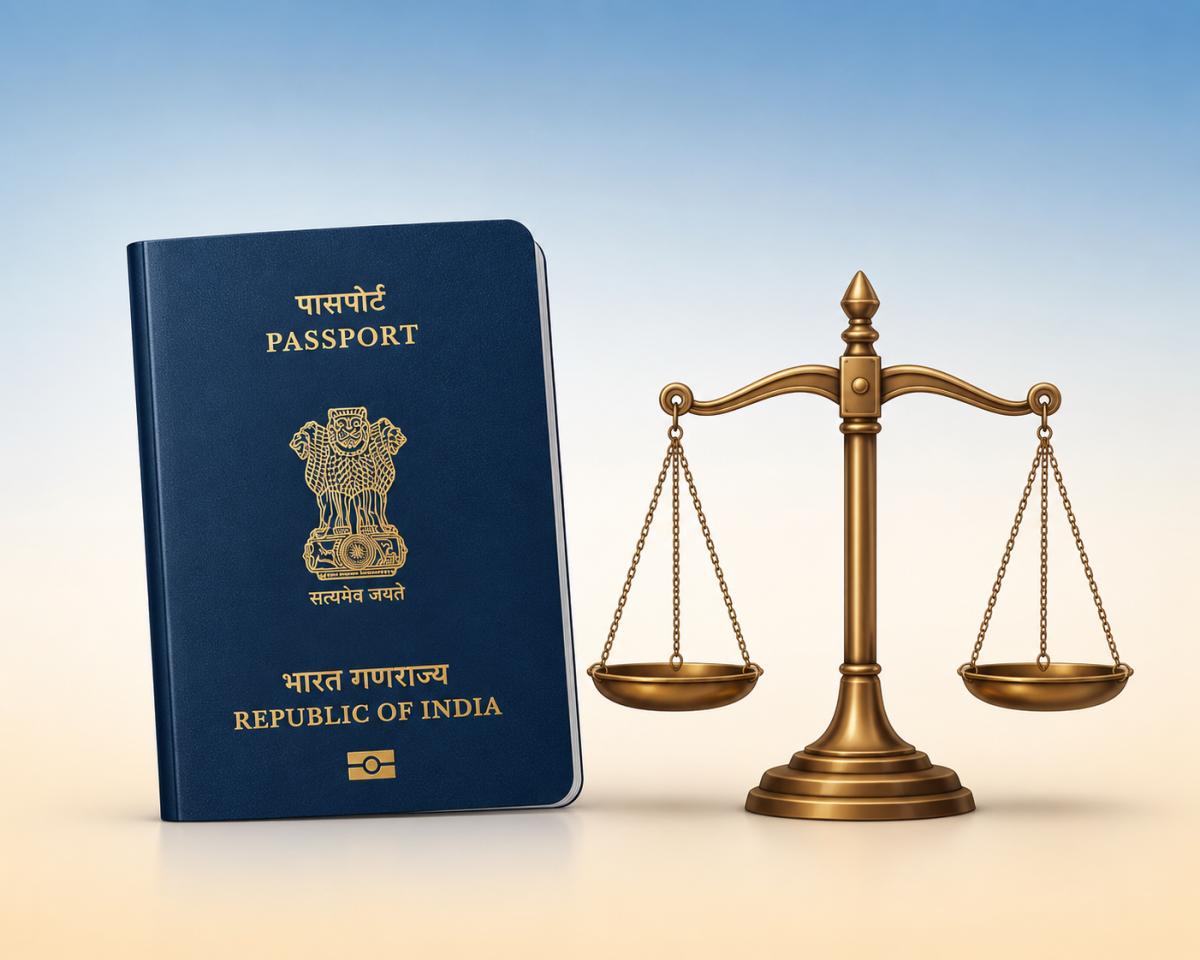
- Indian Passport: Considered definitive proof as it requires rigorous citizenship verification.
- Voter ID (EPIC): Issued only to adult citizens, though subject to verification if challenged.
- Citizenship Certificate: For those who acquire status via naturalization.
Conclusion
The Aadhaar card is a powerful tool for financial inclusion and administrative efficiency. It has revolutionized how India delivers welfare and verifies identity. However, it is not, and was never intended to be, a certificate of nationality. The Supreme Court and the UIDAI have drawn a firm line: Aadhaar asks "Who are you?" while Citizenship asks "Do you belong?" Recognizing this distinction is the first step toward safeguarding your rights in India's complex legal landscape.


Community Insights