
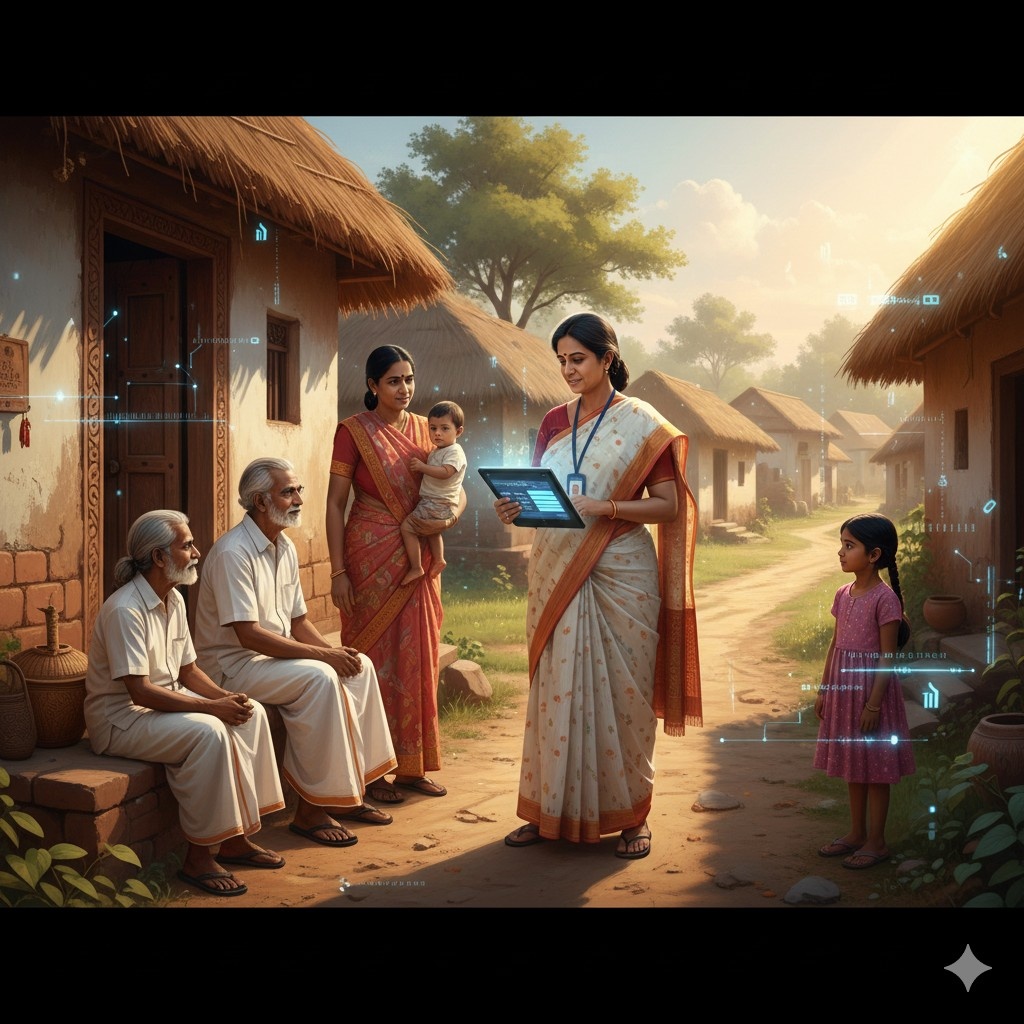

After a delay spanning more than half a decade due to the global pandemic, the Government of India has officially set the wheels in motion for the 16th Census of India. This massive administrative exercise, often described as the largest of its kind in the world, is poised to be a landmark event in the nation’s history. Not only will it be the first fully digital census, but it will also mark a significant shift in social data collection by including caste enumeration for the first time since independence. Scheduled to culminate in early 2027, this operation will reset the national baselines for poverty, urbanisation, and population projections, shaping policy for decades to come.
For citizens, policymakers, and observers alike, understanding the structure, schedule, and scope of Census 2027 is vital. This detailed guide breaks down every aspect of the upcoming census, from the timeline and digital innovations to the specific questions enumerators will ask at your doorstep.
The Timeline: A Phased Approach
The Union Cabinet, chaired by Prime Minister Narendra Modi, has approved the scheme with a financial outlay of ₹11,718.24 crore. The census will be conducted in two distinct phases, ensuring that the logistical challenges of covering India’s vast geography and population are managed effectively.
Phase 1: Houselisting and Housing Census
The first phase is the foundational exercise known as the Houselisting and Housing Census. This phase is critical as it maps every structure and household in the country, creating the frame upon which the actual population count rests. According to the official notification, this phase is scheduled to take place between 1 April 2026 and 30 September 2026 across most States and Union Territories.
During this period, enumerators will focus on the 'container' rather than the 'contents'. They will collect data on housing conditions, amenities, assets, and the quality of living. This phase identifies where people live, the condition of their homes, and their access to essential services like water and electricity.
Phase 2: Population Enumeration
The second phase is the main event: the Population Enumeration (PE). This is when the demographic, socio-economic, and cultural details of every individual will be recorded. This phase is scheduled for February 2027.
However, India’s diverse topography necessitates exceptions. For snow-bound and non-synchronous areas—specifically the Union Territory of Ladakh, certain areas of Jammu and Kashmir, and the states of Himachal Pradesh and Uttarakhand—the Population Enumeration will be conducted earlier, in September 2026. This ensures that weather conditions do not hinder the fieldwork in high-altitude regions.
The Digital Leap: Innovations in Census 2027
The most striking feature of the 2027 Census is its transition from pen-and-paper to digital data collection. The government has termed this the first census by digital means in the country, a move designed to enhance the speed, accuracy, and reliability of the data.
Mobile Applications and Real-Time Monitoring
Data collection will be conducted primarily using mobile applications available on both Android and iOS platforms. Approximately 30 lakh field functionaries, primarily government teachers appointed by State Governments, will be deployed as enumerators. They will use their smartphones or handheld devices to input data directly into the system. This digital capture reduces manual errors and eliminates the massive logistical burden of transporting and storing millions of paper forms.
To oversee this gigantic operation, a dedicated portal named the Census Management & Monitoring System (CMMS) has been developed. This allows for real-time tracking of enumerators and progress dashboards, ensuring that delays or exceptions can be flagged and addressed immediately. Furthermore, a 'Houselisting Block (HLB) Creator' web map application will be used by Charge Officers for geospatial mapping, ensuring high geographical precision.
The Option for Self-Enumeration
In a major step towards citizen empowerment and convenience, the Census 2027 architecture includes a provision for self-enumeration. The public will be provided with an option to fill in their details online through a secure government portal. This allows households to submit their data at their own pace. Following this, enumerators will visit only to verify and authenticate the entries, significantly streamlining the field process. Stringent data security measures, including encryption and two-factor authentication, have been put in place to protect citizen privacy.
The Return of Caste Enumeration
Perhaps the most politically and socially significant aspect of Census 2027 is the inclusion of caste data. The Cabinet Committee on Political Affairs decided in April 2025 to include caste enumeration in the upcoming census. While the Scheduled Castes (SC) and Scheduled Tribes (ST) have always been counted, this will be the first comprehensive nationwide caste enumeration since 1931 (excluding the Socio-Economic Caste Census of 2011).
This data will be captured electronically during the second phase (Population Enumeration). The availability of updated caste data is expected to provide critical insights into social stratification and inequality. It will enable evidence-based policymaking, particularly regarding the recalibration of Other Backward Classes (OBC) reservation frameworks and the identification of intra-group inequalities. This move is seen as a vital step towards strengthening social justice policies and ensuring that welfare measures reach the most marginalised communities.
Detailed Breakdown: The 33 Questions of Phase 1
While the detailed questions for the Population Enumeration (Phase 2) will be notified later, the government has officially released the questionnaire for the Houselisting and Housing Census (Phase 1). This schedule contains 33 specific questions divided into several categories. These questions are designed to generate a comprehensive picture of India’s living standards.
1. Identification and Structure
The first set of questions aims to uniquely identify the location and physical structure of the dwelling.
- Building Number: This refers to the number assigned by the municipal or local authority, or a census number if no other number exists.
- Census House Number: A unique number assigned to the specific census house structure.
- Material of the Floor, Wall, and Roof: Enumerators will record the predominant material used for construction. Options for the floor include mud, wood, burnt brick, stone, cement, mosaic, and tiles. Similar detailed options exist for walls (e.g., grass/thatch, plastic, mud, stone, concrete) and roofs. This data is crucial for identifying 'dilapidated' versus 'livable' housing stock.
- Use of Census House: Is the building used for residence, a shop, a school, a hotel, a place of worship, or is it vacant? This helps in understanding the functional landscape of Indian settlements.
- Condition of the Census House: The enumerator will classify the house as 'Good', 'Livable', or 'Dilapidated'.
2. Household Composition
Once the structure is identified, the focus shifts to the people living within it.
- Household Number: A specific identifier for the household within the census house.
- Total Persons: The total number of people normally residing in the household.
- Head of the Household: The name and sex of the head of the household are recorded. Notably, the form includes options for Male, Female, and Transgender persons.
- Social Category of the Head: A question asks whether the head of the household belongs to a Scheduled Caste (SC), Scheduled Tribe (ST), or Other category. It is specified that SC status can only be claimed by Hindus, Sikhs, and Buddhists, while ST status can be from any religion.
3. Ownership and Space
These questions assess the security of tenure and the issue of overcrowding.
- Ownership Status: Is the house owned, rented, or occupied under other conditions?
- Number of Dwelling Rooms: The number of rooms exclusively in possession of the household is recorded (excluding kitchens, bathrooms, and verandahs).
- Number of Married Couples: This data point is a key indicator for assessing privacy, overcrowding, and potential housing shortages.
4. Water, Sanitation, and Hygiene (WASH)
A significant portion of the questionnaire is dedicated to health and hygiene indicators, which directly feed into schemes like the Jal Jeevan Mission and Swachh Bharat Mission.
- Main Source of Drinking Water: Options include tap water (treated/untreated), wells, hand pumps, tubewells, springs, rivers/canals, tanks, or packaged water.
- Availability of Water Source: Is the water source located within the premises, near the premises, or away?
- Access to Latrine: Does the household have access to a latrine? If yes, is it for exclusive use, shared, or a public facility? If no, do they use open defecation?
- Type of Latrine: For those with access, the type is categorised (e.g., flush connected to sewer/septic tank, twin pit, single pit).
- Waste Water Outlet: Is the household connected to closed drainage, open drainage, or no drainage?
- Bathing Facility: Is there a bathroom or enclosure available within the premises?
5. Energy and Cooking
These questions help track India’s energy transition and the success of schemes like Ujjwala.
- Main Source of Lighting: Electricity, kerosene, solar, other oil, or no lighting.
- Kitchen Availability: Does the house have a separate kitchen?
- LPG/PNG Connection: A distinct question separates Piped Natural Gas (PNG) from Liquefied Petroleum Gas (LPG) connections, reflecting the modernization of urban infrastructure.
- Main Fuel Used for Cooking: Options range from firewood, crop residue, and cow dung cake to clean fuels like LPG, PNG, electricity, and biogas.
6. Digital Connectivity and Assets
Reflecting the changing times, the 2027 Census places a heavy emphasis on digital inclusion and modern assets.
- Electronic Assets: Ownership of a radio/transistor, television (distinguishing between DD Free Dish, DTH, and Cable), laptop/computer, and telephone/mobile phone.
- Smartphone Ownership: For the first time, the census distinguishes between basic mobile phones and smartphones, a crucial metric for Digital India initiatives.
- Internet Access: A new question asks about access to the internet, verifying whether it is accessed via laptop/computer, mobile devices, or other means. This is a key development indicator for governance and service delivery.
- Mobility Assets: Ownership of bicycles, scooters/motorcycles/mopeds, and cars/jeeps/vans.
7. Dietary Patterns and Communication
- Main Cereal Consumed: A new addition to the questionnaire asks for the main cereal consumed by the household (Rice, Wheat, Jowar, Bajra, Maize, etc.). This offers vital insights into regional dietary habits and food security.
- Mobile Number: Households will be asked to provide a mobile number. Officials have clarified that this is strictly for census-related communications and follow-ups.
Why This Data Matters: Governance and Welfare
The data collected during the Houselisting phase is not merely for statistical archiving; it is the backbone of India’s welfare architecture. The shift to a digital-first approach allows for what the government calls "Census-as-a-Service" (CaaS). This initiative aims to deliver data to ministries in a clean, machine-readable, and actionable format, enabling automated dashboards and analytics.
Micro-Targeting Welfare: The granular data on housing conditions and amenities helps the government identify vulnerable households with precision. For instance, data on *kucha* (temporary) houses informs the targets for the PM Awas Yojana (housing scheme). Data on fuel usage helps identify pockets where clean cooking fuel has not yet penetrated, guiding the expansion of the Ujjwala Yojana.
Delimitation and Representation: The 2027 Census holds immense political weight. The freeze on the delimitation of parliamentary constituencies is set to lift after 2026. Consequently, the population data generated by this census will likely form the basis for the redrawing of electoral boundaries and the reallocation of seats in the Lok Sabha and State Assemblies. This makes the accuracy of the 2027 count essential for the future of democratic representation in India.
Urbanisation and Migration: The delay in the census since 2011 means that India is currently planning based on outdated baselines. The new data will reveal the true extent of urbanisation, the growth of slum populations, and migration trends. This is crucial for urban planning, resource allocation to cities, and managing infrastructure deficits.
Challenges and the Road Ahead
Conducting the world’s largest administrative exercise is not without challenges. The reliance on digital tools brings the issue of the digital divide to the forefront. While enumerators are trained, technical glitches in remote areas could pose hurdles. To address this, the apps are designed to work offline, syncing data once connectivity is restored.
Privacy concerns are also paramount. With questions regarding mobile numbers and internet habits, citizens may be wary of data misuse. However, the Census Act of 1948 provides a robust legal framework, ensuring that individual data remains confidential and cannot be used as evidence in any court of law. The government has reiterated that stringent cybersecurity protocols, including encryption, are in place.
Furthermore, the inclusion of caste data is politically sensitive. Ensuring the accurate classification of thousands of caste and sub-caste names returned by millions of respondents will be a complex task requiring careful harmonisation.
Conclusion
The Census of India 2027 represents a massive leap forward in the nation’s statistical capability. It is an exercise that goes beyond mere headcounting; it is a comprehensive audit of the nation’s progress, its living standards, and its social fabric. By transitioning to a fully digital format and integrating caste enumeration, India is attempting to build a high-resolution image of itself that is fit for the 21st century.
For the citizen, participation is not just a statutory duty but a contribution to national planning. The 33 questions of the first phase may seem extensive, covering everything from the floor beneath one's feet to the smartphone in one's hand, but each answer helps sketch the roadmap for India’s future development. As the enumerators begin their rounds in April 2026, they will be carrying not just tablets, but the responsibility of defining the next decade of Indian governance.


Community Insights