
At a glance — what Swasthya Sathi is and why it matters
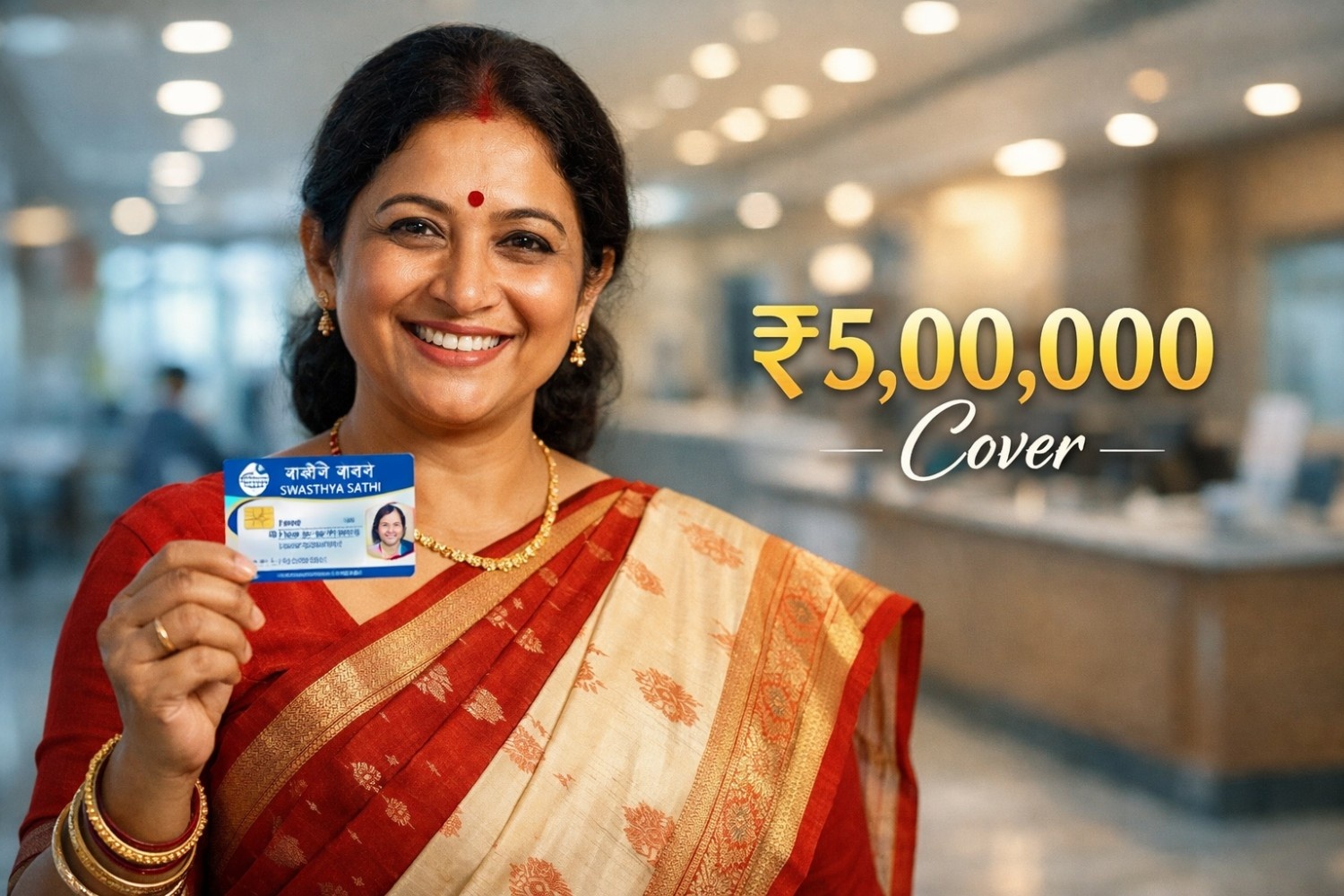
Swasthya Sathi is West Bengal’s flagship, state-funded health protection scheme that provides paperless, cashless, smart-card based inpatient cover up to ₹5 lakh per family per year for secondary and tertiary care. The card covers pre-existing conditions from day one, includes parents from both spouses, and there is no cap on family size. The scheme is funded entirely by the State Government and is intended to provide universal financial protection for healthcare to eligible residents. ([swasthyasathi.gov.in][1])
Who is eligible — the basic rule
The scheme’s core eligibility principle (after the state’s decision to extend coverage widely) is:
- Permanent residents of West Bengal are eligible, except those who are already covered by any other government-sponsored health insurance/assurance scheme. In plain terms, if a family member is already entitled to health cover under another government programme (for example WBHS for government employees/pensioners), that family is excluded from Swasthya Sathi coverage. This exclusion was made explicit when the state expanded the scheme to universal coverage while keeping out those who have government-provided cover. ([swasthyasathi.gov.in][2])
- Private health insurance alone generally does not exclude you. The chief disqualifier is government-sponsored coverage, not private plans—so if your family only has a private health insurance policy and is otherwise a West Bengal resident, you are normally still eligible. (Practical note: certain employer schemes or government-linked benefits may still be treated as government coverage—see the exclusions section below.) ([swasthyasathi.gov.in][2])
Specific case: West Bengal government pensioners (e.g., retired primary teachers)
If you are a pensioner of the West Bengal government (for example a retired primary teacher) and receive health benefits under the West Bengal Health Scheme (WBHS) or another state employee/pensioner scheme, you are generally NOT eligible to receive a Swasthya Sathi card. WBHS and similar schemes are exactly the kind of government-sponsored coverage the Swasthya Sathi exclusion clause refers to. If your pension comes with WBHS health coverage or a designated medical allowance scheme that essentially functions as government health insurance, your family is excluded. ([Starhealth][3])
Practical consequence: a retired teacher drawing pension + WBHS → do not apply for Swasthya Sathi; attempting to apply where the system later detects overlap may lead to rejection or cancellation. If in doubt, check your pension documentation / HR or pension office about whether you or any family member is covered under WBHS or any other government health scheme.
Who will NOT get the card (detailed list and examples)
These are categories commonly excluded:
- People already covered under any government health insurance/assurance scheme. This includes:
- State government employees and pensioners covered by West Bengal Health Scheme (WBHS).
- Any other central/state government health schemes that explicitly provide inpatient cover to the beneficiary/family. ([swasthyasathi.gov.in][2])
- Families that declared ‘YES’ to receiving government-sponsored health insurance on Form-B (the official enrolment form). The Form-B includes questions about whether any family member receives government health insurance or medical allowance; affirmative answers disqualify, by design. ([swasthyasathi.gov.in][4])
- Duplicate applications: One family can receive only one card. If multiple cards for the same family are detected, both may be invalidated. (This is a fraud-prevention and duplication rule.) ([Government of West Bengal][5])
- Non-residents of West Bengal: The scheme targets permanent residents. Temporary visitors or residents of other states should not receive the card.
- Families already covered under certain specific targeted schemes described by administrative orders (check latest circulars). Always consult the official portal or helpline if your situation is complicated (for example, central government employees posted in West Bengal but covered by central schemes).
Documents you need — checklist
The exact documents requested at enrolment/verification can vary slightly by district and the local verification centre, but typically you will need:
- Aadhaar card of the family head and family members (or accepted alternative identity proof as per government guidelines).
- Proof of residence in West Bengal (ration card / voter ID / latest utility bill / BPL card / any government-accepted proof).
- Form-B (filled) — this is the Swasthya Sathi application form that lists family members, their relationships, Aadhaar numbers, and asks about any government health scheme coverage. The PDF is available on the official portal. ([swasthyasathi.gov.in][4])
- Proof of relationship for dependents where necessary (birth certificate/school ID for children; relationship certificates for parents).
- Proof of non-coverage under government scheme — typically you will answer a declaration on Form-B stating whether any family member receives government-sponsored health insurance or medical allowance. That declaration is part of the verification and is important.
- Phone number / mobile — the system sends URN / SMS updates.
- Any additional documents requested by local verification authority (municipal ward, Panchayat, or health centre).
How to apply — step-by-step (online and offline)
Option A — Online application (recommended if you have good internet access)
- Visit the official portal: [https://swasthyasathi.gov.in](https://swasthyasathi.gov.in). Use the “Apply Online” / “Beneficiary Registration” link. ([swasthyasathi.gov.in][1])
- Create or access your profile: Provide the family head’s details (name, Aadhaar, mobile). Many districts let you register using Aadhaar authentication or by entering required identity and address proofs.
- Fill Form-B online: Enter full family details — names, relations, Aadhaar numbers, dates of birth. On the form you must answer whether any family member is covered under another government health scheme (this is a critical field). ([swasthyasathi.gov.in][4])
- Submit required documents: Upload Aadhaar, proof of residence and any other documents asked. The portal will generate a URN (Unique Registration Number) once submitted. Save the URN and note the SMS. ([Niva Bupa][6])
- Verification: The local authority (ward/panchayat or designated health office) will verify the details. This may include physical verification by field staff or verification of records.
- Card issuance: On successful verification, the system will issue the smart card (often with a preference to issue the card in the name of the eldest woman of the family) and you will be notified by SMS. The card is downloadable/printable via the portal or handed out at a distribution centre. ([swasthyasathi.gov.in][7])
Option B — Offline application (for those with limited internet)
- Obtain Form-B physically from the nearest government hospital, ward office, Gram Panchayat, village medical centre or designated enrollment camp. The PDF of Form-B is on the official site if you want to preview it first. ([swasthyasathi.gov.in][4])
- Fill the form in block letters and attach photocopies of Aadhaar and proof of residence (and other documents listed above). Ensure you honestly answer the question about other government health coverage.
- Submit at designated centre: Submit the form and documents at the specified local office or the help desk in government hospital. You will receive a URN by SMS or paper acknowledgement. Keep that URN safe.
- Wait for verification & card issue: The local authority will verify, and on approval you will receive the smart card or instructions for collection/download.
How long does verification take?
- The timeline varies by district and workload; many applicants receive URN immediately and the card within days to a few weeks after local verification. There is no uniform national timeline published — the verification depends on local officials and the accuracy of documents. If verification stalls, contact the local health department or the Swasthya Sathi helpline. ([helpline.swasthyasathi.gov.in][8])
What the card covers (short summary)
- Cashless hospitalization for secondary and tertiary care up to ₹5,00,000 per family per year.
- All pre-existing diseases are covered from day one (i.e., no waiting period for pre-existing conditions).
- No cap on family size; parents of both spouses are included; preference to issue card under name of eldest woman in family. ([swasthyasathi.gov.in][1])
Common pitfalls & how to avoid them
- Incorrect declaration about government coverage: If you falsely declare “No” while someone in your family actually receives WBHS or similar, your application will be vulnerable to later cancellation. Always declare truthfully. ([swasthyasathi.gov.in][4])
- Aadhaar mismatch or missing Aadhaar: Make sure Aadhaar details are correct and linked to the right family members. If someone has no Aadhaar, check the portal/local office for accepted alternatives.
- Using an employer or central government benefit incorrectly: If a family member is covered by a central government scheme (or through employer provisions that are effectively government coverage), you may be ineligible—seek clarification from the scheme administrators.
- Duplicate registration: Do not try to create multiple cards for the same family; system detection can cancel both. ([Government of West Bengal][5])
- Not keeping URN and SMS: Those are your primary tracking references; save them immediately.
If you’re ineligible — what are your options?
- If ineligible because of WBHS (or similar): Use the benefits available to you under WBHS — these are often more favourable for state employees/pensioners in some aspects (different limits, reimbursement rules). Check WBHS rules with your pension office. ([[https://www.bajajfinserv.in](https://www.bajajfinserv.in)][9])
- If denied due to document mismatch: Fix the document problem (update Aadhaar, correct address, get relationship proofs) and reapply.
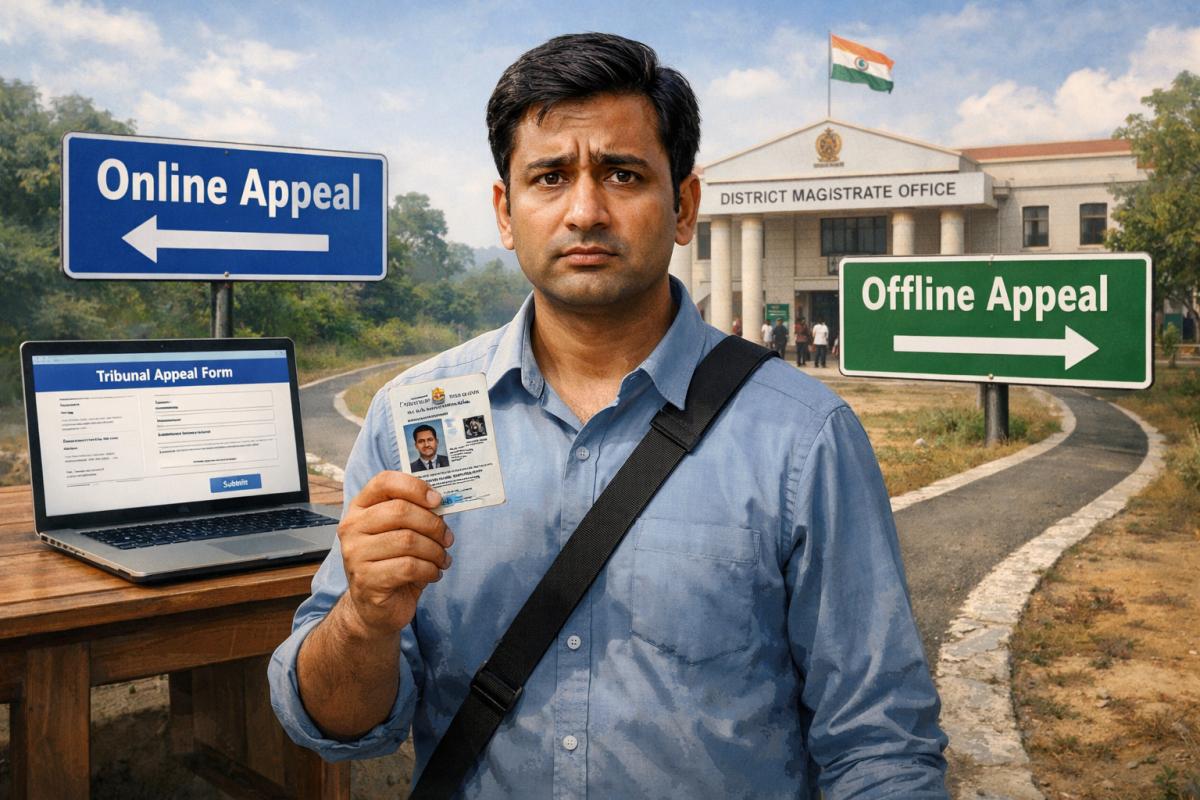
- If you believe you were wrongly excluded: Approach the local Swasthya Sathi helpdesk or the District Health & Family Welfare Office with proof. Keep your URN and submission receipts handy.
- If you have private insurance only and were denied mistakenly: Present documentation proving that your coverage is private and not government-sponsored; upload it or take it to the verification office.
Contact & grievance redressal
- Official portal: [https://swasthyasathi.gov.in](https://swasthyasathi.gov.in) — use the contact/help sections and portal services. ([swasthyasathi.gov.in][1])
- Helpline: A 24×7 toll free number is available (the helpline is listed on official materials). Use the helpline for status checks and enquiries. ([helpline.swasthyasathi.gov.in][8])
- Local health office / Gram panchayat / Ward office: these are the practical windows for offline applications and verification.
Quick FAQ (short & practical)
Q: I am a retired West Bengal primary school teacher and get a pension — can I get Swasthya Sathi? A: If you or your family are covered by the West Bengal Health Scheme (WBHS) or another government health scheme via your pension, then no — you are generally excluded. If you do not receive WBHS or other government health coverage, you may be eligible. Always check your pension paperwork / HR for the exact nature of medical benefits. ([Starhealth][3])
Q: I have private health insurance — can I still get a Swasthya Sathi card? A: Yes — private insurance alone typically does not exclude you from Swasthya Sathi; the exclusion targets government-sponsored schemes. However, disclose your private insurance during registration if asked; it won’t normally block your enrolment. ([swasthyasathi.gov.in][2])
Q: Can I use Swasthya Sathi at private hospitals? A: Yes — both public and private hospitals are empanelled under the scheme; the beneficiary can choose from empanelled hospitals (graded by facilities). Check the portal or app for empanelled hospitals in your district. ([swasthyasathi.gov.in][10])
Tips and best practices (to get approved quickly)
- Prepare documents cleanly: Originals + photocopies; labeled and organized. Aadhaar errors cause the most delays.
- Fill form-B carefully: Spelling mistakes, wrong Aadhaar numbers and incorrect family ties cause verification friction.
- Keep phone handy: URN and status updates come by SMS.
- Prefer online registration where possible (faster tracking) but use local help desks if you are not confident with online forms. ([Niva Bupa][6])
- If you are a pensioner unsure about WBHS overlap — visit the pension disbursing office or the finance department to obtain a clear written statement of whether you or any family member is already covered under a government health scheme. That written clarity prevents rejections.
Final checklist before you apply
- [ ] Are you a permanent resident of West Bengal?
- [ ] Is no one in your family covered under a government health insurance scheme (WBHS or similar)? If yes, STOP — you are likely ineligible. ([swasthyasathi.gov.in][2])
- [ ] Aadhaar numbers for family members ready and accurate.
- [ ] Proof of residence ready.
- [ ] Phone number active to receive URN SMS.
- [ ] Completed Form-B (online or offline) with truthful declaration about other coverage. ([swasthyasathi.gov.in][4])
Closing note — stay up to date
State schemes are periodically updated by administrative orders. While the central principles above (₹5 lakh cover, exclusion of government-covered families like WBHS pensioners, required Form-B declaration) are sourced from official Swasthya Sathi materials, always verify the latest circulars or FAQs on the official portal and consult the local Swasthya Sathi helpdesk if your case involves pension benefits or employer-linked insurance. The official website and Form-B remain the authoritative sources for application and eligibility details. ([swasthyasathi.gov.in][1])
Conclusion
Applying for a Swasthya Sathi card is a straightforward process designed to provide universal healthcare access to the residents of West Bengal. By ensuring you meet the residency requirements, verifying that no family member is already covered by a government-sponsored health scheme (like WBHS), and meticulously preparing your documents, you can secure this vital ₹5 lakh annual coverage. Whether you apply online for speed or offline for local assistance, staying informed about the specific exclusions and keeping your registration details accurate are the most important steps toward a successful application.


Community Insights