
If you have been tracking the socio-political pulse of West Bengal lately, you will know the state is in the middle of a massive administrative pivot. With the Assembly elections looming, the Government of West Bengal has unveiled an aggressive interim budget for the financial year 2026–27. While infrastructure and healthcare saw significant mentions, the undisputed headline is the state's aggressive focus on the "educated unemployed."
In this post, I want to break down the newly announced Banglar Yuva Sathi scheme. We will move beyond the basic headlines to understand the eligibility nuances, the operational logistics of the upcoming enrollment camps, and how this scheme fits into the broader history of unemployment assistance in the state, tracing back to the Yuvashree days. Whether you are a job seeker, a policy enthusiast, or just curious about the state's economic direction, this guide is for you.
The Headline: What is Banglar Yuva Sathi?
Announced during the presentation of the ₹4.06 lakh crore interim budget, Banglar Yuva Sathi is a direct benefit transfer (DBT) scheme aimed at providing a financial cushion to the state’s unemployed youth.
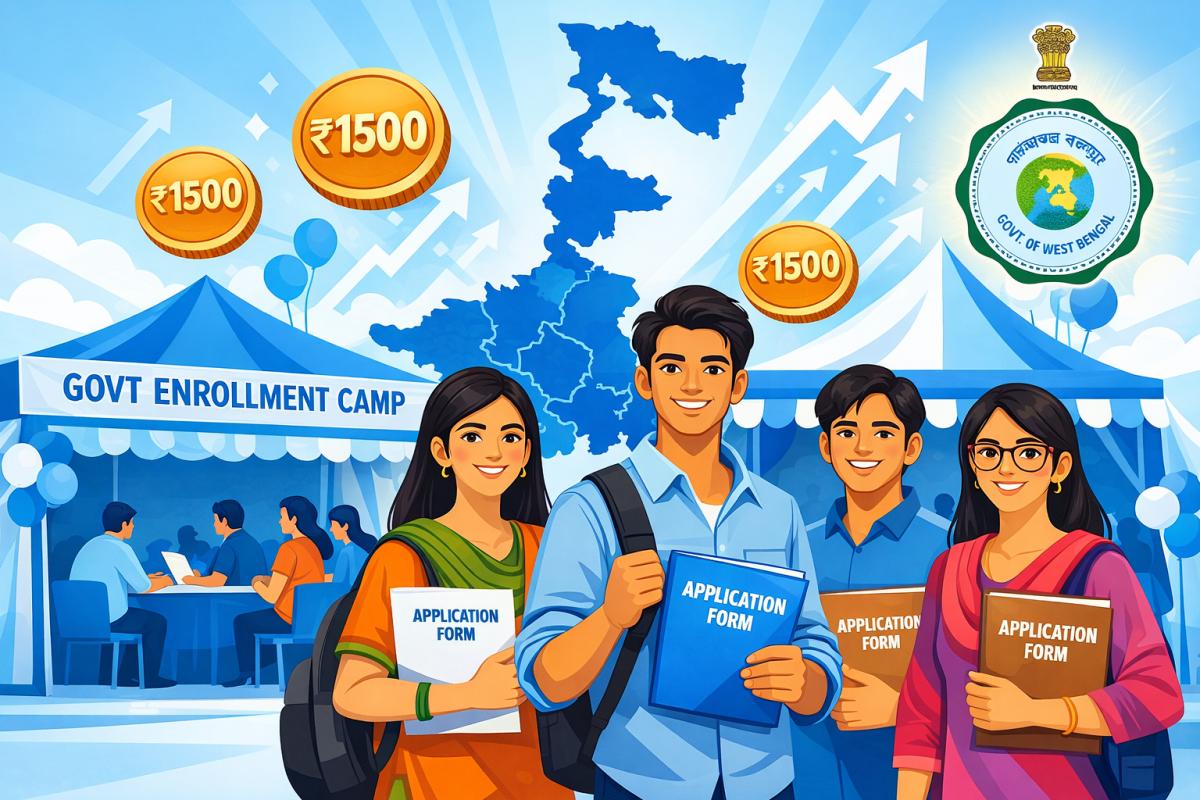
Here is the core proposition: The state government will provide a monthly allowance of ₹1,500 to eligible applicants. Originally, Finance Minister Chandrima Bhattacharya proposed launching this scheme on Independence Day, August 15, 2026. However, in a strategic move aligning with the start of the new financial year (and arguably the election calendar), Chief Minister Mamata Banerjee announced that the rollout has been advanced to April 1, 2026.
The government has earmarked a massive ₹5,000 crore specifically for this project in the budget, signaling that this isn't just a pilot project but a full-scale welfare rollout intended to cover a significant demographic.
Who is Actually Eligible?
Unlike previous iterations of unemployment assistance, the eligibility criteria for Yuva Sathi have been tightened to target a specific "prime" workforce demographic. If you are planning to apply, here are the non-negotiable requirements:
- Age Bracket: The applicant must be between 21 and 40 years of age. This is a shift from older schemes like Yuvashree that often allowed applicants as young as 18.
- Educational Qualification: You must have passed the Madhyamik (Class 10 state board exam) or its equivalent. This effectively categorizes the scheme as a benefit for the "educated unemployed."
- Employment Status: You must be unemployed. The scheme is designed as a bridge—financial support is provided until the beneficiary finds a job or for a maximum period of five years, whichever happens first.
- One Family, One Beneficiary: Generally, welfare schemes in the state follow a "one member per family" rule to ensure funds reach the maximum number of households.
The "Scholarship vs. Welfare" Confusion
One of the most common questions circulating right now is about "double-dipping." Can you receive this money if you are already getting money from the government?
The Chief Minister clarified this explicitly: Beneficiaries of student scholarships are eligible. If you are receiving funds under Aikyasree (minority scholarship), Medhasree (OBC scholarship), Sikhasree (SC/ST support), or the Swami Vivekananda Merit-cum-Means Scholarship, you can still apply for Banglar Yuva Sathi. The logic is that scholarships support education, while Yuva Sathi supports subsistence during unemployment.
However, if you are receiving benefits under other welfare schemes—such as social pensions or the newly announced support for landless farmers—you are not eligible.
The Logistics: How to Apply (The Camp Model)
In a digital age, it might come as a surprise that the government is not opening an online portal immediately. Citing the short timeframe before the April 1 launch and the need for rigorous verification to prevent fraud, the administration has opted for a physical outreach model.
Mark these dates: The government is organizing enrollment camps in every single one of the 294 Assembly constituencies from February 15 to February 26, 2026.
What to Expect at the Camps
These camps will function similarly to the popular Duare Sarkar (Government at the Doorstep) camps. They will operate from 10:00 AM to 5:00 PM. The idea is to have a "single-window" system where you submit your documents and receive an acknowledgment receipt on the spot.
At these camps, you will find representatives from multiple departments, including Youth Services, Agriculture, Power, and Irrigation, because the government is simultaneously registering people for two other schemes:
- Landless Farmers Assistance: A ₹4,000 annual grant (paid in two installments of ₹2,000 before Kharif and Rabi seasons).
- Electricity Waiver: Free shallow pump power connections for farmers to reduce cultivation costs.
Documents You Will Likely Need: Based on standard protocols for such schemes in West Bengal, ensure you carry:
- Proof of Age: Birth Certificate or Madhyamik Admit Card.
- Proof of Education: Madhyamik Marksheet/Certificate.
- Identity & Residence: Voter ID (EPIC), Aadhaar Card, or Ration Card.
- Bank Details: A copy of your bank passbook (front page). The account should ideally be with a nationalized bank and linked to Aadhaar for Direct Benefit Transfer (DBT).
Contextualizing the Scheme: Yuvashree vs. Yuva Sathi
To really understand the significance of Banglar Yuva Sathi, we have to look at its predecessor, the Yuvashree scheme (originally Yuva Utsaha Prakalpa), launched back in October 2013.
Yuvashree was managed by the Labour Department and linked strictly to the Employment Bank. While it also offered ₹1,500 a month, its criteria were looser in some ways (Class 8 pass, age 18-45) but the disbursement was limited by a "waiting list" system where only a set number of candidates received the stipend.
The new Yuva Sathi seems to be a structural refinement. By raising the educational bar to Class 10 and narrowing the age to 21-40, the government is targeting the workforce that is theoretically "market-ready" but stalling in the transition from school to work. Furthermore, the five-year sunset clause serves as a policy safeguard—it prevents the allowance from becoming a permanent pension and incentivizes the recipient to keep looking for work.
The Macro-Economic Strategy: Consumption and Skills
Critics often dismiss these schemes as "doles" or election-year "freebies". While the political timing regarding the upcoming Assembly polls is undeniable, there is an economic argument at play here regarding consumption and liquidity.
Injecting ₹5,000 crore into the hands of young people in rural and semi-urban Bengal creates immediate demand. A monthly stipend of ₹1,500 may not seem like much in a metro city, but in a village, it covers internet costs for job hunting, travel fares for interviews, or fees for competitive exams. This money circulates locally, supporting small businesses and stabilizing the micro-economy.
The Skill Development Link
Crucially, these financial transfers operate in tandem with the state’s skill development ecosystem, primarily Utkarsh Bangla. The government's vision is that while Yuva Sathi provides the financial bridge, Utkarsh Bangla provides the ladder.
The Paschim Banga Society for Skill Development (PBSSD) offers free vocational training ranging from 12 to 720 hours. For a Yuva Sathi beneficiary, utilizing this time to get certified in high-demand trades—like becoming a data entry operator, a dialysis technician, or getting into mushroom cultivation—is essential. We can expect "active labor market" conditionality to be part of Yuva Sathi's long-term governance, similar to Yuvashree where beneficiaries submitted proof of skill upgrading.
The Broader Welfare Umbrella: Women and Workers
Banglar Yuva Sathi is just one pillar of the 2026-27 Interim Budget. The state has clearly adopted a "Lifecycle" approach to welfare, ensuring that every demographic in a household has a safety net.
- Lakshmir Bhandar (The Women's Pillar): The monthly assistance has been hiked by ₹500. Women in the General category will now receive ₹1,500, and those in SC/ST categories will receive ₹1,700. This puts significant liquidity into the hands of the matriarchs of rural Bengal.
- Gig Workers and Civics: Recognizing the shifting nature of labor, the budget proposed bringing gig workers (delivery partners, app-cab drivers) under social security nets like Swasthya Sathi (health insurance up to ₹5 lakh). Additionally, civic volunteers and Asha/Anganwadi workers saw a pay hike of ₹1,000.
- The Rural Workforce: For those in the agrarian sector who do not own land, the new financial assistance of ₹4,000 per year fills a critical gap that schemes like Krishak Bandhu (which requires land ownership) previously missed.
Conclusion: A Financial Bridge, Not a Destination
The launch of Banglar Yuva Sathi marks a significant pivot in West Bengal’s social policy. By advancing the launch to April 1, the government has signaled that youth welfare is its priority number one going into the election season. For the youth of West Bengal, this scheme offers breathing room—a small but vital financial independence that allows them to pursue training or education without becoming a burden on their families.
However, the ultimate success of this scheme will not be measured by how many people join it, but by how many people leave it because they found gainful employment. The ₹1,500 allowance is designed as a stipend for self-improvement, not a salary.
If you are eligible, prepare your documents for the February 15 camps. But once you have secured the support, look immediately toward Utkarsh Bangla or the Student Internship Programme. Use this safety net to build the trampoline that launches you into a sustainable career. The government has provided the bridge; crossing it is up to you.
Quick Reference Guide: Banglar Yuva Sathi
| Feature | Detail |
|---|---|
| Launch Date | April 1, 2026 |
| Enrollment Dates | February 15 – February 26, 2026 |
| Where to Apply | Physical Camps in every Assembly Constituency |
| Monthly Amount | ₹1,500 |
| Age Limit | 21 – 40 Years |
| Education | Madhyamik (Class 10) Pass |
| Can I have a scholarship? | Yes (Aikyasree, Swami Vivekananda, etc. allowed) |
| Can I have other welfare? | No (No other state pension/dole allowed) |
Disclaimer: The details provided here are based on the West Bengal Interim Budget 2026-27 announcements and news reports available as of February 2026. Please verify dates and document requirements at your local BDO or SDO office.


Community Insights